

Table of Contents
- Why Look Beyond Jefferspet for Quality Harnesses
- What Defines a Quality Harness for Large Dogs
- How to Measure a Dog for a Harness: A Quick Fit Guide
- No-Pull Harness Benefits: Why the Front Clip Matters
- Durable Pet Gear for Active Dogs: What to Inspect
- Top Jefferspet Alternative: Paw Fit Gears No-Pull Harness
- Final Verdict: Is This the Right Harness for Your Dog?
- Frequently Asked Questions
Last Updated: September 6, 2026
Finding a reliable jefferspet alternative for quality harnesses often comes down to one frustrating reality: many mass-market options fail within months of daily use. A quality harness is about how straps and buckles work together to keep your dog safe, comfortable, and under control. Below, we'll show you what to look for, how to measure your dog, and why a focused brand outperforms a giant catalog.
Why Look Beyond Jefferspet for Quality Harnesses
The biggest mistake owners make is assuming a large retailer's inventory guarantees quality. Big-box stores prioritize volume over material science and hardware integrity. A brand that specializes exclusively in pet gear engineers products around specific behavioral needs, not generic fits meant to accommodate every breed poorly.
Specialized brands also iterate faster on design flaws. A company that sells only harnesses and leashes hears directly from customers when a buckle fails or a stitch pulls, driving better tensile strength and stitching quality in the next production run.
The "alternative" isn't about finding a cheaper price. It's about finding a manufacturer that treats safety standards as a baseline, not a selling point. Look for brands that discuss pressure distribution, choke-free designs, and weather-resistant materials, details that signal engineering intent.
What Defines a Quality Harness for Large Dogs
A quality harness for large dogs is defined by four non-negotiable components: hardware integrity, material density, pressure distribution, and adjustability. Large breeds often exceed 100 pounds of pull when excited. Hardware integrity means solid steel clips and D-rings, not pot metal that bends under strain. The material should be dense oxford weave or similar high-denier fabric that resists abrasion.
Pressure distribution prevents injury by spreading force across the chest and shoulders rather than concentrating it on the neck or a single strap point (peer-reviewed research). The padded chest plate should sit below the trachea, redirecting pull force to the sternum, preventing choking and reducing the risk of tracheal collapse (avma.org).
Breathable mesh panels are another hallmark of quality. Active dogs generate body heat quickly, and a harness that traps heat against the skin causes chafing. Quality harnesses use breathable mesh in high-contact zones while reserving thicker padding for load-bearing areas.
Matching Harness Design to Your Dog's Anatomy
The "one-size-fits-all" approach fails most large breeds because their body structures vary dramatically. A harness that works for a deep-chested Great Dane will not fit a barrel-chested Bulldog correctly. Understanding your dog's anatomy is the first step in choosing a harness that provides both safety and comfort.
Deep-chested breeds (Great Danes, German Shepherds, Dobermans). These dogs have a narrow chest that slopes down to a tucked-up abdomen. The harness needs a longer sternum strap that follows the chest contour without riding up into the armpits. Look for a Y-shaped front that allows the straps to sit flat against the chest without twisting.
Barrel-chested breeds (Bulldogs, Boxers, Pugs). These dogs have a wide, deep chest with a short back. Standard harnesses often gap at the sides or put pressure on the throat. The key is a wide chest plate with substantial padding that distributes force across the entire sternum. The girth strap needs to be highly adjustable, as these breeds tend to gain and lose weight more noticeably. A front-clip attachment is particularly important, as their center of gravity makes them prone to pulling with their entire body weight.
Narrow-chested breeds (Whippets, Greyhounds, Vizslas). These sighthounds have a very deep but narrow chest, making it difficult to find a harness that stays in place. The harness needs a longer, narrower chest plate and a girth strap that can be cinched tightly without causing chafing. A padded handle on the back is essential, as their thin coats offer no natural protection against harness rub.
Orthopedic Support for Senior Dogs: A Missed Consideration
Most harness guides focus on no-pull mechanics or adventure durability, but they overlook senior dogs with mobility issues. For an older large-breed dog, the primary concern is not pulling but support and stability. Arthritis, hip dysplasia, and muscle weakness make it difficult to navigate stairs, climb into vehicles, or maintain balance on uneven terrain.
A quality harness for a senior dog needs a different set of features than one for a young, active dog. The most critical feature is a sturdy, well-padded handle positioned over the dog's center of gravity, just behind the shoulders, allowing the owner to provide lift assistance without undue pressure on the spine or ribs. The handle should be long enough to grip with both hands and have a non-slip surface.
The chest plate should be wider and more heavily padded than on a standard harness, distributing the dog's weight more evenly and reducing pressure points on arthritic joints. The material should be soft and flexible, as senior dogs often have thinner skin prone to chafing. Avoid hard plastic buckles that press against the body; look for padded buckle covers or metal hardware that sits away from the skin.
Adjustability becomes even more critical for senior dogs, who often lose muscle mass in their chest and shoulders. A harness with four points of adjustment allows you to fine-tune the fit as your dog's body changes, loosening the chest strap on stiff days or tightening it after a good walk makes a meaningful difference in comfort.
A supportive handle is a daily tool for managing a senior dog's changing needs. Using it to guide a dog down a steep curb, help them up the last step onto the porch, or steady them when startled can prevent falls and injuries, a use case no-pull-focused reviews never address.
How to Measure a Dog for a Harness: A Quick Fit Guide
Proper measurement is the single most important step in choosing a harness, yet most owners skip it entirely. You need two measurements: the neck circumference and the girth measurement, the widest part of the chest just behind the front legs. Use a flexible fabric measuring tape, keeping it snug but not tight, allowing room for two fingers to slide underneath.
| Measurement | Where to Measure | How It Should Fit |
|---|---|---|
| Neck Circumference | Base of neck, where collar sits | Snug, two fingers fit flat |
| Girth Measurement | Widest part of chest, behind front legs | Firm, four fingers stacked fit |
| Weight Check | Current weight + breed growth | Adjustable straps should have 2-3 inches of room |
A common mistake is measuring while the dog is sitting or lying down. Stand your dog on all four paws and measure in a neutral standing position. For growing puppies, measure every two weeks. Adjustable straps should give you at least two to three inches of adjustment room on both ends, allowing for seasonal weight changes and winter coat growth.
No-Pull Harness Benefits: Why the Front Clip Matters
A no-pull harness benefits both dog and owner by addressing the root cause of pulling: natural opposition reflex. When a dog pulls forward and meets resistance at the back or neck, their instinct is to pull harder. A front-clip harness changes the physics, when the leash attaches at the chest, forward pressure redirects the dog's momentum to the side, gently turning them back toward you.

No-pull harness benefits extend beyond walkability. This design functions as a training aid, reinforcing loose-leash walking without aversive corrections. The front clip discourages pulling by making it physically uncomfortable, not painful, to strain against the leash, far more effective than choke chains or prong collars, which suppress behavior rather than redirecting it.
The dual-clip design offers versatility that single-point harnesses lack. A back-clip attachment is ideal for casual walks and dogs that already walk politely; the front clip is reserved for training sessions or high-distraction environments. The best designs place a padded handle at the top, giving owners a quick control point for managing sudden lunges near traffic or other dogs.
Durable Pet Gear for Active Dogs: What to Inspect
Durable pet gear for active dogs starts with knowing where harnesses fail first: stitching at stress junctions, buckle fatigue, and fabric fraying at leash attachment points. Before every purchase, inspect the stitching where straps meet the chest plate, looking for reinforced bar-tack stitching, which uses multiple passes of thread in a tight zigzag pattern to distribute stress.
Hardware integrity is equally critical. Test every quick-release buckle by clicking and unclicking it several times; quality buckles have a positive, crisp action and show no flex in the plastic. Metal D-rings should be welded or solid cast, never open-ended wire that can bend under load. For large dogs, look for hardware rated explicitly for high tensile strength.
Reflective strips are a non-negotiable safety feature for active dogs, especially those walked during early morning or evening hours (the CDC). Quality reflective material is woven into the fabric, not ironed on as a decal that peels after a few washes. Weather-resistant materials also matter: Oxford fabric with a water-repellent coating dries quickly and resists mildew, while untreated nylon absorbs moisture and becomes heavy.
The 6-Month Reality Check: What Actually Fails
Most reviews are based on initial impressions from a few weeks of testing. But the real question for an active dog is: what does this harness look like after six months of daily use?
Fabric wear at contact points. The most common issue in six-month-old harnesses is abrasion where straps rub against the dog's chest and under the front legs. On some harnesses, the outer layer of webbing can begin to pill and fray within months of daily walking. By the six-month mark, the structural integrity can be compromised, and the harness may stretch, potentially allowing the dog to slip out more easily. Higher-denier fabrics can show minimal surface wear in the same period.
Buckle creep and failure. Plastic buckles can be prone to "creep" under constant load. A buckle that clicks securely when new may slowly deform under the repeated stress of a strong dog pulling, especially in warm weather. After some time, buckles may still click but no longer hold with the same tension, potentially allowing the harness to loosen during walks. This is why metal quick-release buckles or buckles with a metal core can be a worthwhile consideration for large, powerful dogs.
Stitching degradation at stress points. Bar-tack stitching, while often superior to straight stitching, is not immune to wear. The thread, typically nylon or polyester, can degrade with UV exposure and friction. The stitching at the junction where the front clip meets the chest plate can be among the first areas to fray on some harnesses. Quality harnesses often use a heavier thread weight and more passes per bar-tack, which can extend this timeline significantly.
The hardware that never fails (and what that tells you). The most telling sign of a quality harness can be its long-term performance. Welded steel D-rings and solid cast metal clips can show minimal wear after extended daily use. In contrast, stamped metal hardware may develop burrs and sharp edges that can eventually cut through the leash attachment point, which can indicate a manufacturer's prioritization of cost over long-term durability.
How to Extend the Life of Your Harness
Even the most durable harness will last longer with proper care. After muddy or wet walks, rinse the harness with fresh water and hang it to dry away from direct sunlight, which degrades both fabric and plastic components. Machine washing accelerates wear; if you must machine wash, use a mesh laundry bag and air dry only. Inspect the stitching and hardware monthly, and replace the harness at the first sign of structural compromise.
Top Jefferspet Alternative: Paw Fit Gears No-Pull Harness
Our top recommendation for a jefferspet alternative for quality harnesses is the Paw Fit Gears No-Pull Dog Harness, specifically the adjustable, reflective, padded vest model designed for large dogs. This harness combines every quality marker discussed above: dual leash attachment points for training flexibility, breathable padding that prevents chafing, and reflective straps that keep your dog visible during low-light walks. The no-pull, no-choke design makes it a legitimate training tool, not just a restraint system.
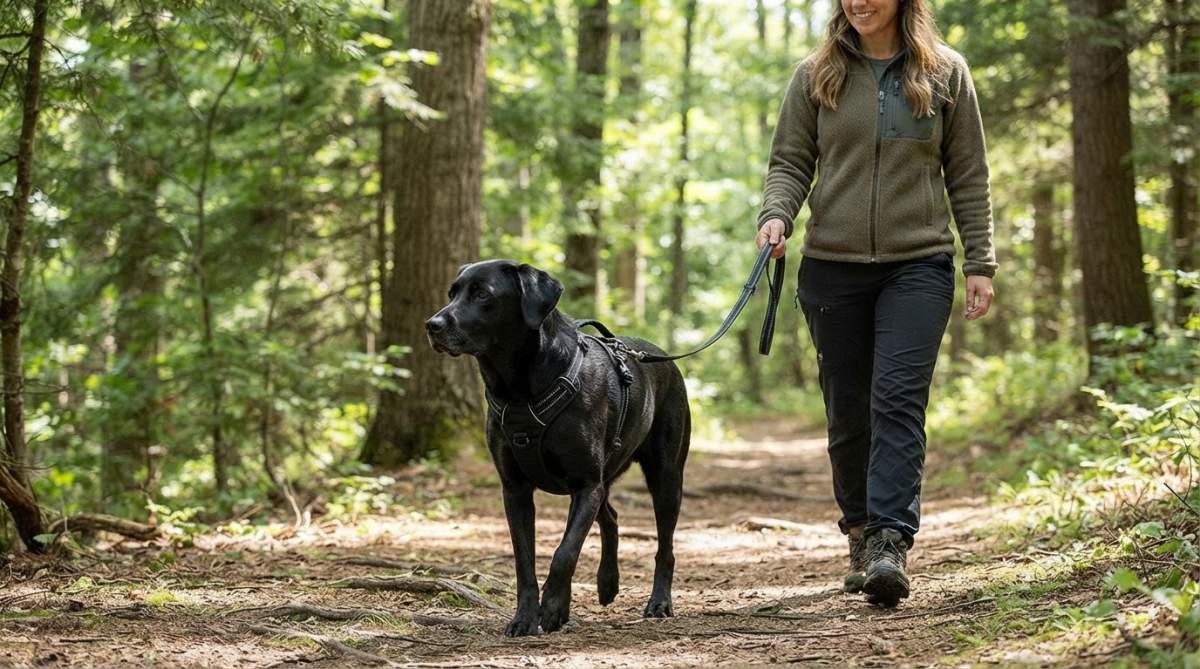
What sets this harness apart is the adjustable fit system with four points of adjustment, allowing precise customization for barrel-chested breeds like Boxers, deep-chested dogs like Great Danes, and everything in between. The easy-control handle on the back gives owners a secure grip point for managing reactive dogs or guiding them through crowded spaces. At $27.09, it offers hardware and material quality designed for durability.
For owners who need maximum durability for intense training sessions, the heavier-duty BARKBAY model at $36.48 offers upgraded metal leash clips and a stronger chest plate. Both models share the same no-pull front-clip mechanism, but the heavier option uses denser webbing for dogs that routinely pull at maximum strength. The choice comes down to your dog's pulling intensity and your typical walking environment.

Final Verdict: Is This the Right Harness for Your Dog?
A quality harness is an investment in your dog's physical health and your walking relationship. The right harness prevents tracheal damage, distributes pressure safely, and gives you the control needed to manage strong dogs confidently. For most large-breed owners, the Paw Fit Gears No-Pull Harness hits the sweet spot of durability, comfort, and training functionality without the premium markup of boutique brands.
That said, consider your specific situation before purchasing. If your dog is a senior with mobility issues, prioritize a harness with a supportive handle for assisting them up stairs or into vehicles. If you hike in rugged terrain, the heavier-duty model's denser fabric will resist abrasion better. And if you walk primarily at dawn or dusk, the reflective strips are a necessity for visibility and safety.
The broader lesson applies beyond any single product: a jefferspet alternative for quality harnesses should be evaluated on engineering, not brand familiarity. When you choose gear built around your dog's specific anatomy and behavioral needs, you get a product that lasts longer, fits better, and makes every walk safer. That is the standard every quality harness should meet.
Frequently Asked Questions
What features define a high-quality dog harness?
A high-quality harness uses durable materials like Oxford fabric with reinforced stitching at stress points. Look for a padded chest plate to distribute pressure evenly, adjustable straps for a secure fit, and hardware that won't bend or break under tension. Reflective strips add safety for low-light walks. The design should be choke-free and allow natural movement while giving you control.
Is it better to use a front-clip or back-clip harness?
It depends on your goal. A front-clip (chest) attachment redirects your dog's forward motion toward you, which helps discourage pulling during training. A back-clip is better for casual walks with dogs that already walk politely. The best quality harnesses offer both leash attachment points so you can switch based on the situation.
How do I choose a harness that prevents pulling?
Choose a no-pull harness with a front chest clip. When your dog pulls, the clip gently turns their body sideways, interrupting the forward momentum without choking them. Ensure the harness has a padded chest plate for comfort and adjustable straps so it fits snugly without rubbing. This combination works as a training aid while keeping walks comfortable.
How does Paw Fit Gears compare to traditional pet supply retailers?
Paw Fit Gears focuses specifically on durable, thoughtfully designed gear rather than stocking hundreds of generic options. Their harnesses include features like dual metal leash clips, reflective Oxford material, and an easy-control handle for large dogs. This specialized approach means each product is built to handle real-world wear from active dogs, not just look good on a shelf.
Choosing the right harness requires looking past marketing claims and examining how a product handles real-world stress. Paw Fit Gears builds harnesses with dual leash clips, breathable padding, and reflective materials engineered for daily use by active dogs. Get started with Paw Fit Gears and find a quality harness that supports your dog's comfort, safety, and training needs on every walk.