

Table of Contents
- What Makes a Heavy Duty Dog Harness Different
- How to Stop Dog Pulling on Leash With the Right Harness
- Front Clip vs Back Clip Harness: Which Works Best for Strong Dogs
- How to Measure a Dog for a Harness That Fits Properly
- Materials and Construction: What Durability Really Means
- Top Heavy Duty Harness Options for Large Dogs
- Common Mistakes When Buying a Heavy Duty Harness
- Conclusion
- Frequently Asked Questions
Last Updated: September 2, 2026
What Makes a Heavy Duty Dog Harness Different
A heavy duty dog harness is a reinforced restraint system designed to distribute force evenly across a dog's body while providing superior control and durability for large breeds and strong pullers. Unlike standard collars that concentrate pressure on the neck, a heavy duty harness spreads the load across the chest and shoulders, reducing strain and injury risk.

Heavy duty harnesses use thicker webbing, reinforced stitching, and industrial-grade hardware that withstands repeated tension from powerful dogs. At Paw Fit Gears, we understand that active dog owners need gear built to last through years of daily use, not equipment that frays after a few months.
What separates a truly durable harness from a standard one is engineering. Padded construction prevents chafing on sensitive areas, while multiple attachment points give you training flexibility. Reflective strips add visibility during evening walks.
A cheap harness might feel sturdy in your hand but fails when your 80-pound dog lunges after a squirrel. The webbing tears, buckles snap, or stitching unravels. A properly constructed heavy duty harness distributes that sudden force across reinforced seams and quality hardware, staying intact through thousands of pulls.
How to Stop Dog Pulling on Leash With the Right Harness
Pulling on the leash is one of the most common behavioral issues dog owners face, and the right harness can transform your walks from exhausting battles into controlled, enjoyable outings. A heavy duty dog harness with proper design teaches your dog to walk better rather than simply restraining them.

Front-clip harnesses work by redirecting your dog's forward motion (avsab.org). When your dog pulls, the chest clip naturally turns their body toward you instead of allowing them to charge ahead. Most dogs respond to this within a few weeks of consistent use.
Effectiveness depends entirely on proper fit and consistent training. A loose harness won't redirect effectively, and an inconsistently applied tool won't teach the behavior you want. Pair the right equipment with patient, repetitive practice. Start with short walks in low-distraction environments, reward calm walking behavior, and gradually increase difficulty.
Many dog owners make the mistake of switching tools constantly. Behavior change takes time. Dogs need 3-4 weeks minimum to adjust to new equipment and understand the cause-and-effect relationship between pulling and gentle redirection (peer-reviewed research).
The handle feature on many heavy duty harnesses adds another layer of control. When your dog lunges unexpectedly, you can grab the handle for immediate stability rather than relying solely on the leash.
Front Clip vs Back Clip Harness: Which Works Best for Strong Dogs
The choice between front-clip and back-clip attachment points determines how much control you have and what behavior you're reinforcing.
Front-clip harnesses redirect your dog's forward momentum toward you when they pull. The leash attaches to a ring on the chest, so pulling creates a turning motion that naturally discourages the behavior. This design works exceptionally well for dogs that pull constantly and need active training intervention. Front-clip harnesses give you maximum control with minimum force, which matters when managing a 70+ pound dog.
Back-clip harnesses attach the leash at the shoulders, similar to how sled dogs are harnessed. This design distributes force evenly but doesn't provide the redirecting effect of a front clip. Back clips work best for dogs that already have decent leash manners or for casual, low-distraction walks.
A back-clip harness actually encourages pulling slightly because the dog's forward momentum isn't interrupted. If your dog is a strong puller, a back-clip alone won't solve the problem. Some heavy duty harnesses include both attachment points, giving you flexibility to switch between training mode (front clip) and casual walks (back clip).
For strong dogs, the front clip is almost always the better starting point. You can transition to back-clip walks once your dog has learned better leash manners.
How to Measure a Dog for a Harness That Fits Properly
Proper fit is the single most critical factor in harness effectiveness and comfort. A harness that's too loose won't provide adequate control, and one that's too tight restricts movement and causes chafing (aaha.org).
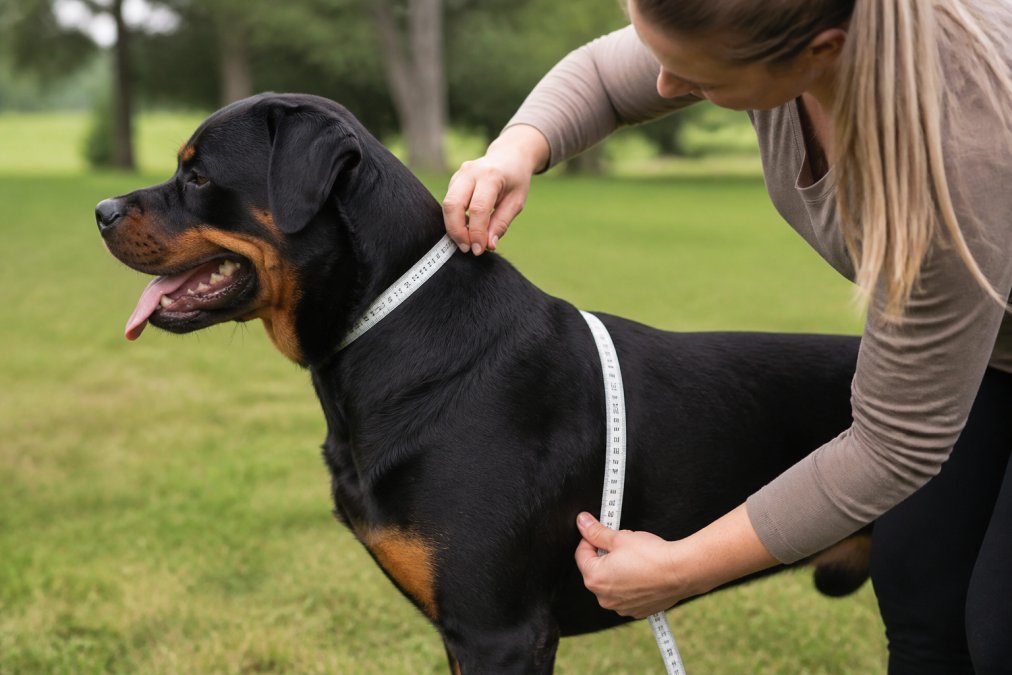
You need two measurements: chest girth and neck circumference. For chest girth, measure around the widest part of your dog's ribcage, just behind the front legs. Use a soft measuring tape and keep it snug but not tight, you should be able to slide one finger between the tape and your dog's body.
For neck circumference, measure around the base of your dog's neck where a collar would sit. These two measurements determine which size harness will fit correctly.
Most manufacturers provide a sizing chart that correlates these measurements to harness sizes. Don't rely on your dog's weight alone; two dogs of the same weight can have completely different body shapes.
When your harness arrives, test the fit before committing to a walk. Can you fit one finger between the harness and your dog's body at the chest? Can you fit one finger at the neck? A harness that's too tight causes discomfort and chafing. If it's too loose, it won't stay in place during walks.
Adjustability matters significantly. A heavy duty harness should have multiple adjustment points so you can fine-tune the fit as your dog grows or if seasonal coat changes affect how snugly the harness sits.
Materials and Construction: What Durability Really Means
Durability isn't a single feature, it's the result of thoughtful material selection and construction technique working together.
Webbing quality is the foundation. High-quality webbing is tightly woven nylon or polyester that resists fraying, maintains its shape, and doesn't degrade quickly under UV exposure. When you examine a heavy duty dog harness, run your fingers along the edges. Do they feel clean and finished, or do loose fibers pull away easily?
Stitching pattern determines how long the harness holds together under stress. Single-line stitching fails relatively quickly when subjected to repeated pulling. Box-stitching (where the seam is stitched in an X pattern) distributes force across multiple threads and holds up far longer. Double-stitched seams are the industry standard for equipment that needs to survive constant use.
Hardware quality often gets overlooked but matters enormously. Plastic buckles crack under stress. Metal hardware, particularly steel or aluminum, withstands repeated use without failure. Check that all D-rings, clips, and adjustment buckles are metal.
Padding prevents chafing on your dog's chest and shoulders, distributes pressure more evenly, and adds structural integrity to the harness. Neoprene or foam padding is standard on quality harnesses.
The combination of these elements determines real-world durability. At Paw Fit Gears, our no-pull harnesses combine reinforced nylon webbing with double-stitched seams and metal hardware specifically because this combination actually lasts.
Top Heavy Duty Harness Options for Large Dogs
Selecting the right harness requires understanding what features matter most for your specific situation.
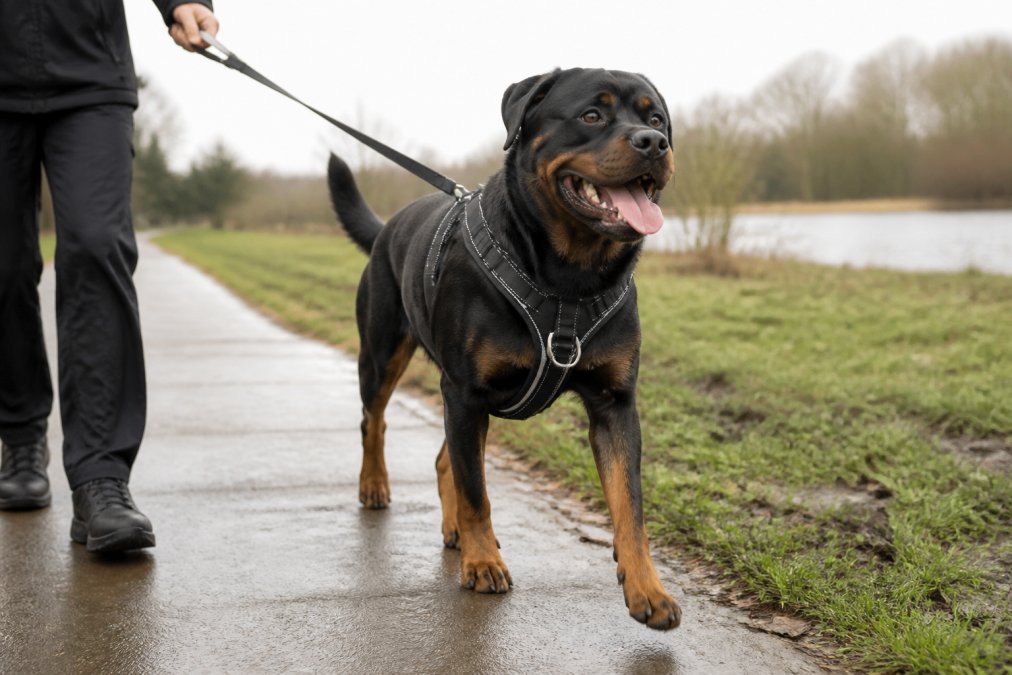
No-Pull Dog Harness - Front Clip, Reflective, Heavy Duty with Handle for Large Dogs ($36.48)
This harness from Paw Fit Gears combines core features that matter for strong pullers: a front-clip design that redirects pulling, reinforced construction for durability, and a handle for emergency control. The reflective strips ensure visibility during low-light walks. When your dog pulls, their body naturally turns toward you rather than forward.
The handle positioned on the back gives you immediate control if your dog lunges unexpectedly. This feature matters significantly for owners managing dogs that weigh 60+ pounds.
The construction uses reinforced nylon webbing with double-stitched seams throughout. Metal hardware on all attachment points means the harness won't fail when your dog tests it repeatedly. The padded chest area prevents chafing during extended wear.
No-Pull Dog Harness with 2 Leash Clips - Adjustable, Reflective, Padded Vest for Large Dogs ($27.09)
This Paw Fit Gears option provides versatility through dual attachment points. The front clip works for training and pulling correction, while the back clip allows casual walks once your dog's leash manners improve.
The padded vest construction distributes pressure across a larger surface area than minimal-padding harnesses, reducing the risk of chafing. The adjustable fit accommodates growth or seasonal coat changes, so one harness can serve your dog through different life stages.
The reflective webbing provides safety visibility, and the construction uses the same reinforced materials as the front-clip option.
For dogs that pull aggressively, the front-clip option with handle provides superior control. For dogs with moderate pulling issues or those transitioning to better leash manners, the dual-clip design offers flexibility.
Common Mistakes When Buying a Heavy Duty Harness
Understanding what doesn't work saves time and money.
Buying based on appearance alone is the most common error. Examine the actual construction: stitching pattern, webbing thickness, hardware type. Don't rely on product images; read detailed descriptions and check what materials the manufacturer actually uses.
Ignoring fit requirements creates problems no harness design can overcome. Measure your dog correctly before purchasing. A harness that doesn't fit won't work, regardless of how well it's constructed.
Expecting immediate results sets unrealistic expectations. Behavior modification takes weeks of consistent practice. Commit to at least 3-4 weeks with any new harness before evaluating effectiveness.
Choosing back-clip for a strong puller undermines the entire training process. If your dog pulls hard, start with front-clip. You can transition to back-clip later.
Buying the cheapest option often costs more in the long run. A $15 harness that fails after three months means buying another harness plus interrupted training. A quality harness at $27-36 lasts years.
Neglecting maintenance shortens the lifespan of any harness. Rinse your harness occasionally to remove dirt and salt, let it air dry completely, and inspect for damage regularly.
Conclusion
Choosing a heavy duty dog harness that actually solves pulling problems requires understanding how harnesses work, what materials create durability, and how proper fit enables effectiveness. The wrong harness leaves you exhausted and frustrated. The right one transforms walks from battles into training opportunities.
Paw Fit Gears offers two proven options designed specifically for large dogs and strong pullers. Our no-pull harnesses combine front-clip training design with reinforced construction, padded comfort, and reflective safety features. Whether you choose the single front-clip with handle for maximum control or the dual-clip design for versatility, you're getting equipment built to last through years of daily use.
Start with proper measurement, commit to consistent training, and give your dog time to adjust. Within 3-4 weeks, you'll notice your dog pulling less and walking calmer. That's when you realize the right harness doesn't just control your dog, it creates the foundation for better behavior and safer walks for everyone involved.
Frequently Asked Questions
What features should I look for in a heavy duty dog harness?
Look for reinforced webbing with tensile strength rated for your dog's weight, padded chest and shoulder areas to prevent chafing, adjustable straps for a secure fit, and dual leash attachment points. Reflective strips enhance visibility during low-light walks. Metal hardware and load-bearing stitching indicate quality construction. For large breeds that pull, a front-clip design is essential for control without choking. The harness should distribute pressure across the chest and back rather than concentrating it on the neck.
How do I know if a heavy duty harness will actually stop my dog from pulling?
A front-clip harness redirects your dog's forward momentum toward you when they pull, making pulling less rewarding and naturally discouraging the behavior. This works best when paired with consistent training. The No-Pull Dog Harness with Front Clip from Paw Fit Gears ($36.48) features a chest clip specifically designed to reduce pulling while maintaining control. Back-clip harnesses don't prevent pulling as effectively. Success depends on fit, clip placement, and consistent use during walks.
What's the difference between buying a heavy duty harness and a regular one?
Heavy duty harnesses use thicker webbing, reinforced stitching, and metal hardware rated for high-tension loads, making them suitable for large breeds and strong pullers. Regular harnesses may have thinner materials and plastic components that fail under sustained pressure. Heavy duty options typically include padded construction for comfort during extended wear and adjustable straps for a precise fit. They cost more upfront but last significantly longer, making them a better long-term investment for active dogs and frequent walkers.
Can a poorly fitting harness cause my dog discomfort or anxiety?
Yes. A harness that's too tight restricts movement and breathing, while one that's too loose shifts during walks and rubs skin raw. Improper fit can increase anxiety, especially in dogs sensitive to restraint. Measuring your dog's chest and neck before purchase is critical. The harness should allow two fingers of space between the strap and your dog's body. Padded harnesses reduce pressure points. Paw Fit Gears harnesses feature adjustable straps to accommodate growth and seasonal coat changes, ensuring comfort throughout your dog's life.
This article was written using GrandRanker