

Table of Contents
- Understanding the Causes of Harness Chafing
- How to Fit a Dog Harness Correctly
- Dog Harness Rubbing Armpits: Prevention and Solutions
- Choosing Materials and Padded Designs
- Treating Dog Harness Sores and Skin Irritation
- Maintenance and When to Replace Your Harness
- Prevent Harness Chafing: Your Action Plan
Last Updated: August 30, 2026
Understanding the Causes of Harness Chafing
Harness chafing occurs when straps rub repeatedly against a dog's skin, creating friction that leads to irritation, hair loss, and sometimes open sores. The problem is usually how the harness sits on your dog's body. A harness that's too loose shifts side to side with every step, while one that's too tight compresses the skin and creates pressure points. Even a well-fitted harness can cause problems if the material lacks breathability, trapping moisture that softens skin and increases vulnerability to abrasion. Dogs with sensitive skin, short coats, or prominent ribcages are especially susceptible.
The most common friction points are the armpits, girth strap area, and chest plate where straps cross. These high-contact zones experience the most movement during walks and activities. Understanding where your dog chafes is the first step toward prevention.
How to Fit a Dog Harness Correctly
Proper fit is essential to prevent harness chafing. A correctly positioned harness distributes pressure evenly instead of concentrating it on vulnerable spots. Start by measuring your dog's chest and neck according to the manufacturer's sizing chart, individual dogs vary widely regardless of breed or weight.
Checking for Proper Harness Fit
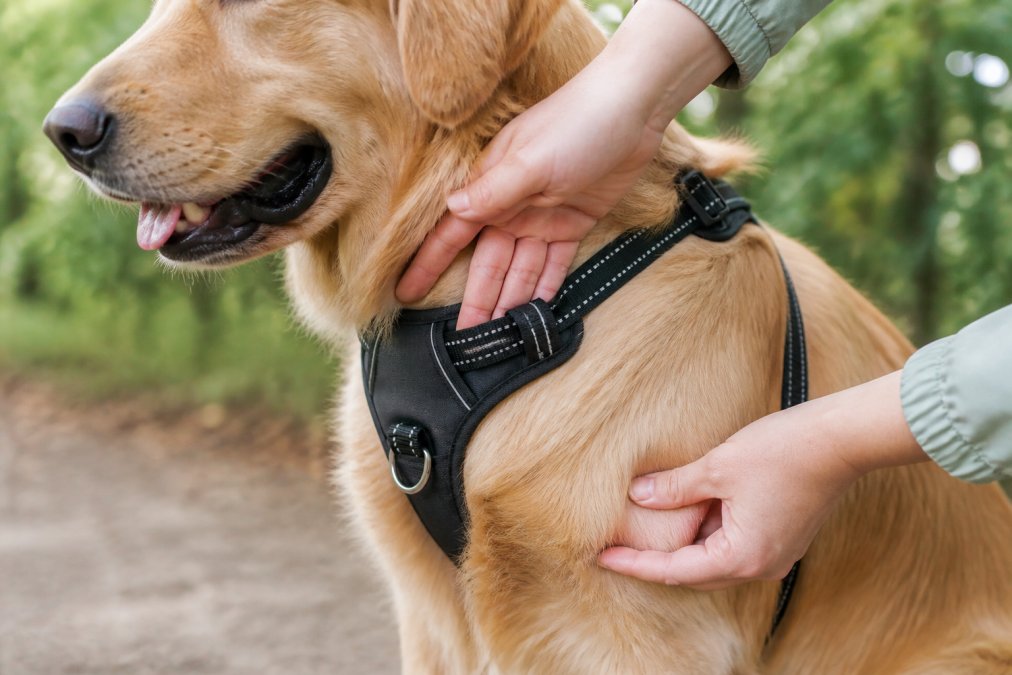
Once the harness is on, perform a two-finger test: you should slide two fingers comfortably under each strap without forcing them. If you can't fit two fingers, it's too tight; if you can fit more than two, it's too loose and will shift during walks.
Check positioning next. The chest plate should sit flat against your dog's chest without twisting or riding into the armpits. The girth strap should sit behind the front legs, not pressing into the armpit area. The back panel should lie flat along the spine without bunching.
Have your dog move around for a few minutes while wearing the harness. A properly fitted harness should stay in place without shifting side to side or rotating. If it creeps or twists, it's either too loose or positioned incorrectly for your dog's body shape.
Adjusting Straps to Prevent Armpit Rubbing
The armpit area is the most common site for harness irritation because it's sensitive, has thin hair, and moves constantly during walking. The girth strap should pass behind the front legs, not across them. If it runs too far forward, it will rub directly in the armpit fold with every step.
Loosen the chest straps slightly if they're pulling the girth strap too far forward. Sometimes the issue is how the front clips are positioned, if your harness has a front clip for no-pull training, ensure it's centered on the chest and not pulling the strap material to one side.
For dogs prone to armpit irritation, consider a harness with a wider girth strap or one designed specifically to avoid this area. The Paw Fit Gears No-Pull Dog Harness with 2 Leash Clips features adjustable straps and padded construction that reduces pressure on sensitive spots. The dual leash attachment points allow you to adjust tension without compromising fit, and the breathable padding minimizes friction.

Dog Harness Rubbing Armpits: Prevention and Solutions
When your dog develops rubbing in the armpit area, it's usually a sign that the harness geometry doesn't match your dog's body shape. Some dogs have narrower chests, others have pronounced ribs, and some have loose skin that bunches when straps tighten.
Identifying Friction Points and Hot Spots
Hot spots are areas where hair has been rubbed away and the skin is red, inflamed, or weeping. Check your dog weekly for early signs: hair loss in a small patch, redness that doesn't fade after removing the harness, or your dog licking or scratching at the same spot repeatedly.
The girth strap creates the most visible hot spots because it's the widest strap and moves the most. The chest plate can cause problems too, especially in dogs with prominent sternum bones. Feel along your dog's body while the harness is on and press gently on areas where straps make contact. If your dog flinches or shows sensitivity, that's a pressure point needing adjustment.
Using Strap Wraps and Fleece Covers
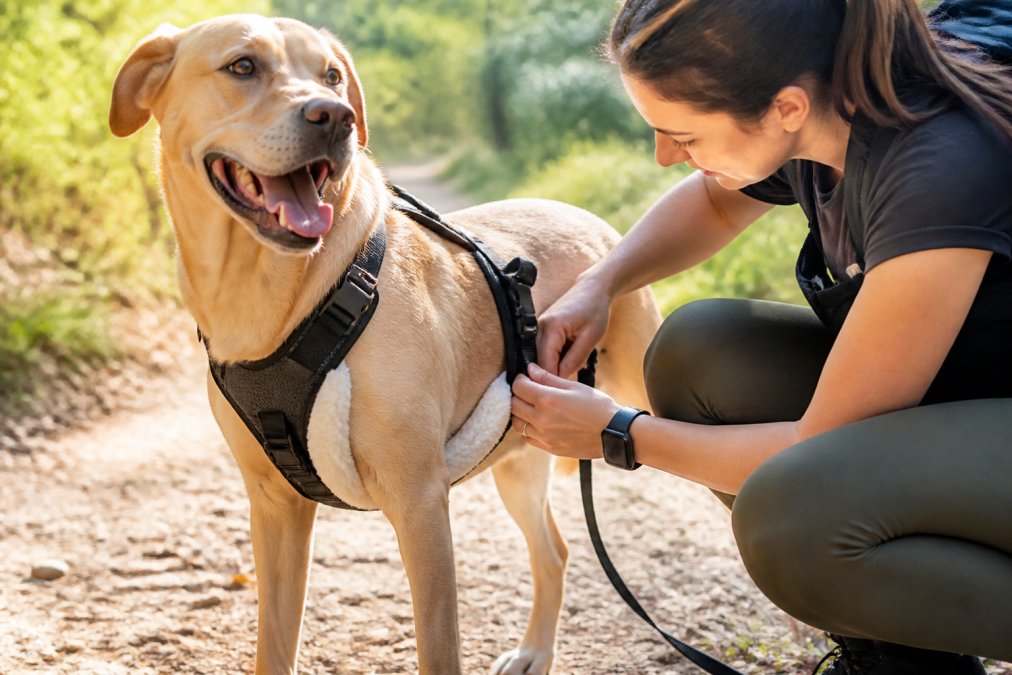
Strap wraps and fleece covers are simple, effective tools for reducing friction without replacing your harness. These thin sleeves create a soft barrier between the harness material and your dog's skin by absorbing friction and distributing pressure over a wider area.
Fleece covers are particularly useful for the girth strap, typically 2-4 inches wide and held in place with velcro or stitching. You can find commercial versions or make your own from soft fleece fabric. Apply them to any strap that contacts your dog's skin directly, especially in the armpit and rib areas.
Strap wraps come in neoprene, fleece, and specialized anti-chafe fabrics. Neoprene offers durability and moisture-wicking properties, while fleece provides maximum softness (peer-reviewed research). Choose breathable, washable materials since these covers will absorb sweat and dirt during outdoor activities.
When applying a strap wrap, ensure it sits flat against the strap and doesn't slide during movement. Test it during a short walk before committing to longer outings.
Choosing Materials and Padded Designs
The material your harness is made from directly impacts whether it causes chafing. Stiff nylon and polyester lack the softness needed for sensitive skin. Harnesses designed with padding, mesh, or fleece-lined straps create a gentler contact surface that reduces friction and allows air circulation.
Benefits of Padded Harness Designs
Padded harnesses distribute pressure more evenly than flat-strap designs because the cushioning absorbs impact and reduces point-loading on the skin. This is especially important for dogs that pull hard or engage in high-energy activities. Padded designs also tend to be wider, spreading the load across a larger area of skin instead of concentrating pressure on a narrow line.
The downside is that padding can trap moisture if not designed with breathable materials. Look for padding combined with moisture-wicking mesh or ventilation channels that allow air to flow.
Paw Fit Gears offers padded options including the No-Pull Dog Harness with 2 Leash Clips, featuring soft padding throughout and adjustable straps, and the No-Pull Dog Harness with Front Clip and Heavy Duty design, ideal for large dogs that pull during training.

Selecting Breathable and Moisture-Wicking Fabrics
Moisture-wicking fabrics pull sweat away from the skin and allow it to evaporate, keeping your dog's skin dry and less prone to irritation. These materials are typically blended synthetics like polyester-spandex or nylon with special treatments that enhance water transport.
Breathable mesh panels allow air circulation around harness contact points, especially valuable in the armpit and girth strap areas where moisture accumulates. A harness with mesh panels will dry faster after wet walks and won't create a sauna effect that softens skin and increases friction sensitivity.
When choosing a harness, feel the material in your hands. Quality materials should be soft but not flimsy, with a smooth surface that won't snag hair. Avoid harnesses with rough seams or stiff edges. Terms like "breathable," "moisture-wicking," and "padded mesh" indicate thoughtful design that prioritizes comfort.
Treating Dog Harness Sores and Skin Irritation
If your dog already has harness sores, immediate action prevents them from worsening into serious infections. Stop using the harness temporarily and switch to a collar or different harness style while the skin heals.
Recognizing Signs of Harness Irritation
Early signs include hair loss in a small patch, mild redness that fades within an hour of removing the harness, or your dog licking the area more than usual. More serious signs include open sores, scabs, swelling, or redness that doesn't fade after several hours. If you see discharge, smell an odor, or notice your dog in pain, contact your veterinarian.
Post-Chafing Skin Care Routine
Keep the affected area clean and dry. Gently wash with lukewarm water and mild soap, then pat dry thoroughly. Allow the area to air dry whenever possible, as moisture accelerates healing problems. If your dog licks excessively, a loose cone or e-collar prevents further damage.
For minor irritation, a veterinary-recommended topical cream with aloe, calendula, or zinc oxide can soothe the skin. Monitor healing progress daily, most minor harness sores improve within 3-5 days once the irritating harness is removed. If the sore isn't improving or is spreading, schedule a veterinary appointment.
Maintenance and When to Replace Your Harness
A properly maintained harness lasts longer and maintains better fit, reducing chafing risk. Regular cleaning removes dirt, sweat, and bacteria that accumulate during use. Most harnesses can be hand-washed with mild soap and water, then air-dried completely.
Inspect your harness regularly for signs of wear: fraying straps, compressed or thinning padding, and cracks or loose connections. Replace your harness when padding is compressed, straps are torn, or the fit no longer matches your dog's body. Check the fit every few months, as weight gain, muscle development, or seasonal coat changes can affect how a harness sits.
Store your harness in a dry location away from direct sunlight. UV exposure degrades synthetic materials over time, making them brittle and more likely to cause chafing (peer-reviewed research).
Prevent Harness Chafing: Your Action Plan
Preventing harness chafing requires three concurrent actions: proper fit, appropriate materials, and regular monitoring. Start by measuring your dog accurately and selecting a harness designed for comfort. The Paw Fit Gears harnesses combine adjustable fit with padded construction specifically engineered to reduce friction and pressure points.
Perform the two-finger fit test and watch how the harness moves during activity. Make adjustments based on what you observe. If chafing develops despite proper fit, add fleece covers to problem areas and consider switching to a harness with moisture-wicking materials.
Establish a weekly inspection routine: check your dog's skin for early signs of irritation, clean the harness regularly, and replace it when wear becomes visible. This proactive approach catches problems before they become serious and keeps your dog comfortable during every walk, training session, and outdoor adventure.
Harness chafing is preventable with the right approach and equipment. Proper fit, quality materials, and regular maintenance eliminate this problem entirely. Paw Fit Gears designs harnesses with padded construction, adjustable straps, and breathable fabrics specifically to prevent the friction and pressure that cause chafing. Start with a properly fitted harness from a brand that prioritizes comfort, monitor your dog's skin weekly, and you'll keep your dog happy and pain-free through every adventure.
Frequently Asked Questions
How can I tell if my dog's harness is causing chafing?
Watch for red, irritated skin, hair loss, or open sores around the chest, armpits, and girth strap areas. Your dog may also excessively lick or bite at these spots. Check your dog's skin daily, especially after walks. If you notice any signs of harness irritation, remove the harness immediately and let the skin heal before resuming use.
What's the best way to fit a dog harness correctly to prevent chafing?
A properly fitted harness should allow two fingers to fit snugly between the harness and your dog's body at the chest, sides, and girth strap. The harness should not shift or rotate when your dog moves. Check the fit while your dog is standing and moving. Adjust straps evenly on both sides, and avoid over-tightening, which increases pressure distribution and friction points that cause harness burn.
Can I use anything to protect my dog's skin from harness rubbing?
Yes. Strap wraps, fleece covers, and soft padding designed for harnesses provide excellent protection against mechanical friction. You can purchase pre-made harness padding or wrap the girth strap and armpit areas with soft fleece fabric. Moisture-wicking materials help reduce sweat buildup, which contributes to contact dermatitis. Padded harness designs with breathable mesh also minimize rubbing and improve walking comfort.
How often should I clean my dog's harness to prevent skin problems?
Clean your harness every 2-4 weeks, or more frequently if your dog walks in wet or muddy conditions. Dirt and moisture trapped against your dog's skin can cause skin inflammation and dermatitis. Hand wash with mild soap and water, then air dry completely before use. Regular harness maintenance removes irritants and extends the life of the gear, reducing the need for replacement.
This article was written using GrandRanker