

Table of Contents
- Diagnose Why Your Dog Bed Is Sagging
- Check the Bed Frame and Support Structure
- How to Replace Dog Bed Stuffing and Restore Loft
- Choosing Dog Bed Replacement Foam for Lasting Support
- How to Repair a Torn Dog Bed Cover
- When to Replace a Dog Bed Instead of Repairing It
- Prevention and Maintenance Tips to Avoid Future Sagging
- Conclusion
- Frequently Asked Questions
Last Updated: October 5, 2026
Diagnose Why Your Dog Bed Is Sagging
A sagging dog bed is a loss of loft or structural support that makes the sleep surface dip, flatten, or bottom out under your dog's weight.
You just need to know whether the problem lives in the filling or in the frame.
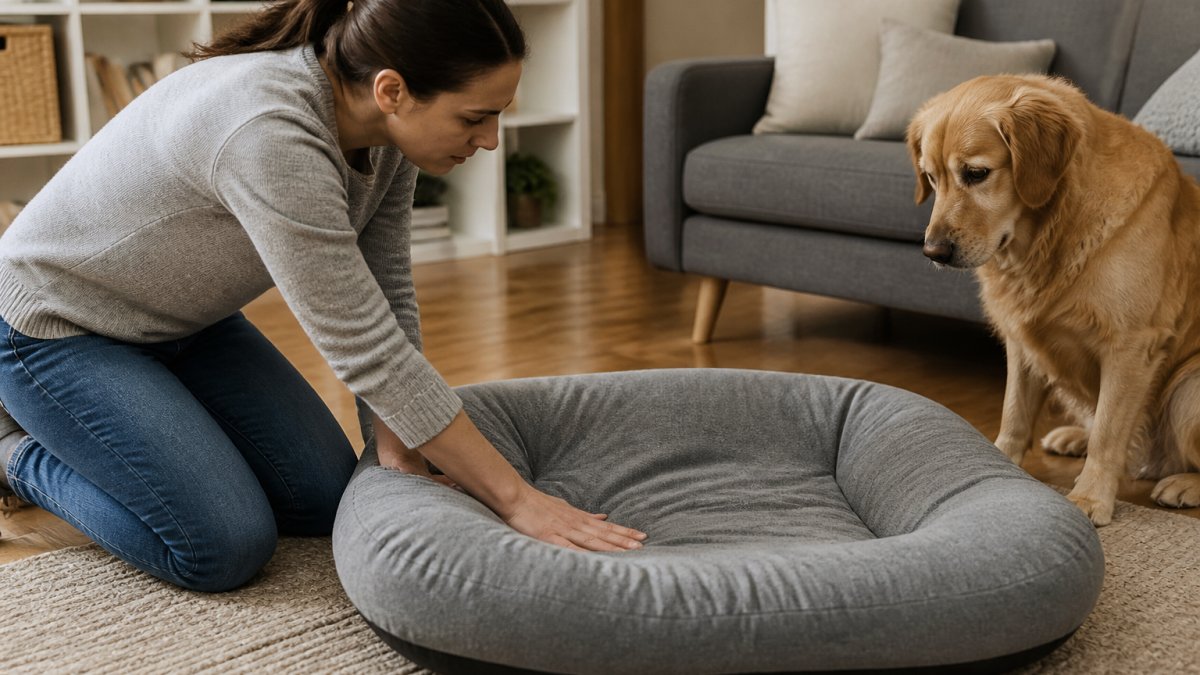
Filling Breakdown vs. Structural Failure
Filling breakdown and structural failure look alike from across the room. They need opposite repairs.
Filling breakdown is when the stuffing, foam, or poly-fill loses its bounce. The cover still fits. The bed just feels flat and thin.
Structural failure is when the frame, legs, or support base gives way. The bed may look fine until your dog steps in.
Test it in ten seconds:
- Press the center with your palm. Does it spring back? The filling is fine.
- Lift one corner. Does the frame flex or creak? That's structural.
- Check the base. A hard bottom with soft top means the frame is sound.
Most "sagging" complaints trace back to cheap filling, not broken frames. Poly-fill compacts under a dog's body weight over time. Memory foam holds its shape far longer.

Check the Bed Frame and Support Structure
Inspect the frame before you touch the filling. A weak frame will flatten any new stuffing within weeks, so diagnosing the structure first prevents you from wasting money on foam that will just bottom out again.
Start underneath and work outward. Look for these problems:
- Cracked or split wooden slats
- Bent or missing metal bars
- Loose or stripped bolts at the corners
Elevated beds with crossbars are the most common offenders. The failure mechanism is simple: the fabric panel carries the dog's weight, the panel stretches over time, the crossbars bow under the load, and the whole platform dips in the middle.
Tighten Legs, Bolts, and Crossbars
Grab a wrench and work through every connection. Loose hardware is the easiest fix on this list.
- Tighten all bolts and screws at the legs and corners
- Re-seat any crossbar that has popped out of its bracket
- Add a center support bar if the frame has none
A sheet of plywood cut to size can rescue an elevated bed that sags in the middle. Sand the edges so splinters don't catch the fabric. For a typical medium elevated bed, a 1/2-inch plywood panel cut to the inner frame dimensions is enough to bridge the gap between crossbars.
Restore Support on an Elevated Bed
If the frame is sound but the platform still dips, the fabric panel is the problem. Two fixes work:
- Add a rigid deck. Cut plywood to the inner dimensions of the frame and lay it across the crossbars. This converts a fabric-suspended platform into a solid deck and eliminates the dip entirely.
- Re-tension the panel. Some elevated beds have adjustable straps or a laced panel underneath. Tighten or re-lace them so the fabric sits taut before your dog steps in.
Measure the inner frame opening (length and width) before you cut anything. A deck that's too small will slide; one that's too large won't seat and can tear the fabric at the corners.
Match Support Spacing to Your Dog's Size
Crossbar spacing matters more than most owners realize. A common pattern is that beds rated for large dogs ship with the same crossbar spacing as small-dog models, which is why heavy dogs sag them quickly.
- Small dogs (under 25 lb): crossbars every 12-14 inches are usually fine.
- Medium dogs (25-60 lb): aim for 8-10 inches between supports.
- Large dogs (60-100 lb): 6-8 inches, plus a center bar.
If your frame can't be modified to add supports, a plywood deck is the practical workaround.
If the frame is cracked beyond repair, skip ahead to our replacement guidance below. Patching a snapped support rarely holds, and a repaired crack will fail again under a dog's weight.
How to Replace Dog Bed Stuffing and Restore Loft
Replacing dog bed stuffing is the fastest way to bring a flattened bed back to life.
Here's the step-by-step:
- Unzip the cover and pull out the old filling. Bag it for disposal.
- Measure the inner dimensions of the cover.
- Buy replacement poly-fill or foam to match those measurements.
- Add filling in layers, not all at once.
- Test the loft with your hand after each layer.
- Zip the cover and let your dog test it.
Don't overstuff. A bed that's too firm won't let your dog nestle, and the seams will strain.
For a round cuddler bed, add extra filling around the raised edges. That's where the head and neck support lives.
If the zipper is broken, you can sew a new one in or close the cover with a hand stitch after refilling.
Choosing Dog Bed Replacement Foam for Lasting Support
Dog bed replacement foam determines how long your fix lasts. The wrong foam flattens in weeks. The right one holds for years. This section covers how to measure, what to buy, and how to keep the materials safe around a dog that chews.
Washable Donut Dog Bed – Calming Round Cuddler for Medium & Large Dogs →
Measure Before You Buy
Foam is sold by thickness and by sheet size, so match both to your cover.
- Unzip the cover and pull out the old foam.
- Measure the inner length, width, and thickness of the cover, not the outer dimensions.
- Add about 1/2 inch to length and width so the foam fills the corners snugly without bulging the seams.
- Match the thickness to the original. Going thicker than the cover allows will strain the zipper.
For a round cuddler or bolster bed, measure the flat sleep surface separately from the raised rim. The rim usually needs a firmer foam so it holds its shape when your dog leans against it.
Foam Types Compared
| Foam Type | Support Level | Lifespan | Best For |
|---|---|---|---|
| Poly-fill | Low | 6-12 months | Cheap quick fixes |
| Egg crate foam | Medium | 1-2 years | Light dogs, budget beds |
| Memory foam | High | 3-5 years | Senior dogs, large breeds |
| CertiPUR-US foam | High | 3-5 years | Joint support, daily use |
| High-density polyurethane | High | 3-5 years | Large breeds, chewers |
For large breeds and senior dogs, go with high-density memory foam. It distributes weight and won't bottom out under a heavy dog. Look for CertiPUR-US certification, which confirms the foam meets independent safety and emissions standards for indoor use (About Certified Foam).
Density and Firmness: What the Numbers Mean
Two specs matter more than brand:
- Density is measured in pounds per cubic foot (lb/ft³). Higher density means the foam resists compression longer. For dog beds, look for 2.5 lb/ft³ or higher. Foam under 1.8 lb/ft³ compacts quickly under a large dog.
- Firmness is measured as Indentation Load Deflection (ILD). A common range for dog beds is 35-55 ILD. Lower numbers feel soft and plush; higher numbers feel firm and supportive. Senior dogs and large breeds usually do best in the 45-55 ILD range.
If a listing doesn't publish density or ILD, treat it as a budget foam and expect to replace it sooner.
Safe Materials for Dogs That Chew
Loose stuffing, needles, adhesives, and small parts are hazards around a dog that chews. A few practical rules:
- Never use loose shredded foam from packaging or old cushions. It compacts fast and can contain materials that aren't safe for a dog that chews.
- Avoid foam with strong chemical odors. A noticeable smell usually means it hasn't finished off-gassing.
- Let new foam air out in a well-ventilated room for 24-48 hours before it goes into the cover.
Match Foam to Bed Type
- Pillow-style beds: one flat slab of memory foam or high-density polyurethane, cut to the inner cover dimensions.
- Bolster beds: a flat slab for the sleep surface plus firmer foam or poly-fill for the raised rim.
- Donut and cuddler beds: loose poly-fill or shredded memory foam works well because it lets the dog nest; top it off with a firmer base layer so the bottom doesn't bottom out.
Our Orthopedic Memory Foam Dog Bed uses high-density CertiPUR-US certified foam for joint support with a waterproof, washable cover. If you're replacing foam in a bed you already own, match the thickness to your cover's depth and check the density spec before you buy.
How to Repair a Torn Dog Bed Cover
Fixing a torn dog bed cover takes 15 minutes for a small rip and about an hour for a full seam repair.
Match the repair to the damage:
- Small rip (under 1 inch): Use a fabric patch or iron-on patch.
- Medium tear (1-3 inches): Hand-sew with a ladder stitch.
- Split seam: Turn the cover inside out and re-stitch along the original line.
Use heavy-duty thread and a needle made for upholstery fabric. For chewed areas, ballistic nylon patches outlast standard fabric patches by a wide margin.
If the cover is shredded across multiple panels, a replacement cover is cheaper than the labor.
When to Replace a Dog Bed Instead of Repairing It
Replace the bed when the frame is cracked, the foam is compressed through, or repairs would cost more than a new bed. Repair wins for filling and fabric.
Use this rule of thumb:
- Filling flat or clumped? Replace the filling.
- Small tear or split seam? Repair the cover.
- Cracked frame or snapped supports? Replace the bed.
A bed that has been repaired twice in a year is telling you something. Cheap materials fail repeatedly.
Our Washable Donut Dog Bed is built for daily use with a machine-washable cover and non-slip waterproof base.

Prevention and Maintenance Tips to Avoid Future Sagging
Prevention comes down to three habits: rotate, wash, and reinforce. Beds that get all three last years longer.
- Rotate the bed every few weeks so weight spreads evenly
- Wash the cover monthly to stop oils and dirt from breaking down foam
- Vacuum or brush the sleep surface to keep filling from clumping
For heavy chewers, place a durable mat or blanket over the bed. It takes the abuse instead of the cover.
Conclusion
A sagging dog bed doesn't always mean a new purchase. Diagnose the cause first, then fix the filling, tighten the frame, or patch the cover. That approach saves money and keeps your dog comfortable.
When a bed is beyond repair, choose one built to last. At Paw Fit Gears, we offer durable beds with washable covers, orthopedic foam, and non-slip bases designed for daily use.
Frequently Asked Questions
Can a sagging dog bed cause discomfort for a dog?
Yes, a sagging dog bed can cause discomfort, especially for older dogs or those with joint issues. When the bed loses support, your dog may sink into the middle, leading to poor posture and pressure on hips and elbows. This can result in restless sleep, difficulty getting up, or even worsening of conditions like arthritis. If you notice your dog avoiding the bed or shifting frequently, it's time to fix the sagging dog bed or replace it.
How do I replace the filling in a dog bed?
To replace dog bed stuffing, unzip the cover and remove the old filling. Measure the interior dimensions, then choose a replacement like shredded memory foam or poly-fill. Stuff the new filling evenly, adding extra in sagging areas. For a more supportive option, consider a solid foam slab cut to size. Zip the cover back up and fluff the bed. If the cover is worn, you may also need to repair or replace it.
How can I make a sagging dog bed supportive again?
Start by diagnosing the cause: if the filling is compressed, replace it with high-density foam or add a support board underneath. For framed beds, tighten bolts and add crossbars. You can also place a piece of plywood cut to size under the cushion to prevent sagging. If the bed is severely damaged, replacing it with a new orthopedic bed may be more cost-effective. Regular fluffing and rotating the bed can also help maintain support.
What are the best materials for repairing a dog bed?
For covers, use durable fabrics like ballistic nylon or canvas, and heavy-duty thread for stitching. For filling, memory foam or high-density poly-fill works well. If reinforcing, use plywood or wooden slats for support. Always choose pet-safe, non-toxic materials. For a quick fix, iron-on patches can cover small tears, but for larger damage, sewing a patch is more secure. Ensure any glue or adhesive is fully cured and safe for pets.