

Table of Contents
- How We Evaluated Memory Foam Dog Beds
- The Verdict: Is a Memory Foam Dog Bed Worth It?
- Best Orthopedic Dog Beds for Joint Pain
- Benefits of Memory Foam for Senior Dogs
- Durable Chew Proof Dog Beds: What to Look For
- Cost-Per-Use Analysis: The Long-Term Value
- Temperature Regulation and Off-Gassing Concerns
- Conclusion
- Frequently Asked Questions
Last Updated: September 20, 2026
How We Evaluated Memory Foam Dog Beds
A memory foam dog bed is worth it when your dog shows joint stiffness, struggles on hard floors, or is a senior needing pressure point relief. At Paw Fit Gears, we evaluated beds on foam density, cover durability, waterproofing, and washability.

The Verdict: Is a Memory Foam Dog Bed Worth It?
Yes, a memory foam dog bed is worth it for most dogs over 30 pounds, and close to essential for seniors or dogs with arthritis. The foam distributes weight across pressure points instead of letting hips and elbows sink into hard padding.

Best Orthopedic Dog Beds for Joint Pain
The best orthopedic dog beds for joint pain combine high-density foam, a waterproof barrier, and a washable cover. Two options from our catalog cover nearly every case: one for sprawlers, one for dogs that curl.
Orthopedic Memory Foam Dog Bed - Waterproof, Washable with Bolsters for Large Dogs
Our top pick for large breeds and seniors with joint issues. It uses orthopedic egg crate foam with CertiPUR-US certification, independent standards for low emissions and restricted materials, and the easiest thing to check when comparing orthopedic beds.
Washable Donut Dog Bed - Calming Round Cuddler for Medium & Large Dogs
For dogs that nestle rather than sprawl, the donut shape does something a flat bed cannot: raised edges give head and neck support and create the enclosed feeling anxious dogs seek, which is why this style is often recommended for separation anxiety.
Benefits of Memory Foam for Senior Dogs
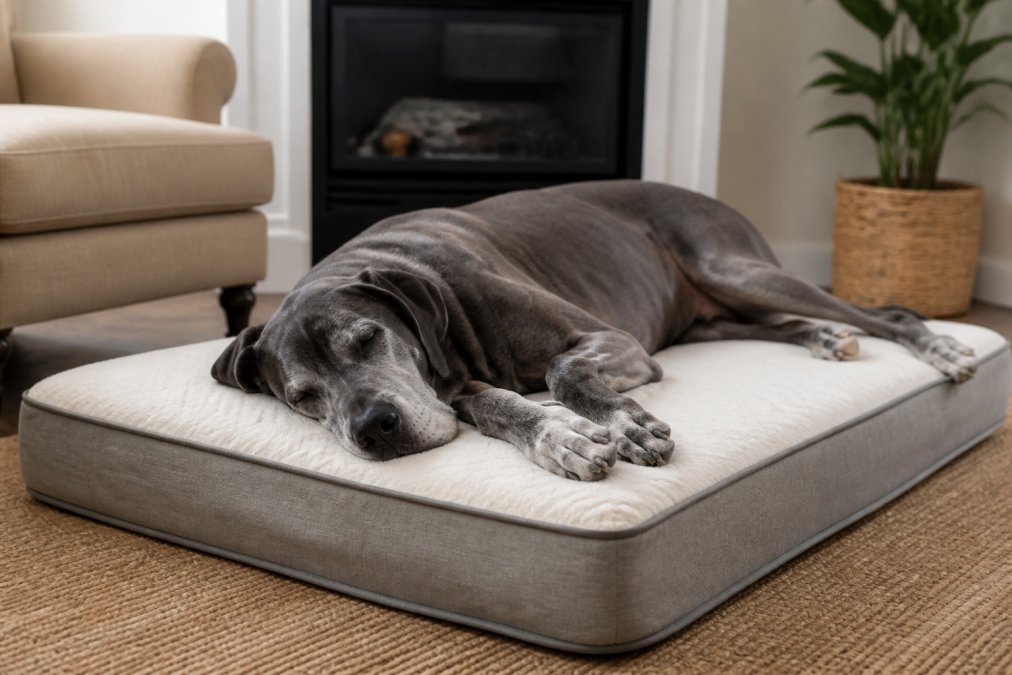
Memory foam helps senior dogs by changing how body weight is distributed across a lying surface. Instead of concentrating load on the hips, elbows, and shoulders, the foam deforms under heat and weight and spreads that load across a wider contact area. Older dogs lose muscle mass along the spine and around the joints, so they have less of their own padding than they did at two years old; foam replaces some of what aging takes away.
Which senior dogs benefit most
The dogs that see the clearest improvement tend to fall into a few groups:
- Large and giant breeds, Great Danes, Mastiffs, and Newfoundlands carry more weight per joint, so the pressure-relief effect is larger. A 120-pound dog on a thin poly-fill bed is essentially lying on the floor.
- Dogs with diagnosed arthritis or hip dysplasia, These dogs need consistent, firm support rather than plush softness. A bed that is too soft lets the joint sink past its comfortable range.
- Dogs recovering from surgery, Post-operative rest is easier when the dog can stay in one position without pressure pain. Ask your vet whether a firmer or softer surface suits the procedure.
- Deep-chested breeds prone to bloat, Some owners find that an elevated or well-supported bed helps a dog stay comfortable after meals, though this is a comfort measure, not a medical treatment.
What memory foam does not fix
Memory foam is a comfort product, not a treatment. It will not reverse arthritis, restore lost muscle, or replace veterinary care. If your senior dog is limping, losing mobility quickly, or showing pain when rising, that is a veterinary conversation first. A better bed can support the treatment plan, but it does not substitute for one.
Matching the bed to how your senior sleeps
A dog that sprawls flat needs a flat orthopedic slab with even density. A dog that curls tightly or leans against walls needs a bolstered or donut shape for head and neck support. Watch your dog for two or three nights before buying, sleeping posture tells you more than any breed chart.
Durable Chew Proof Dog Beds: What to Look For
No fabric bed is truly chew proof, and any product claiming otherwise is overselling. What you can find is chew resistant, and the difference comes down to three things: cover material, seam construction, and whether the foam is accessible if the cover fails.
Cost-Per-Use Analysis: The Long-Term Value
Cost per use is the number that actually tells you whether a memory foam dog bed is worth it. Divide the price by the nights your dog will realistically use it, and the cheap bed stops looking cheap.
| Bed Type | Price | Typical Lifespan | Cost Per Night |
|---|---|---|---|
| Low-density foam | Lower upfront | 4-8 months | Highest |
| High-density orthopedic | $48.54 | 2-3 years | Lowest |
| Poly-fill cuddler | $53.89 | 1-2 years | Moderate |
Temperature Regulation and Off-Gassing Concerns
Two objections come up more than any others when dog owners consider memory foam: heat retention and chemical smell. Both are real, and both have straightforward answers most listings never explain.
Orthopedic Memory Foam Dog Bed →
Why memory foam traps heat
Memory foam is temperature-sensitive by design. It softens in response to body heat, which is exactly how it molds to your dog's shape. That same property means the foam holds warmth instead of releasing it. A thick memory foam bed can get uncomfortably hot, especially for double-coated breeds in summer.
How to keep a memory foam bed cool
A few practical fixes work better than others:
- A breathable cover, Look for covers described as breathable or moisture-wicking rather than plush fleece. Fleece feels soft but traps heat.
- A cooling gel layer, Some beds add a gel-infused top layer designed to pull heat away from the surface. The effect is modest but noticeable for hot sleepers.
- Airflow underneath, A bed raised on a cot-style frame lets air move under the foam. A bed sitting flat on carpet has nowhere for heat to go.
- A cooling mat on top, A separate pressure-activated cooling mat can be placed over the foam in summer and removed in winter.
For cold-weather comfort, the Self-heating pet mat at $49.99 adds warmth without electricity, which pairs well with a foam bed in winter.

Off-gassing: what the new-bed smell actually is
Off-gassing is the new-foam smell from residual compounds released during manufacturing. It is most noticeable in the first few days and fades within days to a couple of weeks in a ventilated room. Unwrap the bed in a garage or spare room and let it air out for 24 to 72 hours; the smell is typically gone before your dog uses it.
Non-toxic materials and sensitive dogs
Non-toxic materials and hypoallergenic covers matter most for dogs with skin sensitivities or respiratory issues. If your dog scratches at bedding or sneezes around new furniture, prioritize certification over price. A dog with allergies may react to dyes, adhesives, or untreated foam, so a washable cover and certified foam core reduce triggers.
The bottom line on heat and smell
Neither issue should stop you from buying memory foam. Heat retention is manageable with a breathable cover or cooling layer, and off-gassing fades on its own. Certification is the one thing worth checking before you buy, because it tells you the foam was tested for the compounds behind both the smell and the health concerns.
Conclusion
Choosing the right bed is harder than it should be, because listings all sound the same and foam quality is buried in details most sellers do not publish. Check density, certification, and whether the cover is genuinely washable, those three things predict performance better than marketing copy.
Frequently Asked Questions
Are memory foam beds good for dogs?
Yes, memory foam dog beds can be excellent for dogs, especially those with joint issues or senior dogs. The foam conforms to your dog's body, providing pressure point relief and supporting spinal alignment. High-density foam also reduces sagging over time. However, memory foam retains heat, so dogs that run warm may prefer a bed with cooling gel. Look for CertiPUR-US certified foam to avoid harmful chemicals.
What are the downsides of memory foam beds for pets?
The main downsides include heat retention, potential off-gassing, and higher upfront cost. Memory foam can trap body heat, making it uncomfortable for dogs in warm climates. Some lower-quality foams may emit odors initially. Also, memory foam beds are not chew-proof, so destructive chewers may damage them quickly. However, a durable chew proof dog bed with a tough cover can mitigate this.
Do senior dogs specifically need memory foam beds?
Senior dogs often benefit greatly from memory foam beds because they provide orthopedic support for aging joints and arthritis. The foam distributes weight evenly, reducing pressure on hips and elbows. A bed with bolstered edges also offers cervical support for head and neck. For senior dogs with mobility issues, a low-profile memory foam bed is easier to step onto.
How do you clean a memory foam dog bed?
Most memory foam dog beds come with a removable, machine-washable cover. Unzip the cover and wash it on a gentle cycle with pet-safe detergent, then air dry. The foam core itself should not be machine washed; spot clean with a damp cloth and mild soap, then let it air dry completely. Regular vacuuming helps remove hair and dander between washes.
Which is better, egg crate or memory foam for dogs?
Memory foam generally offers better orthopedic support and durability than egg crate foam. Egg crate foam is lighter and cheaper but tends to flatten quickly and provides less pressure relief. Memory foam, especially high-density versions, maintains its shape and supports joints more effectively. For dogs with arthritis or senior dogs, memory foam is usually the better choice.