

Table of Contents
- Why Orthopedic Dog Beds Matter for Large Breeds
- Signs Your Dog Needs an Orthopedic Bed
- Orthopedic Dog Bed Thickness Requirements Explained
- What to Look for When You Buy Chew Proof Dog Beds
- Memory Foam Density and Joint Support
- Durability Features That Actually Last
- Orthopedic Beds for Specific Needs
- Conclusion
Last Updated: August 23, 2026
Why Orthopedic Dog Beds Matter for Large Breeds
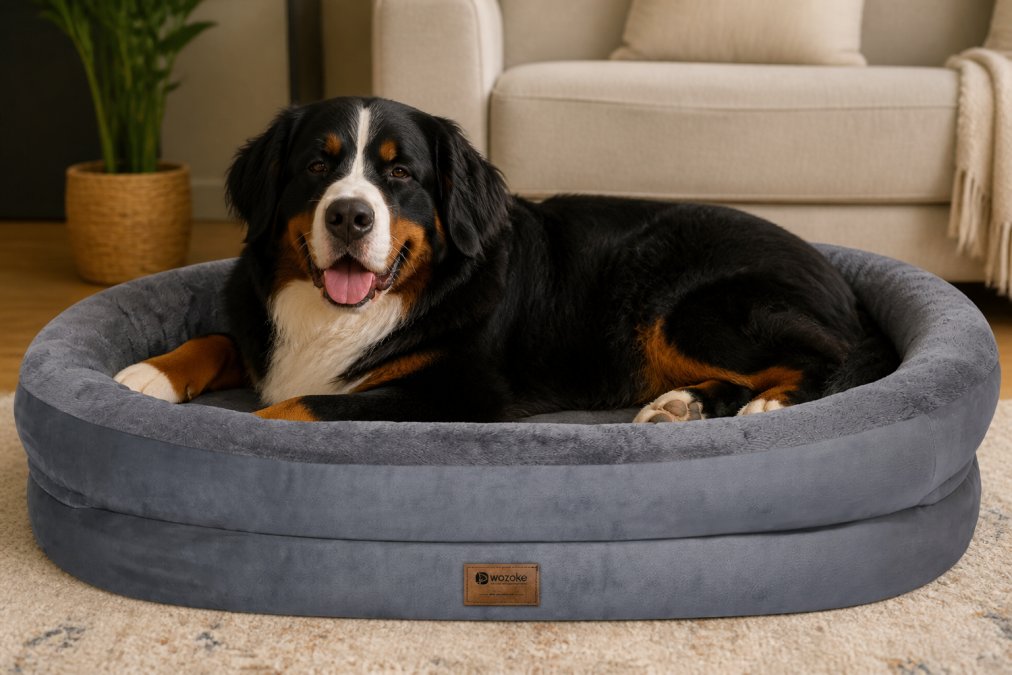
Large breed dogs face unique physical demands. Their joints carry more weight throughout the day, and without proper support, they develop problems that compound over time. An orthopedic dog bed isn't a luxury, it's preventive care built into furniture.
The difference between a standard bed and an orthopedic one comes down to how the bed distributes your dog's weight. A regular bed compresses under pressure and concentrates force on pressure points like hips, shoulders, and elbows. An orthopedic dog bed for large breeds uses high-density memory foam to spread that weight across the entire surface, reducing strain on joints and bones.
This matters most for dogs over 60 pounds. Their skeletal systems work harder simply existing. Add in aging, arthritis, hip dysplasia, or post-surgical recovery, and the right bed becomes essential.
At Paw Fit Gears, we've designed beds specifically for this challenge. The Orthopedic Memory Foam Dog Bed with waterproof cover and bolsters provides the kind of joint support that keeps large dogs comfortable through their senior years. The key is density, the foam needs to be firm enough to provide real support, not so soft that it collapses under a 90-pound dog's weight.

Signs Your Dog Needs an Orthopedic Bed
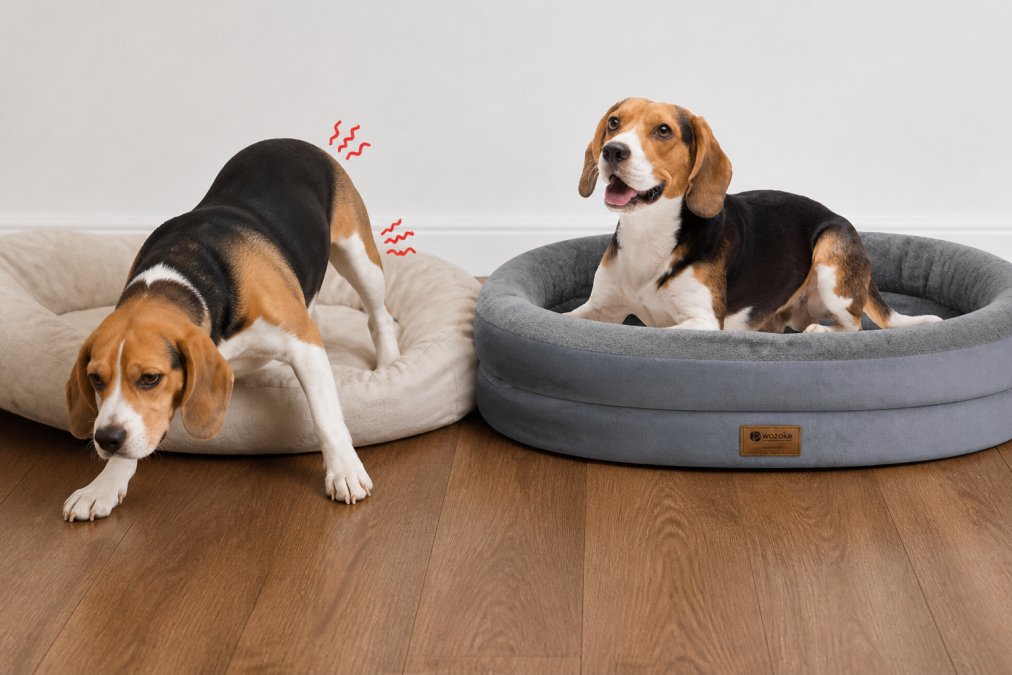
Your dog needs orthopedic support when movement becomes noticeably harder. Watch for these specific signals: stiffness when standing up, reluctance to jump or climb stairs, limping after exercise, or spending most of the day in one spot instead of moving around the house.
Senior dogs show the clearest need. Once a dog hits seven or eight years old, their joints have accumulated wear (aaha.org). You'll see them take longer to rise from a lying position, or they'll favor one leg slightly. These aren't signs of laziness, they're signs of joint pain and reduced mobility.
Dogs recovering from surgery need orthopedic beds immediately after coming home. Vets recommend keeping post-surgical dogs on supportive surfaces that prevent them from putting full weight on healing joints. A standard bed allows them to sink and twist in ways that stress surgical sites.
Large breeds with hip dysplasia or arthritis benefit dramatically from memory foam support. These conditions cause chronic joint inflammation. A bed that reduces pressure on those joints means less pain and better sleep quality, which accelerates healing and improves daily comfort.
Even young, healthy large dogs benefit from orthopedic support as a preventive measure. Starting a giant breed on proper support early can delay or prevent joint problems that might otherwise emerge by age six or seven.
Orthopedic Dog Bed Thickness Requirements Explained
Thickness directly affects support quality. Most orthopedic beds range from 4 to 6 inches thick. Anything thinner than 4 inches doesn't provide enough foam to properly distribute weight. Anything thicker than 6 inches becomes unnecessarily dense and expensive without adding meaningful benefit.
For dogs under 50 pounds, 4 inches is adequate. The foam compresses enough to conform to their body shape while still maintaining support structure underneath.
For dogs 50-80 pounds, 5 inches is ideal. This thickness provides the pressure relief that prevents joint stress while maintaining the firmness needed to support heavier weight.
For dogs over 80 pounds, 6 inches is the minimum (aaha.org). Giant breed dogs need that extra density to prevent the foam from bottoming out. When foam compresses completely, it loses all support value, the dog ends up on a hard surface, defeating the entire purpose.
The relationship between thickness and density matters more than thickness alone. A 4-inch bed with high-density foam (typically 3.5+ pounds per cubic foot) outperforms a 6-inch bed with low-density foam. High-density foam resists compression better and maintains support longer as the dog ages.
Machine-washable covers add practical value without affecting thickness requirements. The Washable Donut Dog Bed from Paw Fit Gears uses a 5-inch memory foam core with a removable, washable cover, hitting the sweet spot for most large breeds. The cover protects the foam while remaining easy to clean.

What to Look for When You Buy Chew Proof Dog Beds
Chew resistance starts with fabric choice. Standard polyester covers tear easily under sustained chewing. Look for beds with ballistic nylon or reinforced canvas covers, materials originally designed for heavy-duty use. These fabrics resist puncture and tearing far better than soft fleece.
Stitching quality determines how long a bed survives aggressive use. Double-stitched seams hold better than single-stitched ones. Reinforced stress points, especially around corners and bolster edges, prevent unraveling when dogs grab and shake the bed. Examine the seam pattern; quality beds have stitching that follows the fabric grain and includes multiple passes.
Waterproof liners protect the foam from accidents and damage. A dog that chews through the cover will reach foam. A waterproof inner layer prevents urine, water, or saliva from soaking the foam core and creating permanent damage. This is non-negotiable for dogs with any history of destructive behavior.
Bolster design affects durability. Flat, thin bolsters tear more easily than thick, structured ones. A good bolster uses multiple layers of fabric and maintains its shape even when chewed. The bolster should be tightly stitched to the base, not just glued.
Test the zipper quality if the cover is removable. Cheap zippers jam, separate, or break after a few wash cycles. Quality zippers use metal sliders and reinforced tape. This matters because you'll be washing the cover regularly to maintain the bed, a broken zipper makes the bed unusable.
Waterproof covers add another layer of protection. The Orthopedic Memory Foam Dog Bed from Paw Fit Gears features a waterproof outer cover that resists damage from moisture and minor chewing while the machine-washable fleece layer provides comfort. This dual-layer approach extends bed life significantly.
Memory Foam Density and Joint Support
Memory foam density is measured in pounds per cubic foot. Standard foam runs 1.5 to 2.5 pounds per cubic foot, it's cheap and comfortable for brief use, but it compresses quickly under sustained weight. Orthopedic foam starts at 3 pounds per cubic foot and goes up to 5+ for premium beds.
The density determines how much weight the foam can support before bottoming out. A 100-pound dog on 2-pound density foam will compress it completely within weeks. The same dog on 4-pound density foam will see minimal compression even after months of use.
High-density foam maintains its shape longer, which means consistent joint support throughout the bed's lifespan. This is crucial for dogs with arthritis or hip dysplasia, they need reliable support every single day, not just when the bed is new.
CertiPUR-US certification indicates the foam meets safety and performance standards (certipurusa.org). Certified foam is free from harmful chemicals and meets durability requirements. This certification matters for dogs with sensitive skin or respiratory issues. Paw Fit Gears uses CertiPUR-US certified foam in their orthopedic beds, ensuring both safety and longevity.
Egg crate foam, the textured, waffle-like surface, increases surface area and improves airflow compared to solid foam. This design reduces heat buildup, which matters for large dogs that generate significant body heat. The texture also conforms more closely to your dog's body shape, improving pressure relief.
Temperature regulation becomes important for dogs that sleep in warm rooms. High-density memory foam can retain heat, making some dogs uncomfortable. Beds with breathable fabric covers and ventilated foam designs help dissipate heat while maintaining support.
Durability Features That Actually Last
Reinforced stitching is the first durability indicator. Beds that survive years of use have seams that are stitched multiple times, with extra reinforcement at corners and stress points. This prevents the cover from separating from the base even when dogs jump on and off repeatedly.
Tear-resistant fabric matters more than softness. Dogs don't care if their bed feels like silk, they care if it's comfortable. A bed made from tough, slightly coarser fabric outlasts one made from delicate fleece by years. Ballistic nylon and heavy canvas provide durability that standard polyester cannot match.
Non-slip bottoms prevent the bed from shifting around on hardwood or tile floors. This reduces stress on seams and keeps the bed in place, extending its lifespan. A bed that slides across the floor gets pulled at odd angles, stressing the seams and cover.
Waterproof liners protect the foam core from moisture damage. When a bed gets wet, from spilled water, accidents, or high humidity, the foam absorbs moisture and begins breaking down. A waterproof barrier prevents this, preserving the foam's support structure for years.
Removable, machine-washable covers extend bed life by protecting the foam from dirt, oils, and allergens. A cover that can be washed regularly stays cleaner and prevents buildup that degrades fabric. The Paw Fit Gears beds feature removable covers specifically designed for durability through repeated washing.
Weight capacity ratings indicate how much stress the bed can handle. A bed rated for 100 pounds used by a 150-pound dog will compress faster and wear out sooner. Matching the bed's weight capacity to your dog's actual weight ensures the foam maintains its support structure throughout the bed's lifespan.
Orthopedic Beds for Specific Needs
Senior dogs benefit most from maximum support and ease of access. A bed with lower sides allows aging dogs to step in without jumping. High-density foam provides the joint relief that reduces morning stiffness. The Orthopedic Memory Foam Dog Bed's 360-degree bolster design gives senior dogs something to lean against, making it easier to stand up.
Dogs recovering from surgery need beds that prevent twisting and provide stable support. A bed with raised sides keeps post-surgical dogs in a neutral position, preventing them from putting weight on healing joints. The firmness prevents them from sinking into soft material that would stress surgical sites.
Dogs with arthritis or hip dysplasia need pressure relief more than anything else. Their joints are inflamed and painful. A bed that distributes weight evenly across the surface reduces pressure on those specific joints. Memory foam that conforms to their body shape while maintaining support provides measurable pain relief.
Anxious dogs often prefer nesting-style beds where they can curl up and feel enclosed. The Washable Donut Dog Bed from Paw Fit Gears provides this exact design, raised edges on all sides create a sense of security while the soft interior supports their joints. The round shape encourages dogs to nest naturally.
Large dogs that sleep on their sides need beds wide enough to stretch out fully. A bed that's too small forces them to curl up, which stresses joints and prevents deep sleep. Width matters as much as thickness for large breed support.
Dogs with mobility issues benefit from lower profile beds that reduce the height they need to step up to. A 4-inch bed is easier to access than a 6-inch one for dogs with arthritis or weakness. Paw Fit Gears offers beds in multiple heights to match specific mobility needs.
Conclusion
Orthopedic dog beds for large breeds are a direct investment in your dog's quality of life. The right bed reduces joint pain, improves sleep quality, and can extend your dog's active years by preventing or slowing joint degradation.
The Orthopedic Memory Foam Dog Bed from Paw Fit Gears combines high-density CertiPUR-US certified foam with a waterproof, machine-washable cover and 360-degree bolster support, specifically designed for large breed comfort and durability. At $48.54, it delivers the joint support and longevity that keeps your dog comfortable through their senior years.
Frequently Asked Questions
What thickness should an orthopedic dog bed be for a large breed?
Large breed orthopedic dog beds should be 4-6 inches thick. This depth provides adequate pressure relief and joint support without being too soft, which can cause sinking and poor spinal alignment. High-density memory foam at this thickness distributes weight evenly, reducing stress on hips, shoulders, and elbows. Beds thinner than 3 inches offer minimal orthopedic benefit, while anything exceeding 8 inches may be unnecessarily bulky and harder for aging dogs to climb onto.
Do orthopedic dog beds actually help with hip dysplasia?
Orthopedic beds reduce pain and improve mobility for dogs with hip dysplasia by providing consistent pressure relief and proper spinal alignment. The high-density memory foam conforms to your dog's body, reducing stress on the hip joint during rest. While a quality bed cannot reverse hip dysplasia, it supports recovery and comfort during treatment. Consult your veterinarian about combining an orthopedic bed with prescribed exercises or medications.
What makes a dog bed chew-proof, and which materials work best?
Chew-proof dog beds use reinforced, tear-resistant fabrics like ballistic nylon or heavy-duty polyester with tight stitching and multiple layers. Look for beds with durable stitching on seams and bolsters, which are common chew targets. Materials treated for water resistance often have added durability benefits. Some beds feature removable, washable covers that can be replaced if damaged. Bolstered edges provide containment that discourages digging and chewing behavior. No bed is completely chew-proof, but high-quality construction and proper sizing reduce damage risk significantly.
Are orthopedic beds better for all large dogs, or only senior dogs?
Orthopedic beds benefit large dogs at any age, not just seniors. Young large breeds like German Shepherds and Labradors benefit from orthopedic support because their size puts natural strain on joints during growth. Dogs recovering from surgery or injury heal faster with proper pressure relief. Dogs with genetic joint conditions like hip dysplasia benefit early, before arthritis develops. Senior dogs see the most dramatic comfort improvements, but preventive orthopedic support in younger years can reduce joint deterioration over time. The key is matching bed thickness and foam density to your dog's current weight and activity level.
Large breed dogs depend on you to provide the support their bodies need. Start with an orthopedic bed that matches your dog's specific needs, whether that's post-surgical recovery, arthritis management, or preventive joint care. Paw Fit Gears offers beds with certified foam, reinforced construction, and removable covers designed to last. Your dog's comfort and mobility are worth the investment.
This article was written using GrandRanker