

Table of Contents
- What Makes Chew Proof Dog Beds Actually Durable
- Best Materials for Chew Resistant Dog Beds
- Elevated Cot-Style vs. Floor-Style Chew Proof Dog Beds
- Breed-Based Recommendations for Aggressive Chewers
- How to Stop a Dog from Chewing Their Bed
- Cleaning, Repairability, and Warranty Policies
- What to Look for Before You Buy
- Conclusion
Last Updated: August 18, 2026
Most dog owners have experienced it: you buy a bed, your dog destroys it in a week, and stuffing scatters across the living room. Chew proof dog beds break that cycle. At Paw Fit Gears, we've seen how the right bed transforms daily life for dogs and their owners. Below, we'll explain what separates a durable bed from marketing claims, which materials actually hold up, and what to know before buying chew proof dog beds that last.
The biggest mistake is shopping by looks. A bed can appear heavy-duty while using materials a determined chewer will shred in days. Durability comes down to construction specifics, not price tag alone.
What Makes Chew Proof Dog Beds Actually Durable
A chew proof dog bed combines reinforced materials, structural stitching, and hardware designed to resist teeth, claws, and persistent digging. True durability is a combination of fabric, frame, and assembly working together.
Most beds marketed as "indestructible" fall into two categories: beds resisting casual chewing from moderate chewers, and beds engineered for aggressive chewers who treat every soft surface as a target. Knowing which category your dog belongs to determines which specs matter.
Reinforced Stitching and Chew-Proof Zippers
The weakest point on most dog beds isn't the fabric, it's the seams and zippers. A dog who can't puncture the surface will often work the edges, pulling at stitching until the bed comes apart from the outside in.
Look for double or triple-stitched seams using heavy-gauge thread. Some manufacturers use box stitching at stress points, distributing tension more evenly than a single seam line. Chew-proof zippers are recessed, covered with a flap, or positioned where the dog can't easily access them. Without this, even tear-resistant fabric can be undermined by a zipper pull that becomes a chew toy.
Reinforced stitching at corners is especially important for floor-style beds, where digging concentrates force at the edges.
Weight Capacity and Frame Construction
For elevated cot-style beds, the frame is the backbone. Aluminum frames are the gold standard for chew-resistant elevated beds. Aluminum resists rust, doesn't splinter like wood, and holds its shape under a large dog's weight over years of use.
Weight capacity is often overlooked. A bed rated for 50 pounds placed under a 90-pound dog will flex, sag, and eventually fail, not because the fabric gave out, but because the frame wasn't built for that load. Always check the manufacturer's stated weight capacity and size up if your dog is near the upper limit.
Best Materials for Chew Resistant Dog Beds
The material of the sleeping surface is the single most important durability factor for aggressive chewers. Not all heavy-duty fabrics perform equally.
Ballistic Nylon and Ripstop Canvas
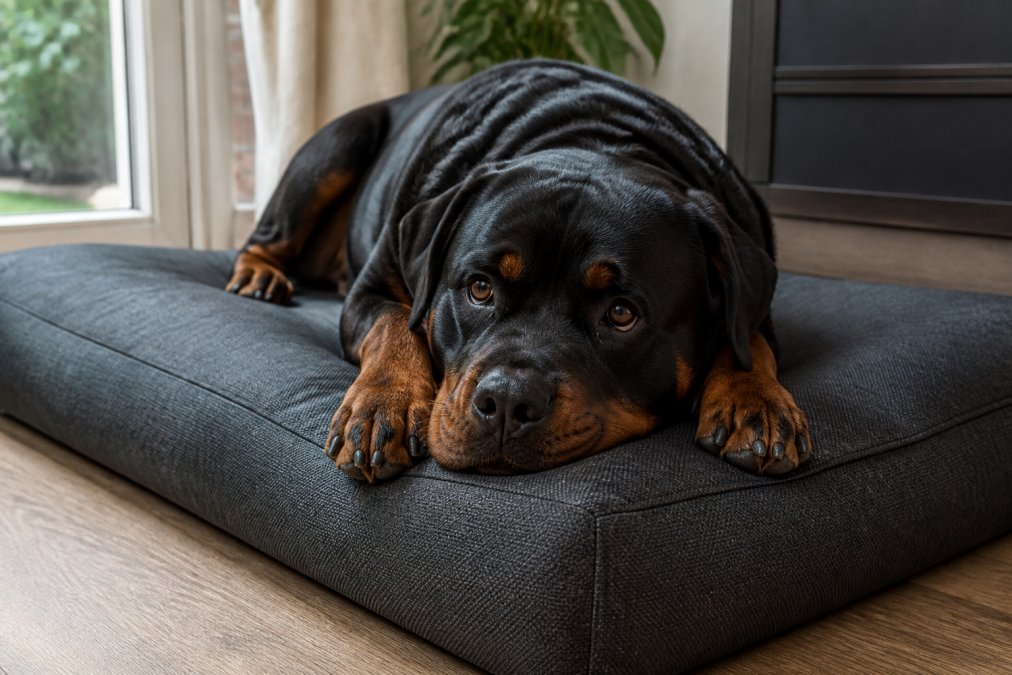
Ballistic nylon is a woven nylon fabric originally developed for military use, characterized by a thick, multi-ply weave that resists tearing and puncturing far better than standard polyester or cotton blends. The tight weave makes it difficult for teeth to get traction, and it holds up to repeated abrasion from claws.
Ripstop canvas uses a reinforced grid pattern woven into the fabric, so any small tear stops at the nearest grid intersection rather than spreading. It's lighter than ballistic nylon and often more breathable, making it ideal for warmer climates or dogs who run hot.
Both materials are typically machine-washable. An odor-resistant coating is sometimes applied, reducing bacterial buildup between washes.
According to the American Kennel Club's guide to dog behavior, chewing is a natural behavior for dogs of all ages, making a durable material a practical necessity for many households.
Non-Toxic and Hypoallergenic Considerations
For aggressive chewers, material safety matters: what happens when your dog chews the bed and ingests pieces?
Fabrics treated with certain flame retardants or dyes can be harmful if ingested in quantity. Look for beds explicitly labeled as non-toxic, and seek products specifying hypoallergenic fill materials. Some beds use memory foam or orthopedic foam cores; low-density foam can be torn apart and swallowed more easily than high-density alternatives.
If your dog actively destroys and eats their bedding, a fabric-only elevated cot with no fill is often the safer choice until the chewing behavior is addressed.
Elevated Cot-Style vs. Floor-Style Chew Proof Dog Beds
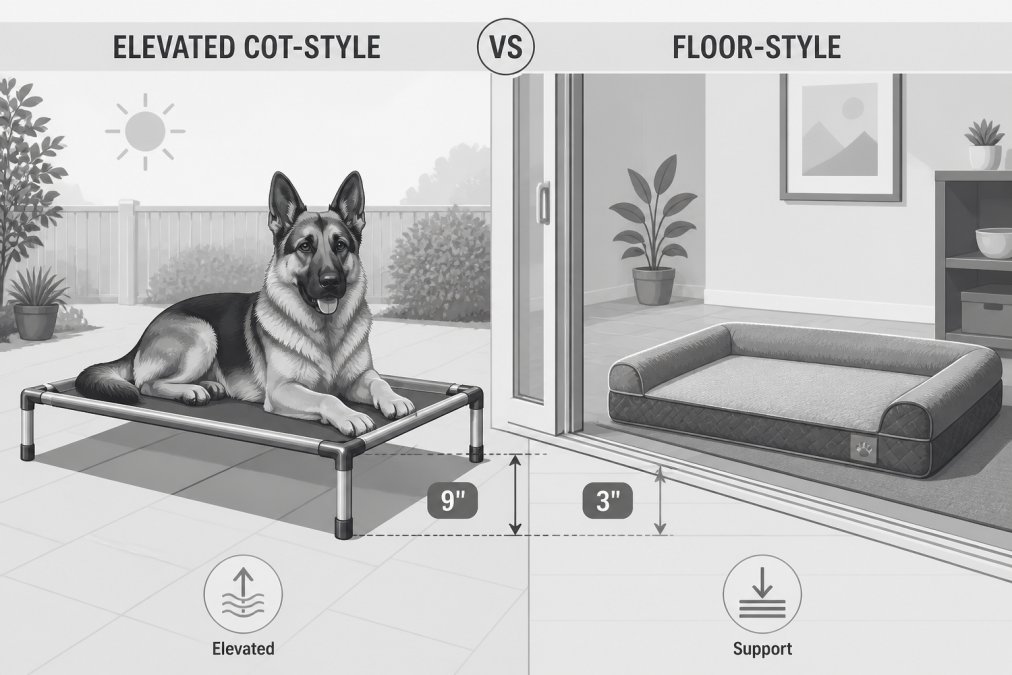
The choice between an elevated cot and a floor-style bed has real implications for durability, comfort, and safety.
| Feature | Elevated Cot-Style | Floor-Style Orthopedic |
|---|---|---|
| Chew resistance | High (fabric over frame) | Moderate (depends on cover) |
| Orthopedic support | Moderate (suspended surface) | High (foam core) |
| Breathability | Excellent | Varies |
| Crate-compatible | Rarely | Often |
| Cleaning ease | Easy (wipe or hose down) | Depends on cover removability |
| Best for | Aggressive chewers, hot climates | Senior dogs, joint issues |
Elevated cot-style beds remove foam fill entirely. There's nothing inside to tear out and scatter. The sleeping surface is suspended ripstop or ballistic nylon over an aluminum or steel frame, making them genuinely difficult for most dogs to destroy. They're also breathable, keeping dogs cooler than a foam bed on the floor.
Floor-style beds offer better orthopedic support for older dogs or breeds prone to hip dysplasia. A determined chewer will target the cover, and once breached, the foam inside becomes a mess. Removable, machine-washable covers with chew-proof zippers extend the life of floor-style beds significantly.
For most aggressive chewers, an elevated cot is the more practical choice. For senior dogs needing joint support, a high-quality orthopedic floor bed with a ballistic nylon cover is worth the extra maintenance.
Breed-Based Recommendations for Aggressive Chewers
Chewing intensity varies dramatically by breed, and matching bed construction to your dog's tendencies saves money and frustration.
Power chewers, breeds like Rottweilers, American Pit Bull Terriers, Mastiffs, and Cane Corsos, apply sustained, high-force biting. These dogs need ballistic nylon or ripstop canvas on an aluminum frame. An elevated cot with a weight capacity exceeding the dog's actual weight by at least 20 pounds is essential.
Anxious chewers, breeds like German Shepherds, Belgian Malinois, and some retrievers, often chew in response to stress. The bed material still needs to be tear-resistant, but behavioral intervention matters as much as the product itself. A crate-compatible orthopedic bed with a chew-resistant cover works well, since crate use often reduces anxiety-driven destruction.
Diggers, Huskies, Terriers, and Dachshunds frequently dig at their sleeping surface before lying down. Reinforced stitching at corners and edges is the priority. An elevated cot handles digging better than a floor bed because the fabric tension absorbs motion rather than concentrating it at a seam.
Puppies chew out of teething discomfort, not habit. A moderately durable bed paired with appropriate chew toys often solves the problem. If you're raising a breed known for adult power chewing, starting with a durable bed avoids replacing it in six months.
How to Stop a Dog from Chewing Their Bed
Buying a durable bed is half the equation. Understanding why your dog chews and addressing the behavior extends the life of any bed.
Behavioral Training Integration
Chewing falls into two main categories: boredom-driven and anxiety-driven. Boredom chewing happens when a dog is under-stimulated, not enough exercise, play, or mental engagement. Anxiety chewing happens in response to stress, often separation-related.
For boredom chewing, the fix is straightforward: more physical exercise, puzzle feeders, and designated chew toys given before the dog is left alone. Redirecting a dog to an appropriate chew item the moment they touch the bed, and rewarding the correct behavior consistently, works well for most dogs within a few weeks.
According to the ASPCA's resource on destructive chewing, providing adequate physical and mental stimulation is one of the most effective ways to reduce destructive behavior in dogs.
Separation Anxiety and Destructive Chewing
Separation anxiety is more complex. Dogs with separation anxiety chew because they're distressed, not bored. Signs include chewing only when the owner is gone, pacing, vocalization, and house soiling that doesn't occur when the owner is present.
For these dogs, a more durable bed buys time but doesn't solve the underlying issue. Desensitization training, gradually increasing the time a dog spends alone, starting with very short intervals, is the evidence-based approach. In more severe cases, veterinary consultation is appropriate. As documented in the Merck Veterinary Manual's section on separation anxiety, behavioral modification combined with environmental management produces the best outcomes.
A crate-compatible bed inside a crate can reduce destructive behavior for anxious dogs by limiting the space they're managing and giving them a den-like environment.
Cleaning, Repairability, and Warranty Policies
A bed's long-term value depends on what happens after purchase as much as on the initial build quality.
Machine-washable covers are essential. Beds accumulate dirt, dander, and odor quickly, and a cover you can throw in the wash on a regular cycle is far more practical than one requiring hand washing. Check that the cover is rated for machine washing at a temperature that sanitizes; cold water rinses don't eliminate odor-causing bacteria effectively.
Repairability matters when a bed is damaged. Some manufacturers sell replacement covers separately, meaning a chewed cover doesn't require replacing the entire bed. This is worth checking before you buy. A bed with a replaceable cover has a significantly longer total lifespan.
Warranty and guarantee policies vary widely. Some brands offer lifetime guarantees against chewing damage, but often with conditions around dog size, damage nature, or replacement limits. Read the policy carefully. A 90-day guarantee on a bed marketed as indestructible is a red flag. A meaningful warranty should cover at least one year of normal use with clear terms.
What to Look for Before You Buy
Here's a practical checklist for evaluating any bed before purchasing:
| What to Check | What to Look For | Why It Matters |
|---|---|---|
| Fabric type | Ballistic nylon or ripstop canvas | Primary chew resistance |
| Stitching | Double or triple-stitched seams | Prevents edge failure |
| Zippers | Chew-proof or recessed design | Eliminates common weak point |
| Frame material | Aluminum (for elevated beds) | Durability and rust resistance |
| Weight capacity | At least 20% above dog's weight | Prevents structural failure |
| Cover removability | Machine-washable, sold separately | Long-term hygiene and repairability |
| Warranty | Minimum 1 year, clear terms | Reflects product confidence |
| Material safety | Non-toxic, hypoallergenic fill | Safety for chewers who ingest material |
Additional questions worth asking:
- Is the bed crate-compatible if you use a crate?
- Does the manufacturer sell replacement parts?
- Is the foam fill (if any) high-density enough to resist tearing?
- Are there any chemical treatments on the fabric, and are they pet-safe?
For owners of large or power-chewing breeds, the Paw Fit Gears catalog is built with exactly these considerations in mind, durable gear designed for real dogs with real habits. Visiting the full collection is worth the time if you've been through multiple beds already.
The Association of Professional Dog Trainers' resources on chewing also offer useful context for owners trying to understand whether their dog's chewing is behavioral, anxiety-related, or breed-typical, which shapes which solution makes the most sense.
Replacing dog beds repeatedly is a frustrating and unnecessary expense. The right chew proof dog bed, matched to your dog's size, breed, and chewing style, genuinely lasts. Paw Fit Gears offers a curated selection of durable pet gear, including beds built for dogs who are hard on their belongings, with quality construction that prioritizes your pet's comfort and your peace of mind. Browse the Paw Fit Gears collection to find the right fit for your dog.
Frequently Asked Questions
Are there any dog beds that are truly 100% chew-proof?
No bed is guaranteed to be 100% chew-proof for every dog. However, beds built from ballistic nylon, ripstop canvas, or heavy-duty aluminum frames come closest. The key is matching the bed's durability rating to your dog's chewing intensity. Beds marketed as indestructible typically use tear-resistant, puncture-proof fabrics and reinforced stitching that outlast standard beds significantly. Always check the manufacturer's guarantee policy before buying chew proof dog beds.
What is the best chew-proof fabric for dog beds?
Ballistic nylon and ripstop canvas are the top choices for chew resistant dog beds. Ballistic nylon is thick, puncture-resistant, and resists tearing even under repeated stress. Ripstop canvas uses a reinforced weave that prevents small tears from spreading. Both materials are also relatively easy to clean. For aggressive chewers, look for beds that combine these fabrics with reinforced stitching along every seam and chew-proof zippers to eliminate the most common failure points.
Are elevated dog beds better for aggressive chewers?
Elevated cot-style beds with aluminum frames remove the foam and fabric filling that dogs typically target first. Because the sleeping surface is suspended rather than stuffed, there is less material to dig into or destroy. They also offer breathable airflow underneath, which helps with odor resistance. For dogs that chew out of boredom or separation anxiety rather than just habit, pairing an elevated bed with behavioral training gives the best long-term results.
How can I stop my dog from destroying their bedding?
Stopping destructive chewing starts with identifying the cause. Dogs chew beds most often due to boredom, separation anxiety, teething, or under-stimulation. Increase daily exercise, provide chew toys as a redirect, and use positive reinforcement when your dog lies on their bed calmly. For dogs with separation anxiety, a crate-compatible bed in a familiar space can reduce stress. Durable, chew proof dog beds buy you time while training addresses the root behavior.
This article was written using GrandRanker