

Table of Contents
- Day-One Must-Haves: Essential Gear for New Puppies
- Puppy Crate Training Essentials
- Best Harness for Puppy Walking and Leash Training
- Puppy Teething Toys Safety and Enrichment
- Grooming Tools, Hygiene, and Potty Training Supplies
- Travel and Car Safety Gear for Puppies
- Budget vs. Premium: How to Prioritize Your Puppy Gear Spend
- Conclusion
Last Updated: August 16, 2026
Day-One Must-Haves: Essential Gear for New Puppies
Bringing a puppy home is exciting and overwhelming. Essential gear isn't just convenient, it's about safety, behavioral development, and setting the right foundation from day one. At Paw Fit Gears, we offer high-quality gear designed for the comfort and safety of your pets.
You don't need everything at once. You need the right things on day one, and everything else can follow. Below, we break down exactly what to prioritize, what to skip initially, and how to spend smarter across every category.
Bedding and Comfort Items
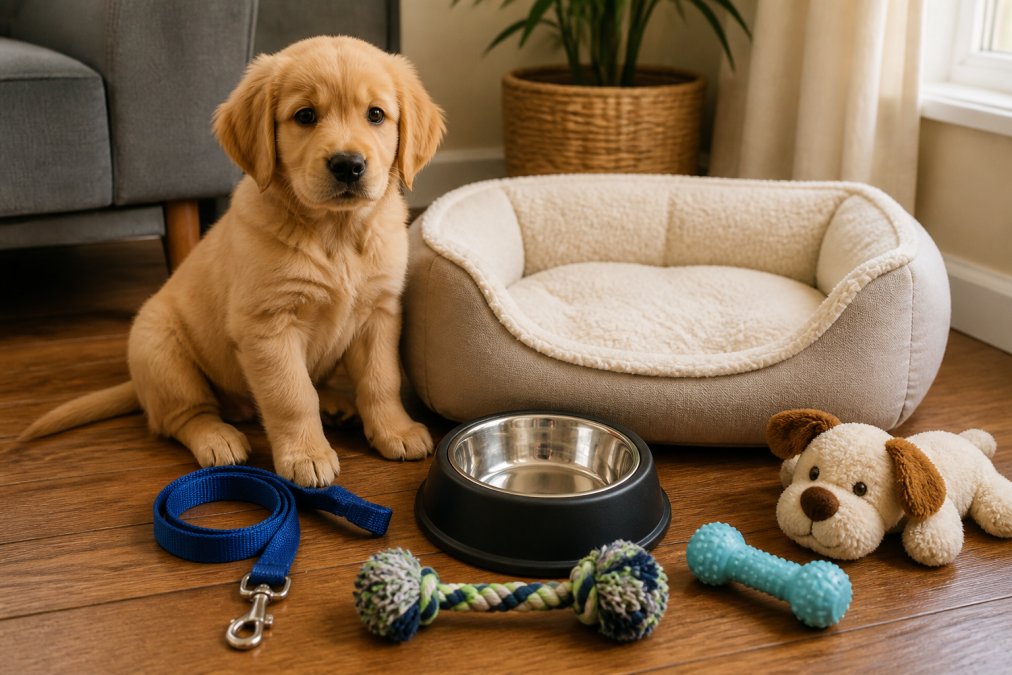
A puppy bed is non-negotiable on day one. A new puppy has just left its mother and littermates, and the right sleeping environment directly affects how quickly it settles into your home.
The most practical choice is a washable, chew-resistant puppy bed with raised sides. The raised sides provide a sense of enclosure that mimics the warmth of a litter. Vetbed-style fleece liners are popular because they wick moisture away, which matters during early potty training.
When choosing a puppy bed, avoid beds with loose stuffing or detachable parts, choose a size that fits inside your crate if crate training, and select machine-washable covers to save time and frustration.
Feeding, Hydration, and Puppy Nutrition Basics
Puppy nutrition in the early weeks shapes long-term health. The feeding setup matters as much as the food itself.
For most puppies, a stainless steel or ceramic bowl is preferable to plastic. Stainless steel bowls are dishwasher safe and nearly indestructible, while plastic can harbor bacteria in surface scratches. Consider a slow-feeder bowl if your puppy inhales food quickly, as rapid eating increases bloat risk, particularly in medium and large breeds.
For hydration, a heavy-based water bowl that resists tipping prevents spilled water and slipping accidents. The American Kennel Club guidance on puppy care provides additional feeding recommendations.
Puppy Crate Training Essentials
Crate training is often misunderstood as punishment. It isn't. A crate is a den, a safe, defined space that supports behavioral development and dramatically speeds up potty training. Done correctly, most puppies will voluntarily retreat to their crate within a few weeks.
The biggest mistake new owners make is skipping the crate entirely, then spending months dealing with destructive behavior and potty accidents throughout the house.
Choosing the Right Crate Size
The right crate size allows the puppy to stand up, turn around, and lie down comfortably, but not much more. Too large and the puppy will use one corner as a bathroom. Too small and it becomes uncomfortable.
For breeds that will grow significantly, a divider panel lets you buy one adult-sized crate and adjust the interior space as your puppy grows, rather than purchasing multiple crates.
| Crate Type | Best For | Key Consideration |
|---|---|---|
| Wire crate with divider | Most breeds, home use | Collapsible, good airflow |
| Plastic travel crate | Car travel, airline use | Meets most airline regulations |
| Soft-sided crate | Calm, older puppies | Not chew-resistant |
| Heavy-duty steel crate | Escape artists, anxious dogs | Significantly heavier |
Puppy Playpens and Baby Gates
A puppy playpen gives your pup a safe zone when you can't supervise directly. Many owners pair a playpen with a crate inside it, giving the puppy room to play while the crate remains its sleeping space.
Baby gates block off areas that aren't puppy-proofed yet. Stairs, kitchens, and rooms with electrical cords or hazardous items should be gated off during the first months. The ASPCA's guide to household hazards for pets lists common items that pose serious safety risks to young dogs.
Best Harness for Puppy Walking and Leash Training
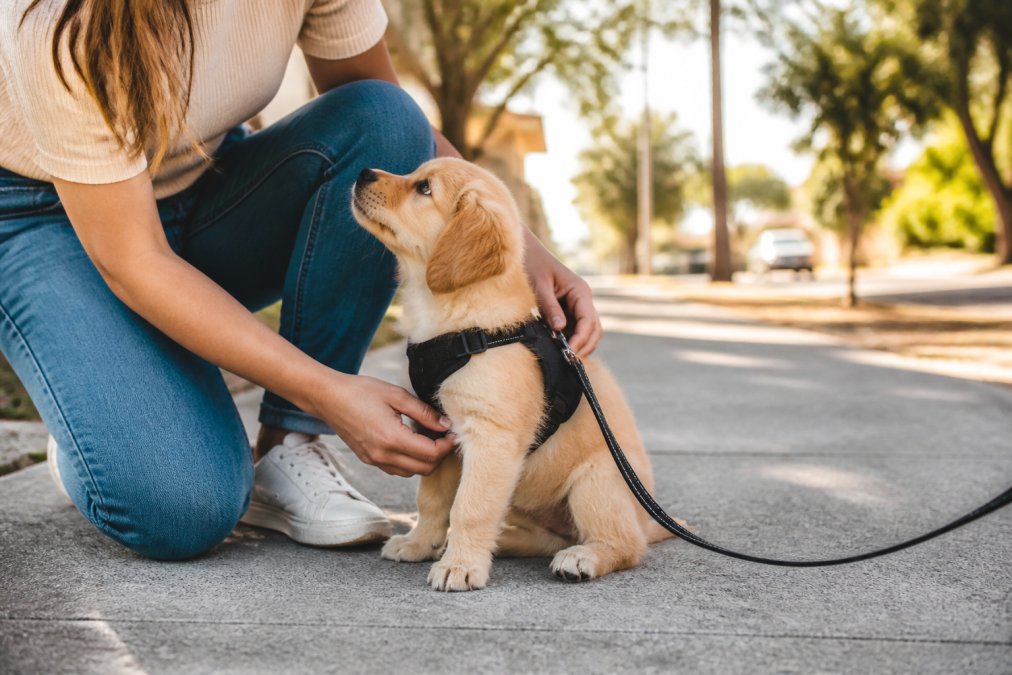
The best harness for puppy walking distributes pressure across the chest and shoulders rather than the neck, making it safer and more comfortable for a growing puppy. A collar alone puts strain on a puppy's trachea during leash training.
Leashes, Collars, and ID Tags
Every puppy needs both a collar and a harness. The collar holds ID tags and is worn constantly. The harness is for walks and training sessions.
For a standard leash, a 4-6 foot nylon or leather leash gives enough control without excess slack. A long line (15-30 feet) is a separate training tool for recall work in open spaces and is one of the most underrated pieces of training equipment for new puppy owners.
ID tags are not optional. Even microchipped puppies need a visible tag with your current phone number. Microchipping provides permanent backup, but a tag gets you a phone call within minutes if your puppy slips out. The American Veterinary Medical Association's microchipping resources provides guidance on registration and databases.
Harness Fitting for Anxious or Strong-Pulling Puppies
A poorly fitted harness creates pressure points that cause discomfort and escalate stress in anxious dogs. The two-finger rule applies: you should be able to slide two fingers under any strap without forcing it, but the harness should not shift when the puppy moves.
For puppies that pull hard, a front-clip harness redirects the dog toward you when it lunges forward. For anxious puppies, a back-clip harness with a padded chest plate reduces pressure on sensitive areas. Some harnesses offer both clip positions, a practical choice if you're still reading your puppy's temperament.
Puppy Teething Toys Safety and Enrichment
Teething relief is a genuine need. Puppies lose their baby teeth between 3 and 6 months, and the discomfort drives much of the destructive chewing behavior new owners find frustrating.
The rule for safe chew toys is simple: if you can't dent it with your thumbnail, it's too hard for a puppy's developing teeth. Antlers, hard nylon bones, and ice cubes carry a real risk of tooth fracture in young dogs.
Better options for teething relief include rubber chew toys designed for puppies, frozen wet washcloths for short supervised sessions, chew-resistant rope toys with knot ends, and puzzle feeders that turn mealtime into enrichment.
Enrichment toys engage a puppy's brain and reduce boredom-driven behavior. A mentally tired puppy is a calmer puppy.
Grooming Tools, Hygiene, and Potty Training Supplies
Introducing a grooming brush, comb, and nail file during puppyhood builds tolerance for handling that pays dividends for years.
Grooming Brush, Comb, and Dental Care
The right grooming brush depends on coat type. Short-coated breeds do well with a rubber curry brush or bristle brush. Double-coated and long-haired breeds need a slicker brush and grooming comb. Starting weekly brushing sessions at 8-10 weeks gets a puppy accustomed to the process.
Dental care is the most neglected area of puppy hygiene. Use a finger brush and puppy-safe toothpaste from the first weeks. Never use human toothpaste, which contains xylitol, toxic to dogs.
Potty Training Pads, Poo Bags, and Scent Marking Control
Potty training pads work well for apartment dwellers, owners with limited outdoor access, or puppies too young to be fully vaccinated. If you use pads, place them near the door you eventually want the puppy to use for outdoor breaks, then gradually move them closer over several weeks.
Enzymatic cleaners are essential for scent marking control, they break down the odor compounds that draw a puppy back to the same spot. Standard household cleaners don't do this effectively. Biodegradable poo bags are widely available and reduce plastic waste without compromising function.
Travel and Car Safety Gear for Puppies
An unrestrained puppy in a moving vehicle is a safety hazard. A travel crate secured to the cargo area or back seat is the most protective option. It prevents the puppy from becoming a projectile in a sudden stop and keeps it from distracting the driver.
For owners who prefer a seat-based solution, a dog guard behind the rear seats or a crash-tested car harness attached to the seat belt are practical alternatives. Look for products that reference independent safety testing in their specifications.
Car seat covers protect your interior and give the puppy a defined, comfortable space during journeys, significantly reducing travel anxiety in young dogs.
Budget vs. Premium: How to Prioritize Your Puppy Gear Spend
The biggest mistake new puppy owners make is spending money in the wrong order. Here's a practical prioritization framework:
| Category | Priority | Why |
|---|---|---|
| Crate with divider | High, buy quality once | Cheap crates fail at latches; escape is a serious hazard |
| Harness | High, fit matters | Poor fit causes discomfort and sets back leash training |
| Collar and ID tag | High, day one necessity | Non-negotiable for safety |
| Puppy bed | Medium, replaceable | Puppies often destroy first beds; mid-range is sensible |
| Grooming tools | Medium, breed-dependent | Invest in coat-appropriate tools |
| Enrichment toys | Low to Medium | Rotate budget options effectively |
| Potty training pads | Low, consumable | No need to spend more than necessary |
Eco-Friendly and Sustainable Puppy Products
Sustainable puppy gear has moved beyond novelty status. Many owners seek products made from recycled materials, organic cotton, or natural rubber, and the options are genuinely good.
Biodegradable poo bags are the easiest starting point. Natural rubber chew toys avoid synthetic chemical concerns. Organic cotton rope toys and bamboo-fiber grooming brushes are available from several specialty manufacturers. Sustainable products tend to cost more upfront but are often more durable, narrowing the gap over the product's lifetime.
Smart-Tech Gear for Modern Puppy Owners
GPS trackers that attach to a collar give real-time location data, useful for escape-prone puppies or owners with large properties. Smart feeders with portion control and scheduled dispensing help maintain consistent puppy nutrition. Activity monitors track rest, activity levels, and calorie burn, providing useful data for owners working with a veterinarian on growth and weight management.
Approach automated training devices with skepticism. Positive reinforcement delivered by a human is more effective for behavioral development than any automated system currently available.
Paw Fit Gears carries a curated selection of harnesses, leashes, beds, and feeders built for daily use, all designed with the quality standards that new puppy owners need when building a gear kit from scratch.
Frequently Asked Questions
What essential items do I need for a new puppy?
The true day-one essentials are a properly sized crate, a puppy bed or vetbed, food and water bowls, age-appropriate puppy food, a flat collar with an ID tag, a standard leash or harness, potty training pads, poo bags, and at least two chew-safe enrichment toys. Everything else, including grooming tools, a long line, and travel gear, can be added over the first few weeks as you learn your puppy's size, temperament, and behavioral development needs.
How do I choose the right size harness for a growing puppy?
Measure around your puppy's chest, just behind the front legs, and check the harness manufacturer's sizing chart against that number. For a growing puppy, choose a harness with multiple adjustment points so it fits snugly without restricting shoulder movement. You should be able to slide two fingers under every strap. Because puppies grow fast, plan to re-measure every four to six weeks and size up before the harness starts leaving marks or rubbing. Visit Paw Fit Gears for current sizing guidance on their harness range.
What are the safest chew toys for teething puppies?
Look for toys rated for teething puppies specifically, made from natural rubber or nylon compounds that flex slightly under pressure. Avoid toys that are harder than a fingernail, since these can fracture developing teeth. Size matters too: the toy should be large enough that your puppy cannot get it fully into their mouth. Rope toys are fine supervised but should be put away when you leave, as ingested fibers can cause intestinal blockages. Frozen rubber toys filled with puppy-safe food provide teething relief and mental enrichment at the same time.
How often should I replace puppy gear as they grow?
Collars and harnesses typically need replacing every two to three months during the rapid growth phase of the first year. Check fit weekly. Crates may need one size upgrade around the four-to-six-month mark for medium and large breeds. Potty training pads, poo bags, and grooming tools are consumables replaced on use. A good-quality puppy bed built with chew-resistant materials can last into adulthood if it is sized for the adult dog from the start. Check Paw Fit Gears's catalog for durable options designed to grow with your dog.
What grooming tools does a new puppy need?
Start with a soft-bristle grooming brush and a wide-tooth grooming comb suited to your puppy's coat type. Add a pair of rounded-tip nail clippers and a gentle puppy-safe shampoo. Dental care is often overlooked: a finger toothbrush and puppy-formulated toothpaste introduced early builds a habit that protects adult teeth. Flea and tick prevention products should be discussed with your veterinarian, who will recommend options appropriate for your puppy's age and weight under current USEPA-registered guidelines.
What is the 3-3-3 rule for new puppies?
The 3-3-3 rule describes a common adjustment timeline: three days to decompress from the stress of a new environment, three weeks to learn household routines and start showing their real personality, and three months to feel fully settled and bonded. During this window, consistent crate training, positive reinforcement, and a predictable feeding and potty schedule matter more than any single piece of gear. Having the right containment solutions and enrichment toys in place from day one supports each phase of that adjustment.
Managing all the essential gear for new puppies at once can feel like a lot, because it is. The key is knowing what to prioritize and what can wait. Paw Fit Gears offers durable, quality-tested harnesses, beds, collars, and feeders designed to support your puppy's daily needs from day one. Browse the full catalog at Paw Fit Gears and get your puppy set up right.
This article was written using GrandRanker