

Table of Contents
- Step 1: Prep the Bed and Remove Loose Debris
- Step 2: How to Remove Dog Hair from Bed Cover
- Step 3: Machine Wash the Orthopedic Dog Bed Cover
- Step 4: How to Get Urine Smell Out of Dog Bed
- Step 5: Drying the Cover Without Damaging the Foam
- How Often to Wash Dog Bed Covers
- Fabric-Specific Cleaning Tips for Orthopedic Dog Bed Covers
- Frequently Asked Questions
Last Updated: September 28, 2026
Step 1: Prep the Bed and Remove Loose Debris
Before you touch any soap, strip the bed down. Learning how to clean an orthopedic dog bed cover starts with one simple move: unzip the cover and pull it off the foam insert.
That insert is the part you can never soak. Most orthopedic beds use memory foam or egg crate foam, and water ruins both.
Here's the prep routine:
- Unzip the cover and set the foam core aside
- Vacuum both sides of the cover with a brush attachment
- Shake it outside to drop loose dirt and kibble crumbs
- Check the zipper for stuck hair before washing
A common mistake is skipping the vacuum step. Hair and grit turn into muddy clumps in the wash, and those clumps grind against the fabric.
If the cover has a waterproof liner, wipe it down with a damp cloth. Never machine wash the liner unless the tag says it's safe.
Step 2: How to Remove Dog Hair from Bed Cover
Removing dog hair from an orthopedic dog bed cover is the step most people rush. It's also the step that decides whether the wash actually gets the cover clean.

Dry hair comes off far easier than wet hair. Once fur gets soaked, it weaves into the fabric and stays there.
Try these methods in order:
- Rubber gloves: Dampen a rubber glove and sweep the cover in one direction. Hair balls up fast.
- Lint roller: Works well on fleece surfaces and bolsters.
- Squeegee: A window squeegee pulls embedded hair off flat panels.
- Reusable pet hair remover: A tool like the Complete Home Survival Kit lifts hair off fabric, carpet, and upholstery without refills.
Work in sections. Short strokes beat long sweeps because they lift hair instead of pushing it deeper.

For heavy shedders, do a second pass after the cover dries. Heat from the dryer loosens hair that survived the first round.
Step 3: Machine Wash the Orthopedic Dog Bed Cover
Most removable covers are machine washable. Check the care tag first, then follow the settings below.
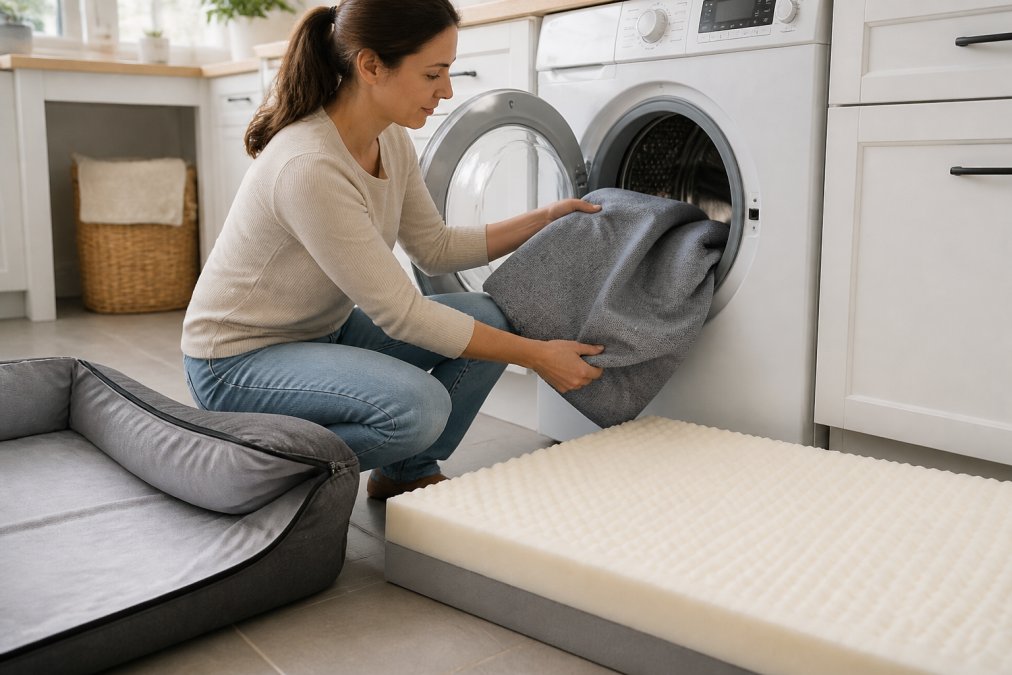
Use cold water and a gentle cycle. Cold water protects fabric fibers, and the gentle cycle reduces agitation that can stretch seams.
Skip the fabric softener. It coats fibers and traps odor instead of removing it.
If your machine has a soak option, use it for heavily soiled covers. A 15-minute soak loosens dried mess before the wash cycle starts.
Choosing the Right Detergent and Water Temperature
Pick a mild, unscented detergent made for pets or babies. Strong fragrances can irritate a dog's nose and skin.
| Setting | Recommendation | Why It Matters |
|---|---|---|
| Water temp | Cold water | Protects fabric and prevents shrinking |
| Cycle | Gentle cycle | Reduces wear on seams and zippers |
| Detergent | Mild, unscented | Avoids skin irritation |
| Extras | Skip softener | Softener traps odors |
| Load size | Wash alone | Prevents snags from other items |
Never use bleach on a colored cover. It breaks down fabric and leaves a harsh smell.
Orthopedic Memory Foam Dog Bed →
Step 4: How to Get Urine Smell Out of Dog Bed
Getting urine smell out of a dog bed takes more than regular detergent. Urine soaks into foam and fabric, and the smell returns as soon as the cover warms up.
Start with an enzyme cleaner. Enzymes break down the uric acid crystals that cause the smell. Regular soap only masks them.
Follow this order:
- Blot fresh accidents with a clean towel right away
- Spray the stained area with an enzyme cleaner
- Let it sit for 10-15 minutes
- Wash on a gentle cycle with mild detergent
- Air-dry and check the smell before the next wash
For older stains, add half a cup of baking soda to the wash.
Step 5: Drying the Cover Without Damaging the Foam
Air-dry the cover whenever you can. Hang it over a drying rack or a shower rod and let it dry in open air.
A few drying rules to follow:
- Tumble dry low for 20 minutes, then air-dry the rest
- Flip the cover halfway through
- Make sure the cover is fully dry before it goes back on
- Never dry a cover with a waterproof liner on high heat
How Often to Wash Dog Bed Covers
Wash the cover every two weeks for most dogs. Weekly is better if your dog sheds heavily, drools, or has allergies.
Here's a simple schedule to follow:
- Weekly: Dogs with allergies, skin issues, or heavy shedding
- Every 2 weeks: Most healthy adult dogs
- Every 3-4 weeks: Senior dogs or low-shedding breeds
- Same day: Any accident, vomit, or visible dirt
Fabric-Specific Cleaning Tips for Orthopedic Dog Bed Covers
Generic advice fails here because the cover fabric decides the water temperature, the cycle, the detergent, and the drying method. Match your method to the fabric on the care tag, then use the protocol below.
Fleece and Sherpa
- Wash: Cold water, gentle cycle. Warm water mats the pile.
- Detergent: Mild, liquid, unscented. Powder detergent can leave grit trapped in the nap.
- Dry: Air-dry flat or tumble on no-heat/air-fluff only. Any heat pills the surface and flattens the loft.
- Watch for: Sherpa backing that separates from the fleece face after repeated hot washes. If the backing is bonded, heat is what kills it.
Microfiber and Suede-Look Fabrics
- Wash: Cold water, gentle cycle, wash alone. Microfiber grabs lint from other laundry.
- Detergent: Mild liquid only. Skip dryer sheets entirely, the coating they leave behind is what makes microfiber feel slick and hold odor.
- Dry: Tumble low or air-dry. High heat glazes the fibers and they lose their soft hand.
Canvas and Heavy Cotton
- Wash: Warm water is fine here, and these fabrics tolerate a normal cycle better than synthetics.
- Detergent: Standard mild detergent works. These are the most forgiving covers in the wash.
- Dry: Tumble low, expect a longer dry time than fleece or microfiber. Pull the cover out slightly damp and reshape it, then finish air-drying to avoid shrinkage at the seams.
Velvet, Plush, and Cuddle Fabrics
- Wash: Hand wash, or machine wash inside a mesh laundry bag on gentle with cold water.
- Detergent: Mild liquid, small amount. Excess detergent is hard to rinse out of dense pile.
- Dry: Air-dry only. Agitation and heat both crush the pile and leave a flattened, shiny patch.
Waterproof Liners and Coated Backings
- Wash: Wipe with a damp cloth and mild soap for routine cleaning. Machine washing is acceptable only if the tag says so, and even then it shortens the life of the coating.
- Detergent: Mild soap only. Detergent residue breaks down the waterproof membrane.
- Dry: Air-dry. Never tumble a coated liner on heat, the coating cracks and the liner stops being waterproof.
- Watch for: A liner that beads water in some spots and soaks through in others is failing. That is a replacement signal, not a cleaning problem.
Allergen and Dander Removal by Fabric
If anyone in the house has allergies, the fabric choice changes the cleaning routine.
- Tight-weave fabrics (canvas, microfiber, coated liners): Dander sits on the surface. Vacuum with a brush attachment before washing, then add an extra rinse cycle to flush fine particles out of the fibers.
- Loopy and piled fabrics (fleece, sherpa, velvet): Dander and dust mites burrow into the pile. These need a longer agitation cycle than you would normally use, plus a hot-water wash if the tag allows it, heat is what kills dust mites. If the tag says cold only, air-dry in direct sun, which also reduces mite load.
- Every fabric: Wash at least weekly during allergy season, and dry completely. A damp cover is a dust-mite habitat.
When to Replace Instead of Clean
Cleaning has a ceiling. Replace the cover when the waterproof liner no longer beads water, when the zipper track is warped or the teeth no longer mesh, when the fabric has thinned to the point that the foam shows through, or when the cover smells after two full enzyme treatments. A replacement cover costs far less than a new bed, and it is the only fix when the fabric itself has failed.
Frequently Asked Questions
How to wash an orthopedic dog bed cover without ruining the foam?
Always remove the cover from the memory foam insert before washing. Most orthopedic dog bed covers are machine washable on a gentle cycle with cold or warm water and mild detergent. The foam insert itself should never go in the washing machine. Spot clean the foam with a damp cloth and let it air-dry completely before reassembling. Check the zipper and seams for wear before each wash.
Is it sanitary to put dog bed covers in my washer?
Yes, as long as you use a pet-safe detergent. Run an empty rinse cycle with vinegar after washing pet items to prevent dander and bacteria from lingering in the drum. If anyone in your home has allergies, use a sanitizing cycle or add a pet-safe laundry sanitizer. Washing removes dander, saliva residue, and odor-causing bacteria that build up between cleanings.
How do you get stubborn dog hair out of bed covers?
Start by shaking the cover outdoors to remove loose debris. Then use a rubber pet hair remover or a damp rubber glove and run it in one direction across the fabric. For embedded hair, a reusable pet hair removal tool works faster than tape or lint rollers. Pre-treat heavy areas before machine washing on a gentle cycle. A second pass after the first wash catches hair that loosened during agitation.
Can you put memory foam covers in the dryer?
Most removable covers can go in the dryer on a tumble dry low setting, but air-drying is safer for fabric longevity. High heat can shrink covers, damage zippers, and weaken waterproof liners. If you use a dryer, choose the lowest heat setting and remove the cover while slightly damp to prevent static and shrinkage. Never put the memory foam insert in the dryer under any circumstances.