

Last Updated: October 24, 2026
Quick Summary
The early signs of heat exhaustion in dogs are excessive panting that doesn't slow when you stop, a racing heart, heavy drooling, ropey saliva, lethargy, incoordination, and shade seeking. Pale or gray gums and a capillary refill time over two seconds are red flags. Any heatstroke sign means stop hiking, start cooling, and call a vet immediately.
- Offer water every 15 to 20 minutes on the trail rather than waiting for a long break.
- Heat exhaustion sits around 105°F to 106°F, while heatstroke is above roughly 106°F.
- Cool a heatstroke dog with tepid or cool water plus airflow, never ice packs or ice-cold water.
- Stop active cooling once the rectal temperature drops to roughly 103°F to avoid hypothermia.
- Call your vet if panting stays heavy after 20 minutes of rest or the dog vomits or seems disoriented.
Table of Contents
- Why Hiking Dogs Overheat Faster Than You Think
- The Early Signs of Heat Exhaustion in Hiking Dogs
- Signs of Dehydration in Dogs on the Trail
- Heat Exhaustion vs. Heatstroke: When It Turns Dangerous
- Dog Heatstroke First Aid: What to Do in the First 10 Minutes
- How to Keep Dogs Cool While Hiking
- Breed, Build, and Acclimatization: Who Is Most at Risk
- After the Trail: Recovery and When to Call Your Vet
- Frequently Asked Questions
Why Hiking Dogs Overheat Faster Than You Think
A dog's body handles heat very differently from yours. According to veterinary research on heatstroke pathophysiology, dogs rely heavily on panting to regulate temperature, and that system has limits.
This guide walks you through the signs of heat exhaustion in dogs, from the early warnings most owners miss to the emergency steps that buy a dog time.
Here's what makes this tricky: a dog will often keep hiking because it wants to stay with you.
The Early Signs of Heat Exhaustion in Hiking Dogs
The earliest signs of heat exhaustion in dogs are excessive panting, a racing heart, heavy drooling, and unusual weakness. The 2013 review in Pathophysiology and pathological findings of heatstroke in dogs identifies these as the first warning signals.
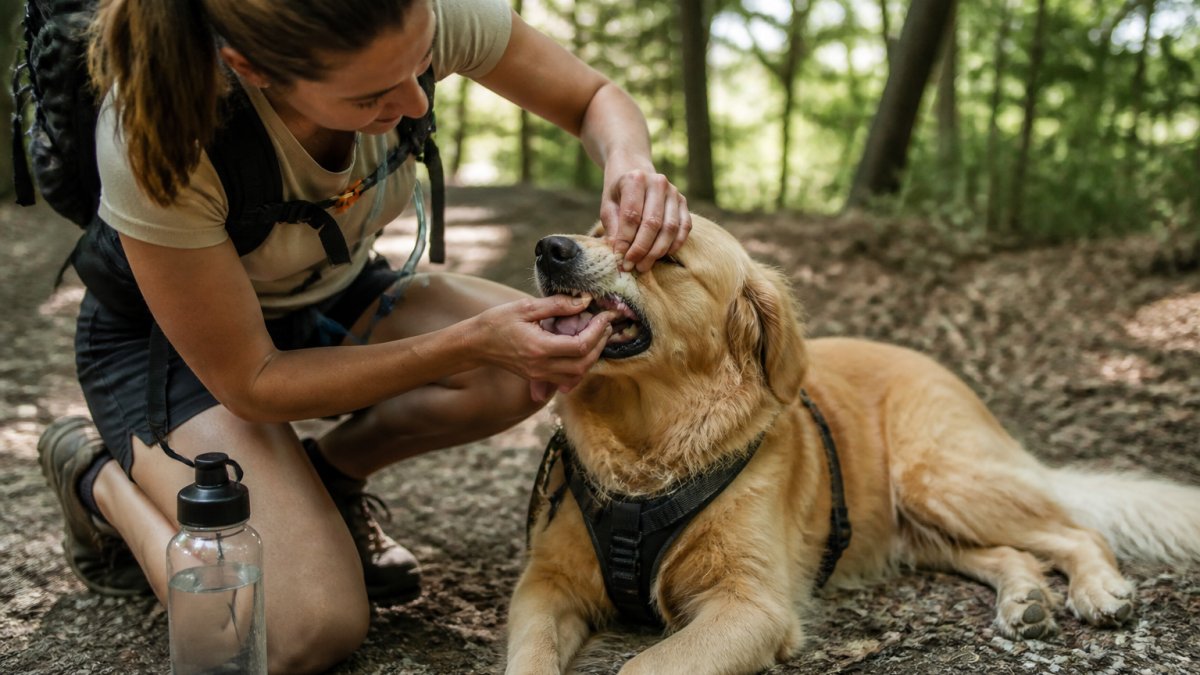
Watch for these early flags:
- Excessive panting that doesn't slow down when you stop
- Ropey saliva that hangs thick instead of dripping thin
- Lethargy or lagging behind when the dog normally leads
- Incoordination or stumbling on flat ground
- Shade seeking or refusing to continue
What Excessive Panting and Ropey Saliva Tell You
Panting is normal. Panting that continues after rest is not. When saliva turns thick and ropey, the dog is losing fluids faster than it can replace them, a sign of dehydration creeping in.
Gum Color, Capillary Refill, and Other Hands-On Checks
Lift the lip and look at the gums. Healthy gums are pink; pale or gray gums signal poor circulation. Press a finger on the gum, release, and count how long color returns. A capillary refill time over two seconds is a red flag worth acting on.
Signs of Dehydration in Dogs on the Trail
The common signs of dehydration in dogs include tacky gums, loss of skin elasticity, sunken eyes, and collapse. A quick skin-tent test on the back of the neck helps: gently pinch the skin and see how fast it springs back.
Dehydration and heat exhaustion feed each other. A dehydrated dog can't cool itself through panting effectively, so the body temperature climbs faster.
Heat Exhaustion vs. Heatstroke: When It Turns Dangerous
Heat exhaustion and heatstroke sit on the same continuum, and the difference is not how the dog looks but how far the core temperature has climbed and whether the body's cooling system is still working.
A useful working framework most emergency practitioners use:
- Heat stress / early exhaustion: core temperature roughly 103°F to 105°F. The dog is panting heavily, drooling, and may be lagging, but is alert, responsive, and able to walk.
- Heat exhaustion: core temperature roughly 105°F to 106°F. Panting is relentless even at rest, gums may look tacky or slightly pale, the dog is weak or wobbly, and capillary refill time starts to stretch past two seconds.
- Heatstroke: core temperature above roughly 106°F, often 107°F or higher. This is a medical emergency. The dog may collapse, vomit, have diarrhea (sometimes bloody), show confusion or seizures, or develop difficulty breathing.
Those numbers are approximate guides, not a diagnosis. A dog can be in serious trouble at a lower reading if it has been hot for a long time, and a single high reading taken with a home thermometer can be inaccurate.
The Signs That Mean It Has Become Heatstroke
Watch for the shift from "uncomfortable" to "systemic." Heatstroke warning signs include:
- Collapse or inability to stand, the dog goes down and does not get back up.
- Vomiting or diarrhea, especially bloody diarrhea, which signals gastrointestinal damage.
- Neurologic changes, confusion, staggering, seizures, or unresponsiveness.
- Respiratory distress, noisy breathing, blue or gray gum color, or gasping rather than panting.
- Bleeding abnormalities, pinpoint bruises on the gums or skin, a sign of clotting problems.
Why the Line Is Thinner Than Most Hikers Assume
A hiking dog is often already dehydrated and already working hard, so it has less margin before the cooling system fails.
That is why the decision rule on the trail is simple: if you see any heatstroke sign, stop hiking, start cooling, and call a veterinarian or emergency clinic immediately.
The article uses core temperature ranges to separate the stages of overheating.
| Stage | Core temperature | Key signs |
|---|---|---|
| Heat stress / early exhaustion | Roughly 103°F to 105°F | Heavy panting, drooling, lagging but alert and able to walk |
| Heat exhaustion | Roughly 105°F to 106°F | Relentless panting at rest, tacky or pale gums, wobbly, capillary refill over two seconds |
| Heatstroke | Above roughly 106°F, often 107°F or higher | Collapse, vomiting, diarrhea, confusion, seizures, breathing difficulty |
Dog Heatstroke First Aid: What to Do in the First 10 Minutes
Dog heatstroke first aid starts with cooling, not waiting. The goal in the first ten minutes is to lower core temperature steadily without shocking the dog, and to get professional help moving while you do it.
Follow these steps in order:
- Move the dog out of the sun and off hot ground immediately. Shade, a breezy spot, or the open door of a vehicle with the AC running all work. Get the dog off asphalt, sand, or dark rock that is radiating heat.
- Wet the dog with tepid or cool water, not ice-cold. Focus on the areas with the most blood flow near the surface: the groin, armpits, neck, and belly. These are where cooling does the most good fastest.
- Keep air moving over the wet coat. A breeze, a fan, or a hand fan accelerates evaporative cooling. Wetting without airflow is much less effective.
- Offer small sips of water if the dog is alert and swallowing normally. Do not force water into the mouth of a dog that is confused, vomiting, or unable to swallow, that risks aspiration.
- Check gum color and capillary refill time. Pink gums that refill in under two seconds are reassuring; pale, gray, or blue gums and a refill time over two seconds mean the dog needs a vet now.
- Call your vet or the nearest emergency clinic while you cool. Tell them you have a suspected heatstroke and give your location and estimated arrival time.
Monitor Temperature, Not Just Behavior
If you have a rectal thermometer, check the temperature every few minutes while cooling. Stop active cooling once the reading drops to roughly 103°F, then keep the dog in a cool, shaded place and continue to the vet. Cooling too far can cause hypothermia, so the target is a controlled descent, not the coldest possible dog.
The Post-Hike Recovery Protocol Most Guides Skip
The danger does not end at the trailhead. A dog that overheated on the trail can worsen after the hike, so treat the return to the car as part of first aid:
- Cool down gradually in the vehicle. Run the AC, crack windows for airflow, and keep the dog out of direct sun. Do not bundle the dog in a towel.
- Offer water in small amounts every few minutes rather than letting the dog gulp a large volume at once.
- Rest in shade for at least 20 to 30 minutes before deciding the dog is fine. Watch breathing rate and gum color during that time.
- Check paws and skin for burns, cuts, and hot spots while the dog rests.
- Call your vet if panting stays heavy after 20 minutes of rest, if the dog vomits, if it seems disoriented, or if it refuses water.
Never leave a dog in a parked car between trailheads, even briefly. Interior temperatures rise far faster than outside air, and a dog that is already hot has no margin left.
How to Keep Dogs Cool While Hiking
The best ways to keep dogs cool while hiking are timing, hydration, and gear. Start early, choose shaded routes, and carry more water than you think you need. A collapsible bowl and a breathable harness make a real difference.
Trail-Specific Cooling Gear and Surface Temperature Checks
Press the back of your hand to the trail surface for five seconds. If it's too hot for your hand, it's too hot for paws. A guide to the best gear for hiking with dogs covers cooling vests, bowls, and packs that hold water. A well-ventilated premium dog harness for hiking won't trap heat against the chest, and a durable dog leash for hiking keeps control easy when your dog starts to slow.
Breed, Build, and Acclimatization: Who Is Most at Risk
Brachycephalic breeds like bulldogs and pugs are at the highest risk because their airways make panting inefficient. Thick-coated and dark-coated dogs also heat up faster. Acclimatization matters too: a dog used to cool mornings struggles on a sudden hot hike.
If you're choosing a trail companion, a breakdown of dog breeds for mountain hiking explains which builds handle heat and distance best.
After the Trail: Recovery and When to Call Your Vet
Cool your dog down gradually after the hike, offer water, and let them rest in shade. Check gum color and breathing once more. Call your vet if panting stays heavy after 20 minutes of rest, if the dog vomits, or if it seems disoriented.
A post-hike wash helps remove trail grime and lets you check for cuts and hot spots.
Frequently Asked Questions
What are the first signs of heat exhaustion in dogs?
The earliest signs are excessive panting, a high heart rate, heavy drooling, and unusual weakness, according to a 2013 review of heatstroke in dogs published in PubMed Central. U.S. Army guidance from 2019 lists the same trio: heavy panting, hyperventilation, and increased salivation. Owners often notice ropey saliva and a dog that lags behind or seeks shade. Acting at this stage, with rest, water, and cooling, is far easier than reversing heatstroke later.
How can I tell if my dog is overheating while hiking?
Watch for a combination of changes rather than one symptom. A dog showing signs of dehydration in dogs, such as tacky gums, slow capillary refill, or skin that stays tented when gently pinched, is already behind on fluids. Add stumbling, incoordination, or pale gums and the situation is urgent. Stop, move to shade, offer small sips of water, and apply cool water to the belly and paws. If the dog does not improve within minutes, treat it as an emergency.
What should I do immediately if my dog shows signs of heatstroke?
Start dog heatstroke first aid right away. Move the dog to shade, pour tepid water over the neck, belly, and inner thighs, and keep air moving with a fan or breeze. Do not use ice or ice baths, which can constrict surface blood vessels. Offer small amounts of water if the dog is alert. Then call your veterinarian or an emergency clinic while you drive, because heatstroke can cause shock and organ failure even after the dog seems calmer.
Are certain dog breeds more susceptible to heat exhaustion?
Yes. Brachycephalic breeds like bulldogs and pugs struggle to pant efficiently, and thick-coated or double-coated dogs such as huskies and German Shepherds trap heat. Large, heavy dogs generate more body heat, and dogs not acclimatized to summer temperatures are at higher risk regardless of breed. If your dog fits any of these groups, hike earlier in the day, choose shaded routes, and plan shorter distances with more water breaks.
Heat exhaustion in hiking dogs is preventable, but only if you know what to watch for and act early. At Paw Fit Gears, we build gear that supports safer trail days, from breathable harnesses and durable leashes to cooling accessories and recovery tools. Get started with Paw Fit Gears and give your dog the comfort and protection it deserves on every hike.
