

Last Updated: November 21, 2026
Quick Summary
The best enrichment activities for hungry dogs turn food drive into mental work: food puzzles, snuffle mats, scatter feeding, scent games, frozen stuffed toys, muffin tin games, and DIY household foraging toys. Measure every piece of food used out of the daily ration, not on top of it, and match each activity to your dog's chewing style and feeding history.
- Food puzzles turn a five-minute meal into fifteen minutes of problem-solving.
- Scatter kibble from the daily ration, never on top of it.
- Begin scent games with a visible drop a few feet away, then hide food.
- Most dogs do well with ten to twenty minutes per food puzzle session.
- A muffin tin with treats under tennis balls is a cheap indoor game.
Table of Contents
- Why Hungry Dogs Need Enrichment Activities
- Food Puzzles and Interactive Feeders for Mealtime Enrichment Activities for Dogs
- Snuffle Mats, Scatter Feeding, and Foraging Games
- Scent Work and Find-It Games for Food-Motivated Dogs
- Indoor Enrichment Activities for Dogs When It's Too Hot or Cold Outside
- Dog Enrichment Ideas DIY: Household Items That Work
- How Long Should a Dog Spend on a Food Puzzle?
- Portion Control and Safety for Hungry Dogs
- Frequently Asked Questions
Why Hungry Dogs Need Enrichment Activities
A food-obsessed dog who wolfs down dinner in ninety seconds spends the rest of the evening staring at you. That restlessness is the problem enrichment solves. The best enrichment activities for hungry dogs turn that food drive into mental work instead of begging, counter-surfing, or chewing the furniture. At Paw Fit Gears, we hear the same thing from owners of retrievers, beagles, and labs: the bowl empties too fast and the dog still wants a job.
The fix is not more food. It is more challenge. A pilot study on environmental enrichment in dogs found that how much enrichment helps depends on the type of activity and the dog's mental state, which means matching the activity to your dog matters more than piling on toys.
That's why we built this list around one idea: give a hungry dog work, not extra calories. For high-energy dogs who still bounce off the walls at night, our guide on how to tire out a high energy dog before bed pairs well with the ideas below.
Food Puzzles and Interactive Feeders for Mealtime Enrichment Activities for Dogs
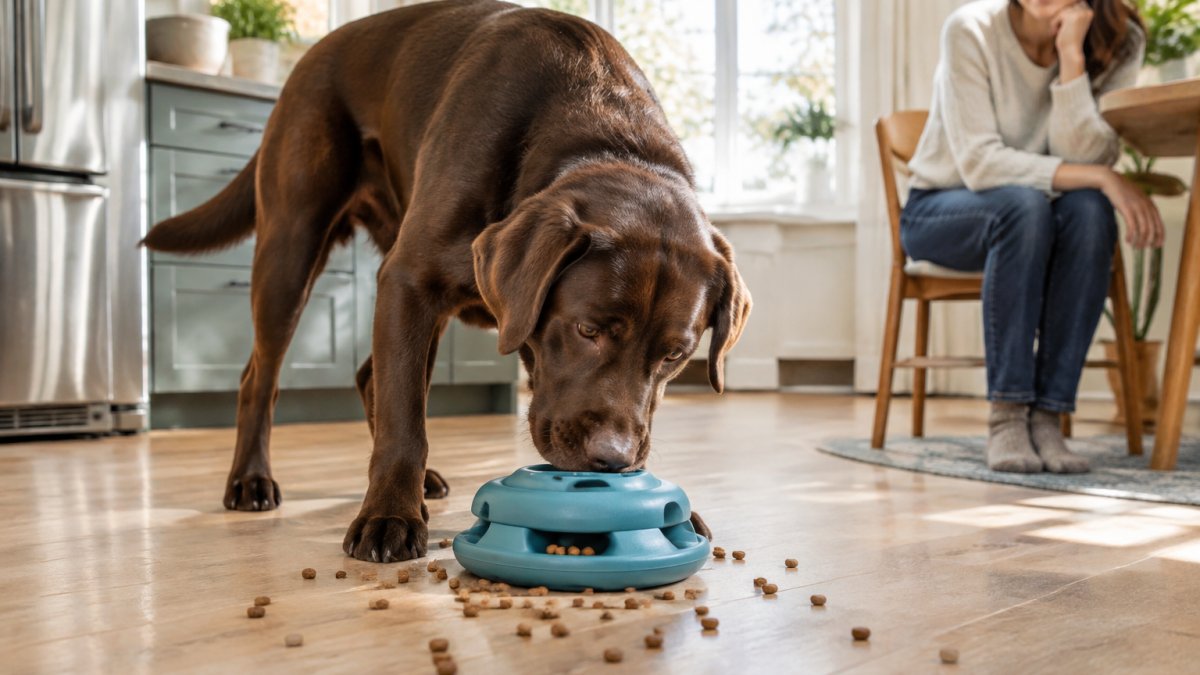
Food puzzles are hollow or compartmented toys that make a dog work for kibble, and they are the fastest way to turn a five-minute meal into fifteen minutes of problem-solving.
Start with a beginner puzzle with wide openings, then move to sliding or flip compartments as your dog gets faster. For dogs who inhale their food, a puzzle is the difference between a swallowed meal and a satisfying one.
Slow Feeding and Reducing Fast Eating
Fast eating is more than a messy habit, and slowing the meal down can be a useful habit for many dogs. Puzzle feeders force a dog to eat one piece at a time, which naturally stretches the meal and reduces gulping.
If your dog eats so fast that even a puzzle barely slows them, our article on how to prevent bloat in dogs naturally at home covers the feeding habits that matter most. Watch out: never put a puzzle feeder down and walk away from a dog who has a history of bloat, since frustration and frantic eating can make gulping worse.
Stuffed Toys and Food-Dispensing Toys
Stuffed and dispensing toys keep a dog busy long after the kibble is gone. A rubber toy packed with wet food and frozen overnight turns into a long, licking project that soothes a wired dog. Food-dispensing balls that release kibble as they roll add movement to the meal, which suits dogs who need to chase as much as chew.
Rotate two or three of these so the challenge stays new. A toy your dog has solved a hundred times stops being enrichment and becomes a habit.
Snuffle Mats, Scatter Feeding, and Foraging Games
Foraging games let a dog use its nose, and a nose-driven search is one of the most tiring things a dog can do. Scatter a handful of kibble across a snuffle mat or a section of lawn and let the dog root it out. Snuffle mats, scatter feeding, and hiding food for a "find it" game are common ways to add a search task to a meal.
Measure the kibble you scatter out of the daily ration, not on top of it. A foraging game only works as enrichment if it replaces part of a meal rather than adding to it.
Scent Work and Find-It Games for Food-Motivated Dogs
Scent games turn a hungry dog's best sense into a job, and a nose-driven search is one of the most tiring things a dog can do in a small area.
Build the game in stages rather than starting with hidden food. Begin with a visible drop: place a piece of kibble on the floor a few feet away, cue "find it," and let your dog eat it. Repeat until your dog is confidently moving to the visible treat on cue. Next, drop the food while your dog watches and let them track the fall.
Session length should follow the same logic. A beginner does well with three to five minutes and five or six successful finds; a confident dog can work ten to fifteen minutes; an advanced forager can handle a room-to-room search or a snuffle mat plus a hidden-food circuit.
Reading your dog is the part most owners skip. Engagement looks like a low, busy nose, a wagging tail, and a dog who returns to the start position for the next rep. Frustration looks like barking at you, giving up and staring, pacing, or abandoning the search to beg. Fatigue looks like slower movement, lying down between finds, or losing interest in the food itself.
Watch out: do not hide food where it can be destroyed or where the dog can get stuck, behind appliances, under heavy furniture, or near electrical cords. Keep hides at nose level or on the floor for beginners, and avoid hiding food in bedding or upholstery that a determined dog will shred to reach it.
Scent work also pairs well with the other activities in this guide. A short find-it game before a frozen stuffed toy, or a scatter feed after a puzzle, gives a hungry dog a sequence of jobs instead of one burst of food.
Indoor Enrichment Activities for Dogs When It's Too Hot or Cold Outside
Bad weather is no reason for a bored dog, and indoor enrichment activities for dogs can burn real energy in a small space. A hallway scatter game, a frozen stuffed toy, or a muffin tin puzzle keeps a dog working without a single step outside. These are the days when enrichment earns its keep.
Muffin Tin Games and Lick Mats
A muffin tin game is one of the cheapest indoor wins. Drop a treat in each cup, cover the cups with tennis balls, and let your dog figure out how to pop them out. It is simple problem-solving that suits a food-motivated dog on a rainy afternoon.
Lick mats work on a different system. Smearing wet food or plain yogurt across the textured surface gives a dog a long, slow licking task that many owners find calming. Licking and chewing are self-soothing behaviors, which makes these tools useful for anxious dogs as well as bored ones.
Dog Enrichment Ideas DIY: Household Items That Work
You do not need to buy much to start. A rolled-up towel with kibble tucked inside is a simple foraging toy. Scatter kibble under a few tennis balls, or hide treats in an empty cardboard box and let your dog shred it under supervision.
- Rolled towel with kibble folded inside
- Muffin tin with treats under tennis balls
- Cardboard box with hidden kibble for supervised shredding
- Scatter feeding across a section of floor
Watch out: skip any household item your dog can swallow or shred into small pieces, and always supervise. After a session with food toys, our guide on how to clean and sanitize dog chew toys safely covers keeping them fresh.
How Long Should a Dog Spend on a Food Puzzle?
Most dogs do well with ten to twenty minutes per food puzzle session, and a few short sessions a day beat one long one. The right length depends on the dog: a beginner may need five minutes, while a seasoned puzzle-solver may work a frozen toy for half an hour. Stop while your dog is still engaged, not after frustration sets in.
| Dog's Experience | Session Length | Frequency | Best Puzzle Type |
|---|---|---|---|
| First-timer | 5-10 min | 2-3 times daily | Wide-opening beginner puzzle |
| Confident solver | 10-20 min | 2 times daily | Sliding or flip-compartment puzzle |
| Advanced forager | 20-30 min | 1-2 times daily | Frozen stuffed toy, snuffle mat |
Session Length
Portion Control and Safety for Hungry Dogs
Every bit of food used in enrichment counts toward the daily ration. That single rule separates enrichment from extra feeding, and it is the one most owners of food-obsessed dogs get wrong. Measure the full day's food once, set aside the portion that will go into puzzles, snuffle mats, and training, and feed only the remainder in the bowl.
A simple budgeting method: scoop the day's total into a container in the morning, then divide it into three piles, bowl meals, enrichment, and training rewards. When the container is empty, the food day is over. This prevents the quiet creep that happens when a handful here and a smear of peanut butter there add up to a second dinner. For exact measuring steps, our guide on how to control your dog's portions accurately walks through the process.
Watch out: calorie-dense add-ins are where budgets blow up. A tablespoon of peanut butter, a spoon of wet food, or a squeeze of cheese can carry more calories than a quarter cup of kibble, so account for them by reducing the kibble that goes into the same toy.
Safety is activity-specific, and it changes with the dog in front of you. Match the toy to chewing style: a heavy chewer can crack a thin plastic puzzle and swallow shards, so choose rubber or thick-walled feeders and retire anything with a split seam.
Feeding style changes the risk profile as well. If you are setting up a mealtime routine around a feeder, check our list of what to check before you choose an automatic pet feeder first.
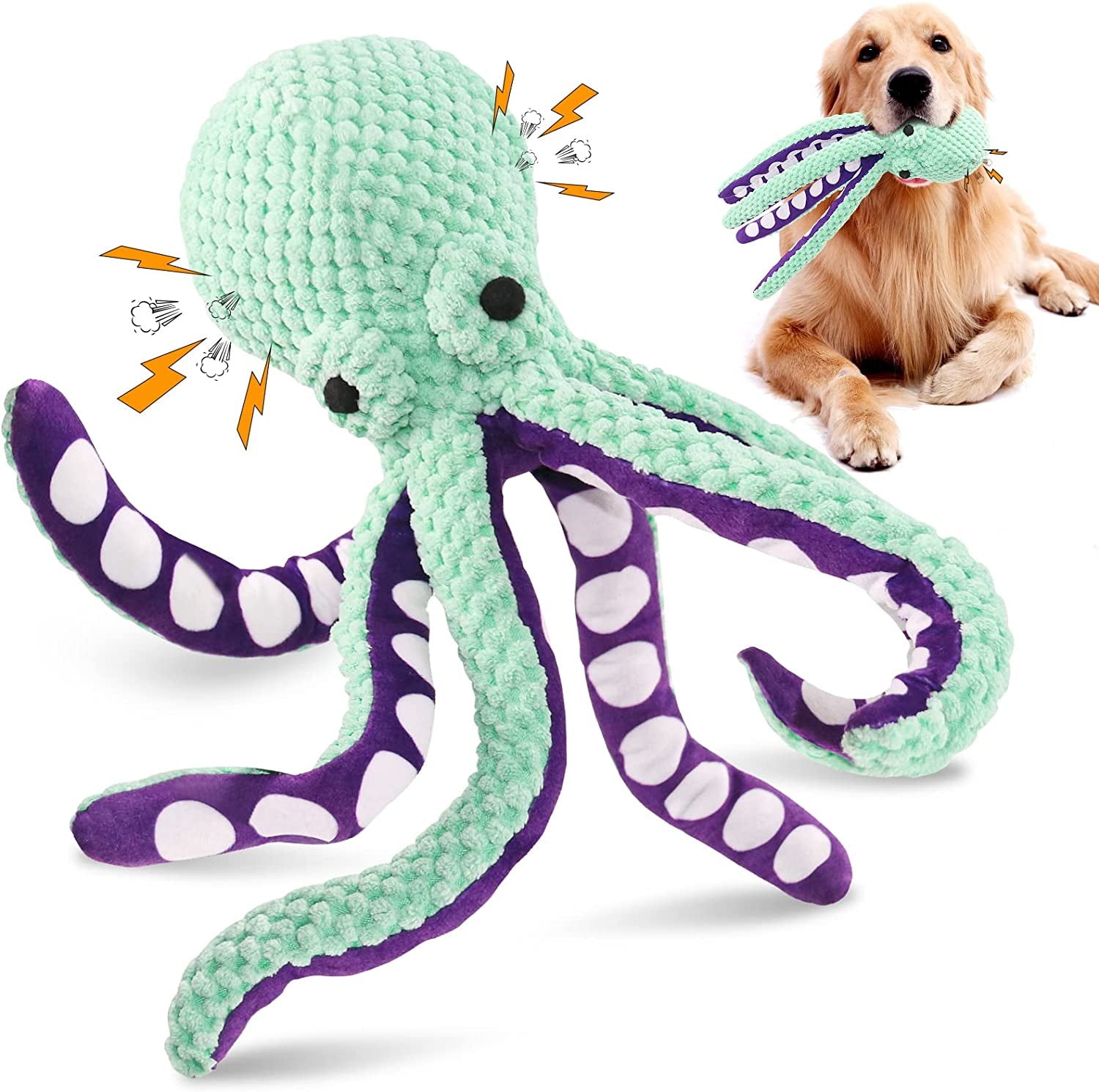
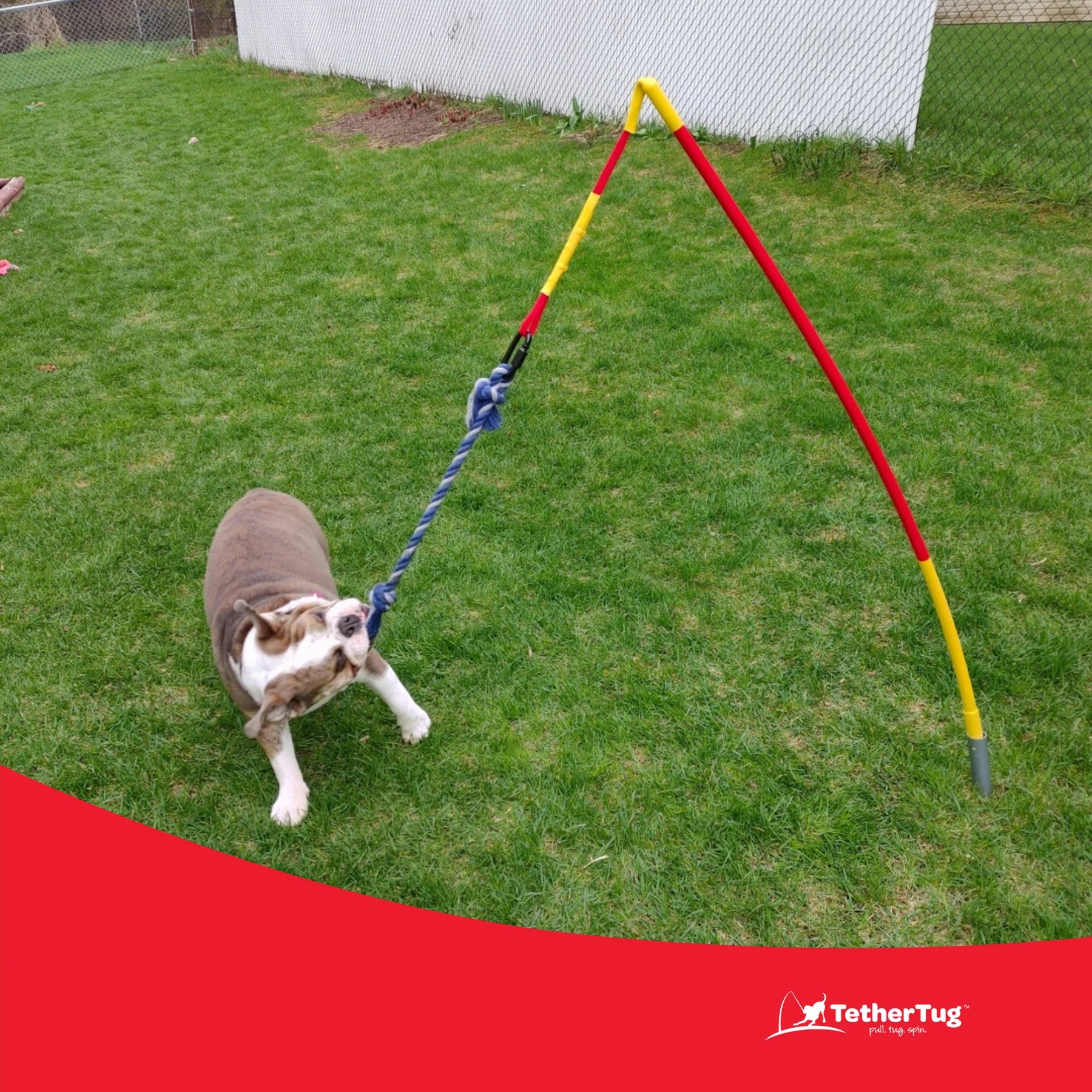
A durable chew is a useful between-meal outlet for a food-motivated dog, but it still counts as a safety decision. Our large squeaky plush dog toy for aggressive chewers at $13.70 is a supervised mouthing option, and our durable tug toy kit at $82.99 gives a pull-and-shake dog a solo outlet that does not involve food at all.
A hungry dog is not a problem to suppress. It is a dog with energy that needs a job. Build a rotation of puzzles, scent games, and foraging tasks, measure every treat into the daily ration, and match each activity to your dog's chewing style and feeding history, and you will have a calmer, more satisfied dog who works for food instead of begging for it.
Frequently Asked Questions
What are the best enrichment activities for hungry dogs?
Food puzzles, snuffle mats, scatter feeding, and frozen stuffed toys work best because they turn mealtime into a 10 to 20 minute job. Snuffle mats and hiding kibble for find-it games are common ways to add mental stimulation. Rotate two or three of these so your dog does not solve the same puzzle in seconds.
How long should a dog spend on a food puzzle?
Most dogs finish a well-matched puzzle in 5 to 15 minutes. A puzzle that takes under 2 minutes is too easy, and one that frustrates your dog past 20 minutes is too hard. Start simple, then increase difficulty as your dog gets faster. Split the daily kibble ration across two or three puzzles instead of one long session.
Can I use my dog's regular kibble for enrichment activities?
Yes. Using part of the daily kibble ration in puzzles, snuffle mats, or scatter feeding keeps calories in check while adding mental stimulation. Measure the full day's food first, then set aside a portion for enrichment and feed the rest in the bowl. This matters most for food-motivated dogs prone to weight gain.
How do I keep a food-motivated dog busy indoors?
Try indoor enrichment activities for dogs like muffin tin games, lick mats, and rolled-towel kibble hunts. Food puzzles are easy to make at home, and scattering kibble in a rolled-up towel or hiding food under tennis balls are simple options. Keep sessions short, supervise chews, and rotate toys so novelty does the work.
