

Table of Contents
- What Makes a Harness Escape-Proof for Small Dogs
- Quick Comparison: 7 Best Dog Harnesses for Escape Artists Small Breeds
- How to Measure Your Dog for a Harness That Won't Slip
-
The Best Harness for Small Dogs That Back Out: Top Picks
- 1. Paw Fit Gears Escape-Proof Step-In Harness
- 2. Paw Fit Gears Three-Point Security Harness
- 3. Paw Fit Gears Reflective Comfort Harness
- 4. Paw Fit Gears Padded Front-Clip Harness
- 5. Paw Fit Gears Adjustable Mesh Harness
- 6. Paw Fit Gears Lifting Handle Harness
- 7. Paw Fit Gears Anxiety-Reducing Vest Harness
- How to Stop Dog Pulling on Leash with the Right Harness
- Harness-to-Collar Backup Systems for Extra Security
- Frequently Asked Questions
Last Updated: September 22, 2026
What Makes a Harness Escape-Proof for Small Dogs
For escape artists small breeds rely on an escape-proof harness with three points of contact, a snug girth strap, and hardware that resists pulling force. Small dogs back out of standard harnesses because their narrow bodies and shoulders slip through openings sized for larger breeds.
Three-Point vs. Two-Point Harness Designs
Three-point harnesses secure the dog at the chest, belly, and back, so no single strap can loosen enough to let the dog slip through.
| Design | Contact Points | Escape Risk | Best For |
|---|---|---|---|
| Three-point | Chest, belly, back | Low | Escape artists, anxious dogs |
| Two-point | Chest, girth | Moderate to high | Calm, trained dogs |
| Step-in | Girth only | High | Tiny, cooperative breeds |
Quick Comparison: 7 Best Dog Harnesses for Escape Artists Small Breeds
| Harness | Style | Key Feature | Best For |
|---|---|---|---|
| Paw Fit Gears Escape-Proof Step-In | Step-in | Dual security buckle | Toy breeds under 10 lbs |
| Paw Fit Gears Three-Point Security | Three-point | Belly strap + chest plate | Confirmed escape artists |
| Paw Fit Gears Reflective Comfort | Vest | Reflective stitching | Evening walks |
| Paw Fit Gears Padded Front-Clip | Front-clip | Leash attachment at chest | Pullers |
| Paw Fit Gears Adjustable Mesh | Mesh | Multiple adjustment points | Growing puppies |
| Paw Fit Gears Lifting Handle | Vest | Lifting handle | Senior or injured dogs |
| Paw Fit Gears Anxiety-Reducing Vest | Compression vest | Ergonomic design | Anxious, reactive dogs |
For most small-breed escape artists, a harness with a belly strap is a strong pick because it can help eliminate the backing-out motion entirely.
How to Measure Your Dog for a Harness That Won't Slip
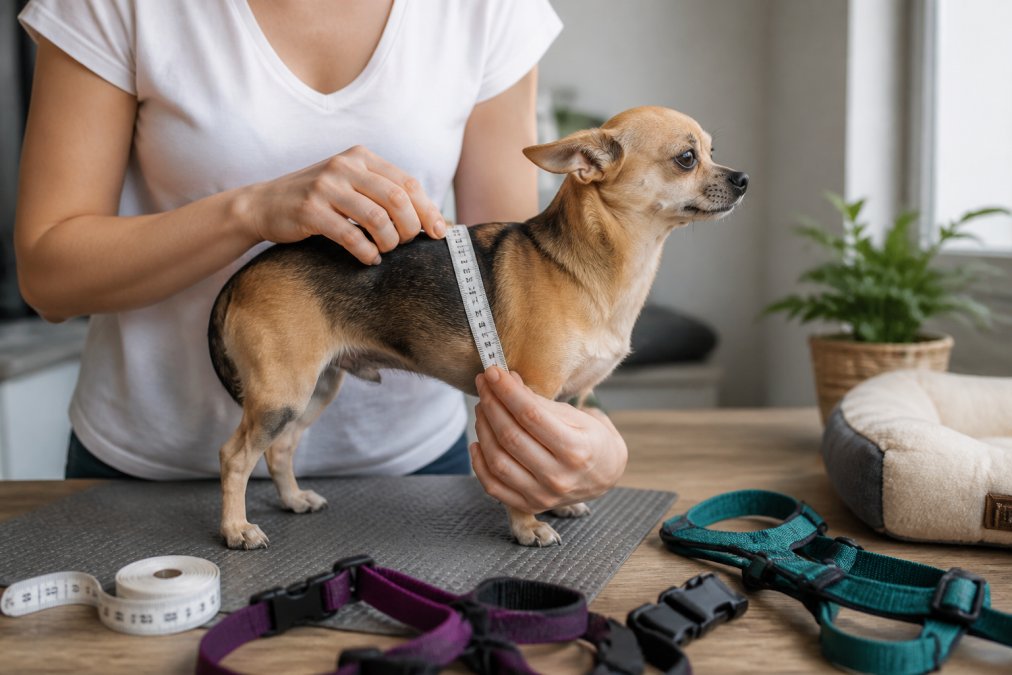
Use a soft tape measure and take three readings:
- Girth measurement: Around the widest part of the ribcage, just behind the front legs
- Chest measurement: From the base of the neck to the widest chest point
- Neck circumference: Around the neck where a collar would sit
Girth, Chest, and Neck Measurements
Take each measurement twice and record the larger number. Add one to two fingers of slack for comfort, no more.
The Weight-to-Harness Ratio Most Guides Ignore
For tiny breeds, a weight-to-harness ratio matters as much as the tape measure. A harness over 5% of the dog's body weight can cause chafing, restrict range of motion, and increase escape risk, because an uncomfortable dog will paw, twist, and back out of it.
Run the math before you buy:
| Dog's Weight | 5% Ceiling | What That Means in Practice |
|---|---|---|
| 4 lbs | 3.2 oz | Padded vest styles are usually too heavy |
| 6 lbs | 4.8 oz | Mesh and step-in designs fit the budget |
| 8 lbs | 6.4 oz | Most vest harnesses become viable |
| 10 lbs | 8.0 oz | Full-feature harnesses with handles fit |
The Two-Finger Rule, Adjusted for Tiny Frames
The two-finger rule was written for medium and large dogs. For breeds under 10 lbs, use one finger at three points: the girth strap behind the front legs, the chest strap across the sternum, and the neck opening. If two fingers slide under easily at all three, the harness is too loose for an escape artist.
Fitting Checkpoints After the First Walk
A harness that measures correctly indoors can still fail on the sidewalk. After the first three walks, re-check:
- Strap creep: Nylon webbing stretches slightly under load. Tighten each adjustment point by one notch if the girth strap has loosened.
- Fur compression: Long-haired breeds like Pomeranians and Havanese compress their coat under the strap, which adds hidden slack. Measure over the coat, not against the skin.
- Shoulder clearance: The dog should be able to walk, trot, and sit without the chest strap riding up into the throat.
- Escape test: With the harness on and the leash attached, gently pull backward at the chest, the same motion a dog uses to back out. If the harness shifts more than an inch toward the tail, it needs tightening.
AKC guide to measuring a dog for a harness
The Best Harness for Small Dogs That Back Out: Top Picks
Every harness below comes from Paw Fit Gears, built specifically for small breeds.
1. Paw Fit Gears Escape-Proof Step-In Harness
Best for: Toy breeds under 10 lbs that slip out of everything.
Pros:
- Fast on and off
- Dual locking buckles
- Lightweight for toy breeds
Cons:
- Less adjustable than vest styles
- Not ideal for heavy pullers
2. Paw Fit Gears Three-Point Security Harness
Best for: Confirmed escape artists and dogs that back out of standard harnesses.
Pros:
- Three points of contact
- Reinforced stitching
- Front and back leash attachment points
Cons:
- Takes longer to put on
- Slightly heavier than step-in designs
3. Paw Fit Gears Reflective Comfort Harness
Best for: Evening and early-morning walks.
Reflective stitching runs along every strap, so drivers see your dog from a distance. The padded chest panel prevents chafing on thin-coated breeds.
Pros:
- High visibility
- Soft padding
- Snug fit
Cons:
- Limited color options
- Not designed for extreme pullers
4. Paw Fit Gears Padded Front-Clip Harness
Best for: Dogs that pull on leash.
The front-clip leash attachment redirects forward motion sideways, discouraging pulling without throat pressure.
Pros:
- Reduces pulling
- Padded chest plate
- Ergonomic design
Cons:
- Requires leash technique adjustment
- Not for off-leash use
5. Paw Fit Gears Adjustable Mesh Harness
Best for: Growing puppies and hard-to-fit body shapes.
Multiple adjustment points let you fine-tune the fit as your dog grows. The mesh construction is light and breathable.
Pros:
- Highly adjustable
- Lightweight
- Affordable
Cons:
- Less secure than three-point designs
- Not for strong pullers
6. Paw Fit Gears Lifting Handle Harness
Best for: Senior dogs, injured dogs, and small breeds that need help on stairs.
Pros:
- Easy lifting support
- Sturdy handle
- Padded interior
**Cons:
- Bulkier than standard harnesses
- Handle adds weight
7. Paw Fit Gears Anxiety-Reducing Vest Harness
Best for: Anxious and reactive dogs with escape behavior.
The compression vest design calms dogs during stressful situations. The ergonomic design prevents pressure points that trigger flight response.
Pros:
- Calming compression
- No chafing
- Secure fit
Cons:
- Takes time to adjust
- Not for hot-weather use
How to Stop Dog Pulling on Leash with the Right Harness
The right harness reduces pulling by redirecting force, not punishing the dog. Front-clip designs turn forward motion sideways, naturally discouraging pulling.
Why Escape Artists Pull Differently
A confident, untrained dog pulls to go faster; an anxious small dog pulls to go away. The handling response differs:
- The confident puller responds to direction changes, stop-and-go, and reward-based loose-leash training.
- The flight-driven puller responds to distance first. No amount of leash technique will calm a dog that's already over threshold. You have to create space from the trigger before you can ask for anything.
Front-Clip vs. Back-Clip for Escape-Prone Small Dogs
| Attachment | Best For | Escape Risk |
|---|---|---|
| Front-clip (chest) | Pullers, reactive dogs | Low, redirects motion, harder to back out |
| Back-clip (dorsal) | Calm walkers, casual use | Higher, a backward pull slides the harness forward |
| Dual-clip (both) | Escape artists in training | Lowest, two points of control |
For a confirmed escape artist, a dual-clip harness with front and back leash attachment gives the most control. Use a double-ended leash: the chest clip holds when the dog backs up, the back clip steadies it when it lunges forward.
Handling Mechanics That Actually Work
Pair the harness with these habits:
- Reward loose-leash walking with treats and praise (positive reinforcement)
- Stop moving when the leash goes tight, but only for the confident puller. For a flight-driven dog, stopping can increase panic. Instead, turn and walk away from the trigger.
- Keep walks short and frequent for puppies
- Use a front-clip attachment for pullers, back-clip for calm walkers, and dual-clip for escape artists
- Carry high-value treats on every walk, a small dog that's food-motivated is easier to redirect than one that's already shut down
For reactive dogs, add distance from triggers before correcting leash behavior, a harness can't fix unaddressed anxiety. The sequence: create distance → let the dog settle → reward calm behavior → then work on leash mechanics.
The Backup Strap Habit
Even with a well-fitted harness, a flight-driven small dog can surprise you. A short backup strap from harness to collar is the cheapest insurance you can buy, a typical nylon safety strap weighs under half an ounce, well inside the 5% weight-to-harness ratio for dogs over 6 lbs.
For escape-prone small dogs, pulling is a symptom, not the problem. Fix the fit first, then address the flight response with distance and reward. A dual-clip harness plus a backup strap covers both failure modes.
Harness-to-Collar Backup Systems for Extra Security
A harness-to-collar backup adds a second connection point in case the harness fails: a short safety strap clips from harness to collar, so the collar catches the dog even if it backs out.
For the most secure setup, combine:
- A three-point harness with a belly strap
- A well-fitted collar with quick-release buckle
- A backup strap connecting the two
Frequently Asked Questions
What is the best harness for small dogs that escape?
A three-point harness with a belly strap and a security buckle can be effective for small dogs that escape. Look for adjustable straps at the neck, chest, and girth. Always measure your dog's girth and chest before buying, and check that the harness fits snugly but allows two fingers under the straps.
How do I measure my small dog for a secure harness fit?
Use a soft measuring tape to measure three areas: the neck circumference just below the collar line, the chest girth at the widest point behind the front legs, and the chest width across the front. Write down each measurement in inches or centimeters. Compare those numbers to the harness size chart. If your dog falls between sizes, size up and use the adjustment points to tighten the fit.
Do escape proof dog harnesses actually work?
Yes, when fitted correctly. Harnesses with a belly strap and three-point design prevent backing out because they secure around the thoracic cage, not just the chest. Poorly fitted harnesses can cause chafing and slip, so the fit matters as much as the design. Pair the harness with a collar backup system for double security.
How can I stop my dog from pulling on the leash?
Use a front-clip harness to redirect your dog's momentum sideways when they pull. Combine that with positive reinforcement training: stop walking when the leash goes tight, and reward your dog when they walk beside you. Practice in low-distraction areas first. A front-clip harness can distribute pressure across the chest, which discourages pulling without causing neck strain.
Small-breed escape artists need gear built for their body shape, not scaled-down versions of large-dog harnesses. Paw Fit Gears designs every harness with the belly strap, reinforced webbing, and secure buckles that small dogs can't defeat. Browse the full harness collection to find the right fit for your dog's size, temperament, and walking style.