

Table of Contents
- How to Measure a Puppy for a Harness
- Front-Clip vs Back-Clip Harness for Puppies
- Signs of a Poorly Fitting No-Pull Dog Harness
- When to Start Leash Training a Puppy
- Features That Matter in a No-Pull Dog Harness for Puppies
- Training a Puppy to Wear a No-Pull Harness
- Frequently Asked Questions
Last Updated: October 2, 2026
How to Measure a Puppy for a Harness
A puppy harness only works when it fits, and getting that fit starts with a soft measuring tape. Learning how to choose a no-pull dog harness for puppies begins with three numbers: girth, neck, and chest strap length. At Paw Fit Gears, we tell new puppy owners to measure every two weeks, because puppies can outgrow a harness in a single month.

Girth is the most important number. Wrap the tape around the widest part of your puppy's ribcage, just behind the front legs. Keep the tape snug but not tight. You should fit two fingers under it.
Girth, Neck, and Chest Strap Measurements
Take all three measurements while your puppy stands still. Treats help here.
- Girth: widest part of the ribcage, behind the front legs
- Neck circumference: around the middle of the neck, not the base
- Chest strap length: from the front of the chest to the widest rib point
Write the numbers down. A sizing chart means nothing without them.
Growth-Stage Adjustment Guide
Most guides skip this part, and it's where owners waste money. Puppies move through three fitment stages:
- 8-16 weeks: expect a change of about one size every 3-4 weeks
- 4-8 months: slower growth, but the chest deepens fast
- 8-12 months: near-adult size, mostly fine-tuning straps
Front-Clip vs Back-Clip Harness for Puppies
The front-clip vs back-clip harness for puppies debate comes down to one question: are you training or walking? A front-clip attachment point sits on the chest, below the neck and above the sternum.
A back-clip d-ring sits between the shoulder blades. It's more comfortable for casual walks, but it gives a strong puppy leverage to pull harder. The strap rides across the top of the back, and a determined puppy can lean into it like a sled dog.
| Feature | Front-Clip | Back-Clip |
|---|---|---|
| Best for | Leash training | Relaxed walks |
| Effect on pulling | Redirects motion | Can add leverage |
| Chest strap pressure | Spread across chest | Minimal |
| Good for puppies? | Yes, during training | Yes, after training |
| Risk with a growing puppy | Chest strap can rub if too loose | Can slip off a narrow-chested puppy |
Why the Attachment Point Matters More for Puppies
A puppy's skeleton is still developing. The growth plates in the shoulders and forelimbs don't close until roughly 12-18 months in most breeds, and pressure from a poorly placed strap can affect how a puppy moves.
Most practitioners find that a front-clip attachment is the better default during the first 6-9 months, when leash manners are still forming and the puppy is most likely to lunge.
Dual-Clip Harnesses and the Transition
Dual-clip harnesses give you both attachment points on one piece of gear. Clip the leash to the front for training sessions, then switch to the back once your puppy's leash manners improve.
A common pattern is to use the front clip for the first 10-15 minutes of a walk while the puppy is fresh and most likely to pull, then switch to the back clip for the return leg when the puppy is tired and walking calmly.
What to Avoid
Skip any harness with a single attachment point if you're still in the training phase. A back-clip-only harness gives a puppy no feedback when it pulls, and a front-clip-only harness can be awkward for relaxed walks once training is done. Also avoid harnesses where the front d-ring is sewn directly into a thin strap, under load, that strap can twist and rub the armpit.
Signs of a Poorly Fitting No-Pull Dog Harness
A badly fitted harness shows clear warning signs, and catching them early prevents long-term problems. Watch for these:
- Axillary chafing: red or bald patches behind the front legs
- Gait restriction: stiff or shortened steps on walks
- Shoulder blade clearance: the strap sits on the shoulder instead of behind it
- Sliding: the harness twists to one side during walks
- Escape risk: your puppy can back out of it
If any of these show up, re-measure and adjust. Don't wait for the fur to thin out.
When to Start Leash Training a Puppy
Leash training can start the day your puppy comes home, usually around 8 weeks. Young puppies can't handle long walks, but short sessions in the house build the habit early.
Start with the harness on for five minutes at a time. Add the leash once your puppy ignores the harness.
The American Veterinary Medical Association's pet care resources notes that early, positive exposure to new experiences shapes a puppy's behavior for life. Harness time fits that mold.
Most puppies need several weeks of short sessions before a full walk feels normal.
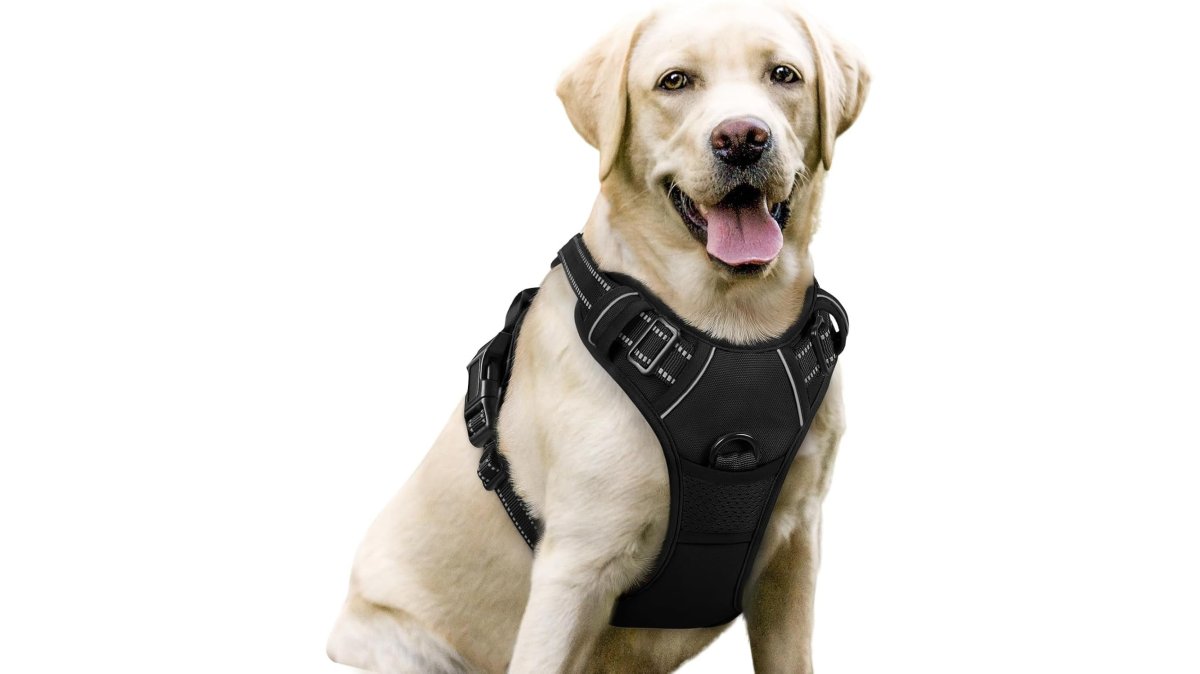
No-Pull Dog Harness with 2 Leash Clips – Adjustable, Reflective, Padded Vest →
Features That Matter in a No-Pull Dog Harness for Puppies
The features that matter most are adjustable straps, padding, and reflective materials. Skip any harness missing all three.
Adjustable Straps, Padding, and Reflective Materials
Four or more adjustment points let the harness grow with your puppy. Padding under the chest strap prevents rubbing. Reflective strips keep evening walks safe.
Look for breathable mesh, a quick-release buckle, and metal d-rings rather than plastic. Metal holds up under leash pressure.
The Consumer Product Safety Commission's pet product guidance reminds owners to check hardware and buckles regularly for wear, since a failed clip can let a puppy bolt into traffic.
Breed-Specific Harness Anatomy
Breed shape changes everything. A deep-chested breed needs a longer chest strap. A narrow-chested breed needs a harness that won't slide.
- Labs, Shepherds, Huskies: deep chest, need a longer chest panel
- Greyhounds, Whippets: deep but narrow, need a snug girth strap
- Pugs, Bulldogs: broad chest, short back, need extra padding
A harness built for a Lab will slip off a Whippet. Measure for the body in front of you.
Paw Fit Gears builds its no-pull harness with four adjustment straps, breathable padding, and reflective strips, which covers most of these breed differences in one design.
Training a Puppy to Wear a No-Pull Harness
Training a puppy to wear a harness takes patience and treats, not force. Most puppies accept a harness within one to two weeks of short, positive sessions.
Desensitization and Positive Reinforcement
Desensitization means letting your puppy get used to the harness before you ever clip a leash on. Lay it on the floor.
Then follow these steps:
- Hold the harness open, treat, release
- Slide it over the head, treat, remove
- Buckle it, treat, remove after 10 seconds
- Leave it on for one minute, treat, remove
- Clip the leash, walk two steps, treat
Positive reinforcement does the heavy lifting. Pair the harness with treats and praise every time.
For puppies that already pull hard on leash, a front-clip no-pull dog harness paired with treat-based training works better than a flat collar. Flat collars put pressure on the throat, which is the last thing a growing puppy needs.
The ASPCA's dog behavior and training resources recommends reward-based methods over punishment for all leash training, since punishment-based correction often increases leash reactivity.
If your puppy is still pulling after several weeks, check the fit first. A loose harness gives no control, no matter how good the design is.
Frequently Asked Questions
What age should you put a harness on a puppy?
Most puppies can wear a properly fitted, lightweight harness from 8 weeks old, once they have their first vet check. Start with short sessions at home before walks. Because puppies grow fast, check the fit every two weeks and adjust the straps or size up as needed. A harness that fits well at 8 weeks may rub or restrict movement by 12 weeks, so regular refitting matters more than the starting size.
Are front-clip harnesses safe for puppies?
Yes, when they fit correctly. A front-clip no-pull dog harness redirects forward motion at the chest instead of the neck, which keeps leash pressure off the throat. The chest strap should sit across the breastbone, not in the armpit, to prevent axillary chafing. Check shoulder blade clearance by sliding two fingers under the strap. If the harness twists or the puppy's gait looks restricted, loosen the straps or try a different size.
How do I know if my puppy's harness fits correctly?
You should be able to slide two fingers under every strap. The chest strap sits behind the shoulder blades, not across them, so the front legs move freely. Watch for signs of a poor fit: rubbing under the armpits, a harness that slides sideways, or a puppy that freezes, bunny-hops, or refuses to walk. A well-fitted harness stays centered, allows a full stride, and does not cause the puppy to scratch or bite at it.
Should I use a harness or a collar for a puppy that pulls?
For puppies that pull, a harness is the safer choice. A collar concentrates leash tension on the neck and throat, which is risky for a growing puppy's trachea and cervical spine. A no-pull dog harness distributes pressure across the chest and shoulders. Use the front attachment point during training walks to discourage pulling, and switch to the back clip for casual walks once your puppy's leash manners improve.
Picking the right gear shouldn't feel like guesswork. Paw Fit Gears makes no-pull harnesses with dual leash clips, four adjustment straps, breathable padding, and reflective strips, so your puppy stays comfortable while you build better leash manners. Measure your puppy, pick the right attachment point, and train with treats. Get started with Paw Fit Gears and make every walk easier for both of you.