

Table of Contents
- What Makes a Harness Effective for Leash Training
- Front Clip vs Back Clip Harness: Which Works Better for Training
- How to Stop a Dog from Pulling on a Leash
- Best Harness for Puppy Leash Training: Starting Right
- Measuring Your Dog for Proper Harness Fit
- Top Harness Options for Training Success
- Safety, Durability, and Long-Term Wear Considerations
- Frequently Asked Questions
Last Updated: October 1, 2026
What Makes a Harness Effective for Leash Training
A harness designed for leash training should prioritize control, comfort, and behavioral correction without causing strain or injury to your dog. The best dog harness for leash training combines a front-clip design with adjustable straps, padded materials, and pressure distribution that redirects pulling force rather than choking.
When your dog pulls forward, a front-clip harness naturally turns their body sideways, making forward momentum impossible. This creates a gentle teaching moment without pain or restriction. Back-clip harnesses, by contrast, actually encourage pulling by allowing dogs to use their full body weight against the leash. For training purposes, front attachment is the critical difference between a tool that works and one that merely manages the problem.
At Paw Fit Gears, we understand that leash training success depends on equipment that communicates clearly with your dog. The harness should feel like a natural extension of the training process, not an uncomfortable constraint. Look for breathable mesh panels, ergonomic design that allows shoulder mobility, and quick-release buckles so you can reward your dog immediately when they respond correctly.

Durability matters too. A harness that breaks mid-walk undermines your training consistency. Quality materials like no-rip nylon and reinforced stitching ensure your investment lasts through months of daily use, even with strong pullers.
Front Clip vs Back Clip Harness: Which Works Better for Training
The front-attachment design is fundamentally superior for leash training, while back-clip harnesses serve different purposes. Understanding this distinction changes your entire approach to loose-leash walking.
Front-clip harnesses redirect your dog's forward motion by applying gentle pressure to the chest when they pull. This mechanical advantage means a 60-pound dog pulling hard gets turned sideways, losing use and momentum. The dog learns quickly that pulling doesn't achieve the goal of moving forward. This is why professional trainers overwhelmingly recommend front-clip designs for dogs with leash reactivity or pulling problems.
Back-clip harnesses distribute pressure across the shoulders and back. While this prevents neck strain, it also allows dogs to pull with full force. A back-clip harness works best for well-trained dogs who already understand loose-leash walking, or for casual neighborhood strolls where pulling isn't the primary concern.
The American Veterinary Medical Association emphasizes that training tools should prevent tracheal collapse and neck strain, particularly in small breeds. Front-clip harnesses achieve this while simultaneously addressing pulling behavior.
For training success, front-clip is non-negotiable. The Paw Fit Gears No-Pull Dog Harness with Front Clip ($36.48) delivers heavy-duty control with metal leash clips and a built-in handle for quick assistance in high-distraction environments. This design works for large breeds, hiking scenarios, and reactive dogs that need immediate redirection.

| Harness Type | Best For | Pulling Control | Comfort | Training Effectiveness |
|---|---|---|---|---|
| Front-Clip | Training, pullers, reactivity | Excellent | High (no neck strain) | Superior |
| Back-Clip | Trained dogs, casual walks | Minimal | High | Poor for training |
| Dual-Attachment | Versatility, transitioning | Good | High | Very good |
How to Stop a Dog from Pulling on a Leash
Stopping pulling requires three elements working together: the right harness, consistent training, and understanding why your dog pulls in the first place.
Dogs pull because forward motion is rewarded. They see something interesting, pull toward it, and get closer to that object or experience. This teaches them that pulling works. Breaking this cycle means making pulling unrewarding and loose-leash walking rewarding.
A front-clip harness removes the mechanical advantage, but the harness alone doesn't train your dog. You must reward calm walking consistently. When your dog walks beside you without tension, mark that moment with "yes" or a clicker, then immediately reward with a treat. This teaches them that staying close to you is more valuable than pulling ahead.
Avoid punishment-based corrections. Yanking the leash, yelling, or using aversive tools creates fear and can increase reactivity. Your dog doesn't pull to be difficult; they pull because they haven't learned an alternative behavior that's more rewarding.
Leash reactivity, lunging, barking, or pulling at other dogs, requires additional work. Desensitization involves exposing your dog to the trigger (another dog) at a distance where they don't react, rewarding calm behavior, then gradually decreasing that distance over weeks. This teaches your dog that other dogs mean good things happen, not that they need to pull or react.
Best Harness for Puppy Leash Training: Starting Right
Puppies learn habits that persist into adulthood. Starting with the right harness and training approach prevents years of pulling problems.
A puppy harness should be adjustable because puppies grow rapidly. What fits perfectly this month will be too small in six weeks. The Paw Fit Gears No-Pull Dog Harness with 2 Leash Clips ($27.09) offers four adjustment straps, accommodating growth without needing to purchase multiple harnesses as your puppy matures.
No-Pull Dog Harness with 2 Leash Clips – Adjustable, Reflective, Padded Vest →
Front-clip attachment is equally important for puppies. Starting them on a front-clip design means they never learn that pulling works. Puppies are easier to train than adult dogs because they haven't yet established pulling as a successful strategy. A few weeks of consistent reward-based training with a front-clip harness can prevent pulling problems entirely.
Comfort is critical for puppies. They're still developing, and poorly fitting harnesses can cause discomfort that creates negative associations with walks. Look for padded chest plates and breathable mesh. Your puppy should move naturally, no restricted shoulder mobility or chafing.
Keep training sessions short. Puppies have limited attention spans. Ten to fifteen minutes of focused training is more effective than an hour of inconsistent effort. Reward frequently, use high-value treats, and end on a positive note.
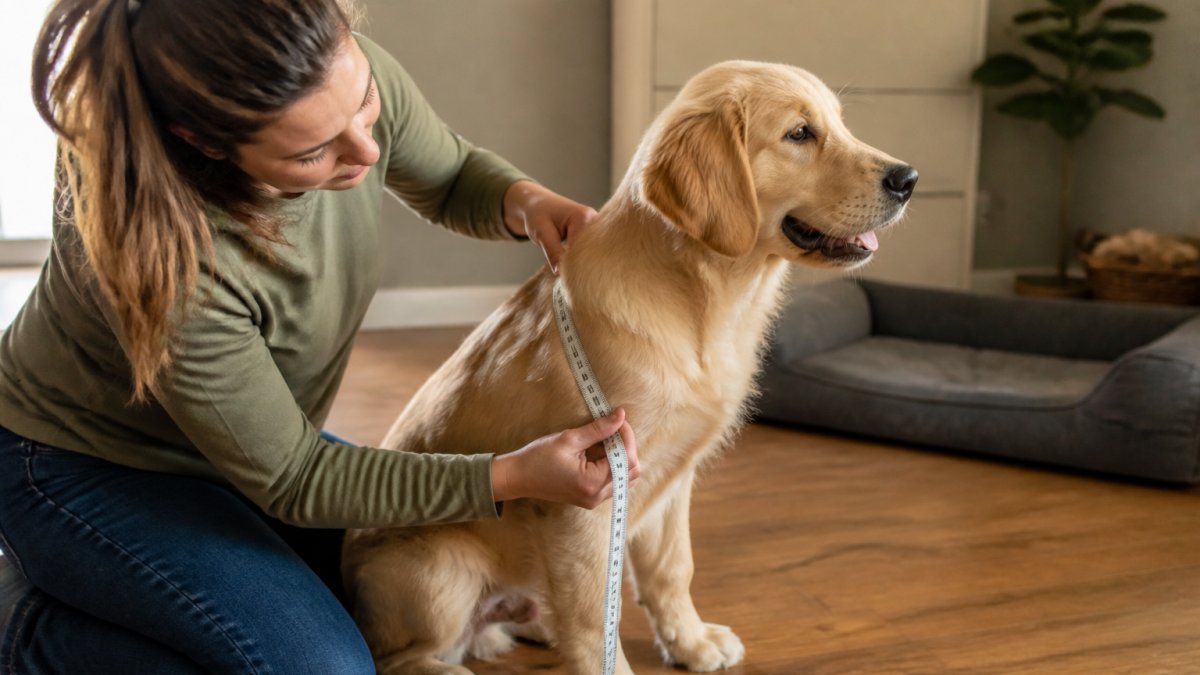
Measuring Your Dog for Proper Harness Fit
Proper fitment is the difference between a harness that works and one that causes discomfort or escape. Measure your dog before purchasing any harness.
You need two measurements: girth (chest circumference) and length (from the base of the neck to the tail base). Girth is the most critical measurement for harness function. A harness that's too loose slides around and offers no control. A harness that's too tight restricts breathing and causes chafing.
To measure girth, place a soft measuring tape around the widest part of your dog's chest, just behind the front legs. The tape should be snug but not tight, you should fit one finger underneath. Write down this measurement in inches. Most harnesses list girth ranges (for example, 20-28 inches), so knowing your dog's exact measurement ensures you fall within the intended size.
Length measurement starts at the base of the neck and extends to the base of the tail. This determines whether the harness will sit properly on your dog's body. A harness that's too short bunches up uncomfortably; one that's too long hangs loosely and may slip.
Check fit after purchase by sliding two fingers under the chest straps. If you can't fit two fingers, it's too tight. If you can fit more than two fingers, it's too loose. Your dog should be able to move naturally without restriction.
Measure your dog in a standing position, not sitting or lying down.
Top Harness Options for Training Success
No-Pull Dog Harness with 2 Leash Clips: Dual-Attachment Versatility
The Paw Fit Gears No-Pull Dog Harness with 2 Leash Clips ($27.09) offers front and back attachment points, giving you flexibility as your dog progresses through training. Start on the front clip for maximum control, then transition to the back clip once your dog demonstrates consistent loose-leash walking.
No-Pull Dog Harness with Front Clip: Heavy-Duty Control
The Paw Fit Gears No-Pull Dog Harness with Front Clip ($36.48) prioritizes control above all else. Built with heavy-duty materials and metal leash clips, this harness handles serious pullers and reactive dogs that need immediate redirection.
Safety, Durability, and Long-Term Wear Considerations
A harness that fails mid-training undermines your progress and creates safety risks. Durability determines whether your investment lasts one season or multiple years.
Frequently Asked Questions
What type of harness is best for dogs that pull on the leash?
Front-clip harnesses are specifically designed to address pulling. When your dog pulls, the chest clip redirects their forward motion to the side, naturally encouraging them to turn back toward you rather than dragging forward. This pressure distribution across the chest and shoulders prevents tracheal collapse that can occur with neck collars. The No-Pull Dog Harness with 2 Leash Clips ($27.09) offers both front and back attachment points, letting you start with front-clip training and transition to back-clip once your dog masters loose-leash walking.
Should I use a front-clip or back-clip harness for training?
Front-clip harnesses are superior for active leash training because they redirect pulling behavior immediately. Back-clip harnesses work better once your dog has learned to walk without tension. For training purposes, start with a front-clip design to establish the no-pull mechanism and positive reinforcement. The No-Pull Dog Harness with Front Clip ($36.48) provides a heavy-duty option with metal leash clips and quick-release buckles, making it ideal for dogs learning to walk with control.
What is the fastest way to leash train a dog?
Combine a front-clip harness with consistent positive reinforcement. The harness handles the mechanical redirection of pulling, while you reward calm walking with treats and praise. Practice short 10-15 minute sessions in quiet areas before progressing to busier environments. Use the built-in control handle on training harnesses for quick assistance during unpredictable moments.
How do I know if a harness fits my dog correctly?
Measure your dog's girth at the widest part of the chest and note their neck circumference. The harness should allow one finger to fit snugly between the strap and your dog's body. Check that the padded chest plate sits flat against the chest without rubbing or gaps. Adjustability is critical: a harness with 4 adjustment points lets you customize the fit as your dog grows or if they have an unusual body shape. Test the fit by walking your dog and watching for signs of discomfort like scratching, limping, or reluctance to move.