

Table of Contents
- Why Standard Leashes Fail When Dogs Pull
- What to Look for in Heavy Duty Leashes for Pulling
- 26ft Retractable Dog Leash: Best for Roaming Pullers
- BARKBAY No-Pull Harness: Front-Clip Control for Strong Dogs
- No-Pull Harness with 2 Leash Clips: Versatile Training Option
- Mighty Paw Retractable Leash: Shock Absorbing for Medium Dogs
- How to Stop Dog Pulling on Leash: Training That Works
- Which Heavy Duty Leash Setup Fits Your Dog?
- Frequently Asked Questions
Last Updated: September 8, 2026
A dog that lunges, pulls, and drags you down the sidewalk isn't just frustrating; it puts both of you at risk of injury. Standard leashes aren't engineered for the sustained tension of a strong puller. Choosing the right heavy duty leashes for pulling is about matching the equipment to the force your dog can generate. This guide from Paw Fit Gears breaks down the mechanics of leash failure and the features that prevent it.
Most leashes are designed for casual walks, not for dogs who lean into the harness with their full body weight. A heavy duty leash must withstand significant pulling force without compromising control or safety. Below, we'll show you how to evaluate tensile strength, hardware, and handle design, plus the training techniques that address the root cause of pulling.

Why Standard Leashes Fail When Dogs Pull
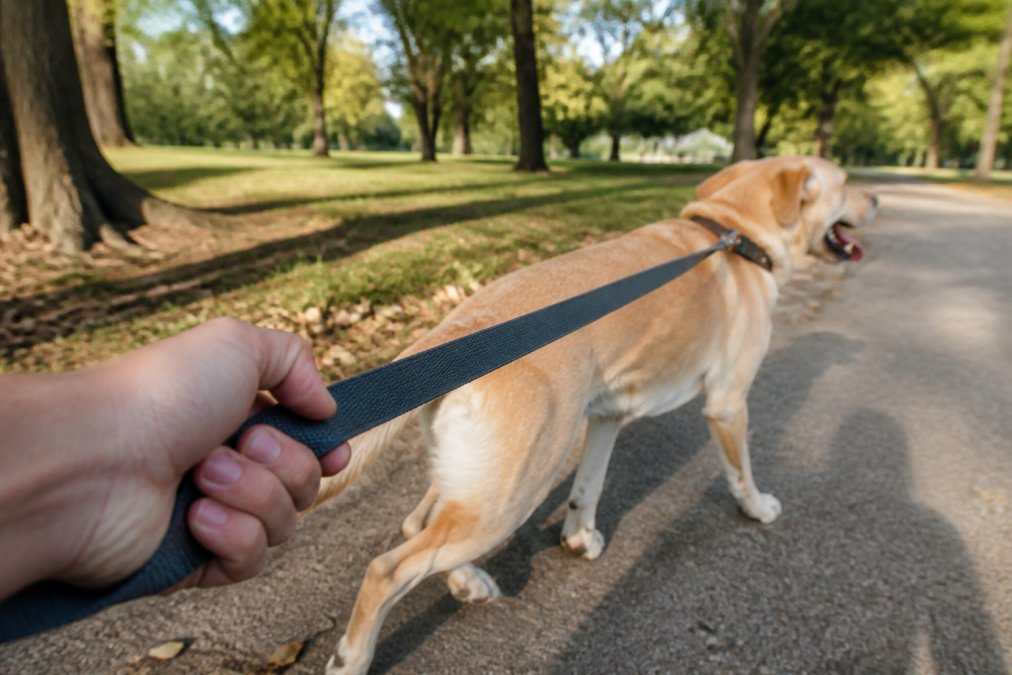
The most common point of failure isn't the strap; it's the hardware. A standard leash often features a lightweight, stamped-metal clip that can bend or snap under repeated pressure (the CDC). When that clip fails, it usually happens at the worst moment, like when your dog spots a squirrel and bolts, endangering your dog and causing you to lose your balance.
Thin webbing is another culprit. Narrow nylon can cause friction burns on your hands when a dog pulls hard, forcing you to let go. The stitching connecting the webbing to the clip is a weak link; a few loose threads can unravel under high tension. A leash that feels fine in the store can fail within weeks of daily use with a determined puller.
What to Look for in Heavy Duty Leashes for Pulling
When shopping for heavy duty leashes for pulling, assess three critical components: material strength, hardware, and handle design. A leash is only as strong as its weakest link, and a high-tensile strap attached to a weak clip is a false sense of security. We prioritize reinforced stitching and solid metal components over plastic or thin cast metal.
Look for a leash rated for a weight class well above your dog's actual weight, giving you a safety margin for sudden jerks that can exert force several times your dog's body weight. Consider the leash's purpose too: a long line for open fields has different requirements than a short, control-focused leash for city sidewalks.
Material Strength and Hardware That Won't Snap
The material determines the leash's resistance to wear and its ability to handle pulling force. Nylon webbing offers a high strength-to-weight ratio, dries quickly, and resists mildew. Biothane is waterproof, odor-resistant, and easy to clean, though it can be stiffer than nylon. For maximum durability, look for wide webbing, typically 1 inch or wider, with reinforced box stitching at stress points.
The hardware is where many leashes fail. A locking carabiner or a heavy-duty swivel clasp made of solid brass or stainless steel is far more reliable than a simple spring clip. A swivel clasp prevents the leash from twisting and tangling as your dog moves. Check that the clip is rated for a tensile strength exceeding your dog's pulling capacity, and inspect the connection point where the clip attaches to the webbing.
Ergonomic Handles for High-Tension Walks
When a dog pulls hard, the handle transfers that force to your body. A thin, unpadded handle will dig into your hand, causing pain and reducing grip strength. Look for a padded, ergonomic grip that distributes pressure across your palm. A control handle, positioned closer to the clip, gives you a second point of grip for steadying your dog or pulling them close.
The handle design also affects your ability to maintain control without injuring yourself. For dogs that pull, a handle that allows you to use both hands is invaluable, letting you brace your body weight against the pull rather than relying solely on arm strength.
26ft Retractable Dog Leash: Best for Roaming Pullers
For dogs that pull out of a desire to explore, the 26ft Retractable Dog Leash is our top pick for giving them freedom while keeping you in control. Built for medium to large dogs up to 110 lbs, it uses a heavy-duty nylon tape that is 26 feet long and tangle-free. The wide tape distributes pressure better than a thin cord, and the 360° design ensures smooth retraction even when your dog changes direction suddenly.

What sets this leash apart is the one-hand brake and lock system. The anti-slip rubberized handle and push-button control let you lock the leash at any length or stop your dog instantly with one hand. The rustproof swivel hook adds durability, ensuring the connection point rotates freely without weakening.
BARKBAY No-Pull Harness: Front-Clip Control for Strong Dogs
The BARKBAY No-Pull Dog Harness tackles pulling at the source by redirecting your dog's forward motion. Instead of attaching to a collar, which can strain the neck, this harness features a chest clip that turns your dog's pull to the side when they lunge forward, making it much harder for a strong dog to generate full force against you.

Built with heavy-duty, no-rip nylon, this harness features two metal leash clips: one on the front for training and one on the back for casual walks. The front-clip attachment is the key to its no-pull design. It also includes reflective strips for low-light visibility and a heavy-duty handle on the back for quick control. With four adjustment points and quick-release buckles, you can get a secure fit that won't rub or chafe.
No-Pull Harness with 2 Leash Clips: Versatile Training Option
If you want a single piece of gear that adapts to different training stages, the No-Pull Dog Harness with 2 Leash Clips offers the flexibility you need. This padded vest harness provides a no-choke design that is comfortable to wear, while the dual leash attachment points give you options. Use the front chest clip to discourage pulling during training, and switch to the back clip for relaxed walks once your dog has learned proper manners.
Comfort is a major focus here. The harness features soft padding and breathable mesh, preventing chafing and overheating during extended wear. The adjustable fit, with four straps, ensures a snug fit that won't shift as your dog moves. It also includes reflective strips and a built-in control handle for extra grip in crowded areas. This is a practical, all-in-one solution for owners working on leash training.
Mighty Paw Retractable Leash: Shock Absorbing for Medium Dogs
For medium dogs up to 50 lbs that pull with sudden bursts of energy, the Mighty Paw Retractable Dog Leash 2.0 offers a unique advantage with its shock-absorbing design. While it's not a bungee leash, the retractable mechanism creates a degree of tension management, and the 16-foot reflective nylon tape allows your dog to roam while you maintain a firm grip. The one-touch quick-lock braking system lets you stop the leash immediately, essential for managing a dog that might chase a bike or runner.
Built with a tangle-free swivel clip and an anti-slip ergonomic handle, this leash is an excellent choice for owners of medium breeds who want to give their dog more freedom to explore in safe, open areas without sacrificing control.
| Product | Best For | Max Weight | Key Feature | Price |
|---|---|---|---|---|
| 26ft Retractable Leash | Roaming in open spaces | 110 lbs | One-hand brake & lock | $24.39 |
| BARKBAY No-Pull Harness | Training strong pullers | Large breeds | Front-clip redirection | $36.48 |
| No-Pull Harness (2 Clips) | Versatile training | Large breeds | Dual attachment points | $27.09 |
| Mighty Paw Retractable | Medium dogs with energy | 50 lbs | Shock-absorbing retraction | $24.42 |
How to Stop Dog Pulling on Leash: Training That Works
The best heavy duty leashes for pulling are only half the solution; the other half is consistent training to change the behavior.
A common approach is the "stop-and-go" method. The moment your dog puts tension on the leash, stop walking immediately. Do not pull back or say anything; just stand still like a tree. Wait for your dog to look back at you and slacken the leash, then reward them with a treat and continue walking. This teaches your dog that forward movement only happens when the leash is loose. For dogs that are highly reactive or easily distracted, the American Kennel Club's guide to leash training recommends practicing in a low-distraction environment first and gradually increasing the difficulty.
Another essential tool is the "turn-around" technique. When your dog starts to pull ahead, change direction and walk the other way, forcing your dog to pay attention to your movements. Pair this with a command like "let's go" to signal the change. Consistency is key; if you allow pulling sometimes but not others, your dog will learn that pulling is sometimes rewarding.
Which Heavy Duty Leash Setup Fits Your Dog?
Choosing the right setup depends on your dog's size, pulling style, and training goals. For a powerful dog that needs physical guidance, pairing a front-clip harness like the BARKBAY with a standard, non-retractable leash can be an effective combination. The harness redirects the pull, and a fixed-length leash gives you control.
For dogs that pull to explore, a long retractable leash like the 26ft model is ideal for open fields and trails, but it should be used with a harness, not a collar, to prevent neck injuries. If you have a medium-sized dog with moderate pulling, the Mighty Paw retractable leash offers a balance of freedom and control. The choice of gear is about matching the tool to the specific challenge your dog presents.
When selecting your gear, consider the environment you walk in most often. Urban walkers with lots of distractions will benefit from a short, padded leash and a front-clip harness for maximum control. Those who hike in rural areas might prefer the versatility of a long line. It's also wise to consider the durability of materials in different weather conditions. For example, guidance from the Pet Poison Helpline on pet safety reminds owners to check gear regularly for signs of wear, as a leash weakened by sun damage or chewing can fail when you need it most.
A well-designed harness that distributes pressure and a leash with reliable hardware are investments in your dog's safety and your own peace of mind. By understanding the mechanics of pulling and choosing equipment that addresses those forces, you can improve your walks.
Frequently Asked Questions
What is the best leash for a strong dog that pulls?
The best heavy duty leashes for pulling combine thick nylon webbing or biothane with welded or rustproof metal hardware. Look for a leash rated above your dog's weight, with a comfortable padded handle. For dogs over 70 lbs, pair a front-clip harness with a 26ft retractable leash rated up to 110 lbs for both control and freedom.
Are bungee leashes good for dogs that pull?
Bungee leashes help absorb the initial shock of a dog lunging or pulling, which reduces strain on your arms and shoulders. They work best for dogs that pull intermittently rather than constant pullers. For persistent pullers, a shock absorbing dog leash should be paired with a front-clip harness to discourage the pulling behavior itself.
What is the best heavy-duty harness for dogs that pull?
A front-clip harness is the best no-pull dog harness for pullers because it redirects your dog's forward motion back toward you. Look for one with two metal leash clips so you can use the front for training and the back for casual walks. Padded, adjustable straps prevent chafing during extended wear.
How do I stop my dog from pulling on the leash?
To stop dog pulling on leash, stop moving when your dog pulls and only resume walking when the leash goes slack. Reward loose-leash walking with treats and praise. Combine this with a front-clip harness for faster results. Consistency matters more than equipment, but the right gear makes training easier.
Finding the right heavy duty leashes for pulling is a matter of matching robust materials and reliable hardware to your dog's specific strength and behavior. At Paw Fit Gears, we focus on durable, comfortable gear that supports your training efforts, from our heavy-duty retractable leashes with anti-slip handles to our front-clip harnesses designed to discourage pulling safely. Get started with Paw Fit Gears and find the no-pull solution that turns walk time into quality time with your dog.