

Table of Contents
- What Makes a Durable Dog Leash Stand Out
- Heavy Duty Dog Leashes for Large Breeds
- How to Choose a Durable Dog Leash
- Leash Maintenance and Inspection Tips
- Retractable vs. Fixed-Length Leashes for Durability
- Safety Features That Last
- Conclusion
- Frequently Asked Questions
Last Updated: August 31, 2026
What Makes a Durable Dog Leash Stand Out
When you're walking a strong dog, a leash isn't just a tool, it's your connection to control and safety. A truly durable dog leash combines multiple elements that work together to withstand daily stress, resist wear, and keep both you and your dog secure. At Paw Fit Gears, we understand that durability isn't about one feature; it's about how materials, hardware, design, and construction all interact.

The foundation of durability starts with material strength. Heavy-duty leashes use webbing or nylon that resists abrasion and maintains integrity under tension. The tensile strength of the material, its ability to resist breaking when pulled, directly determines how long a leash will last. A leash rated for dogs up to 110 lbs needs webbing that won't fray, tear, or degrade from UV exposure and moisture.
Hardware quality matters equally. Snap hooks, D-rings, and clips experience repeated stress every time your dog lunges, pulls, or changes direction. Cheap hardware fails quietly, a clip that looks fine until the moment it doesn't. Quality hardware uses stainless steel or reinforced plastic that maintains its integrity through thousands of open-close cycles.
The handle design affects both comfort and longevity. An ergonomic, padded handle reduces hand fatigue on long walks and prevents the repetitive stress that leads to wear. Anti-slip materials keep your grip secure even when wet, eliminating the need to squeeze harder, which accelerates material breakdown.
Finally, construction method determines how all these elements work together. A leash with reinforced stitching, proper webbing overlap, and sealed seams will outlast one assembled hastily. The way materials are joined, how they're finished at the edges, and whether stress points are reinforced, these details separate a leash that lasts years from one that fails within months.
Heavy Duty Dog Leashes for Large Breeds
Large breeds demand leashes engineered specifically for their strength. A 90-lb German Shepherd or Labrador generates force that separates adequate leashes from truly durable ones. Heavy duty dog leashes for large breeds must handle constant tension without stretching, fraying, or failing at critical connection points.
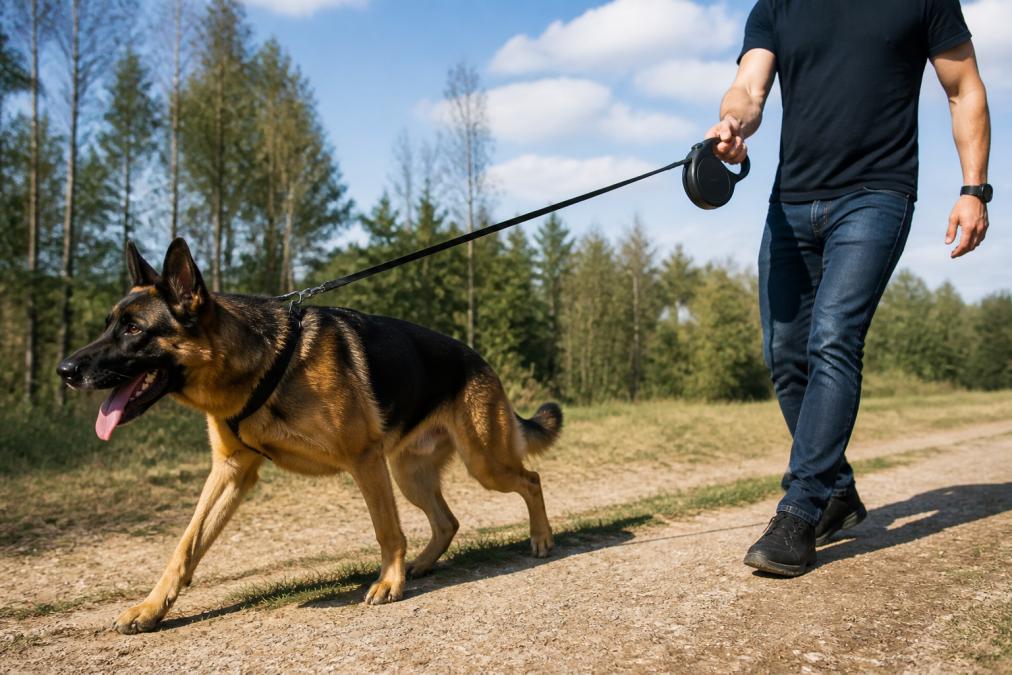
The 26ft Retractable Dog Leash from Paw Fit Gears is built for dogs up to 110 lbs with heavy-duty nylon tape that resists the constant pulling and jerking large dogs generate. The tangle-free design means the webbing retracts smoothly without kinking or bunching, a feature that prevents material stress and extends leash life. The one-hand brake system lets you lock the leash instantly, which reduces sudden jerks that wear down hardware faster than gradual tension.

What separates this leash from cheaper alternatives is the 360-degree tangle-free mechanism. Standard retractable leashes allow the cord to twist around itself, creating weak points where material bunches and stresses unevenly. This design eliminates that problem, distributing tension evenly across the entire webbing length.
The anti-slip rubberized handle is essential for large breed owners. When a 100-lb dog pulls suddenly, your hand needs absolute grip security. Slipping hands force you to squeeze harder, which accelerates wear on the handle material and increases hand fatigue. The rubberized surface maintains grip even when wet from rain or sweat.
For owners of multiple large dogs or dogs with reactive behavior, a 26ft retractable leash provides the distance control needed to prevent confrontations while maintaining security. The extended length gives your dog room to explore without sacrificing your ability to regain control instantly.
How to Choose a Durable Dog Leash
Selecting a durable dog leash requires understanding what actually matters versus what marketing emphasizes. The right choice depends on your dog's size, behavior, and your primary use case.
Material Strength and Tensile Testing
Material strength determines how much force a leash can withstand before failure. Tensile strength, measured in pounds per square inch, indicates the maximum stress a material can handle. A leash marketed as "heavy-duty" should have webbing tested to support at least 1.5 times your dog's weight in breaking force, giving you a safety margin for sudden pulls.
Nylon webbing is the industry standard for durable dog leashes because it offers excellent tensile strength while remaining flexible. Quality nylon resists abrasion better than cotton or rope alternatives. It doesn't absorb water excessively, which means it dries quickly and resists mildew. Biothane, a coated webbing material, offers even better weather resistance and requires minimal maintenance.
Leather leashes appeal to many owners for their aesthetic and comfort, but they demand consistent maintenance. Leather loses tensile strength when wet and requires conditioning to prevent cracking. For everyday durability in variable weather, nylon or nylon-blend materials outperform leather.
When evaluating a leash, check the webbing thickness. Standard webbing ranges from 0.75 inches to 1.5 inches wide. Thicker webbing distributes force over a larger surface area, reducing stress concentration at connection points. For large breeds, 1-inch or wider webbing is worth the investment.
Hardware Quality and Snap Hooks
The snap hook is where most leash failures occur. This single component experiences thousands of open-close cycles and bears the full weight of your dog's pulling force. A cheap snap hook fails silently, it looks fine until the moment your dog lunges and the clip releases.
Quality snap hooks use stainless steel or heavy-duty plastic reinforced with metal components. Stainless steel resists corrosion and maintains consistent strength through years of use. The mechanism should open and close smoothly without requiring excessive force, which indicates the internal spring is properly tensioned.
Look for swivel clips that rotate independently of the leash. A swivel prevents the leash from twisting, which reduces stress on the webbing and hardware. When a leash twists, tension concentrates at specific points, accelerating wear and increasing failure risk.
D-rings, secondary attachment points on the leash, should be welded or riveted securely. Stitched D-rings fail faster because thread eventually frays. On a durable dog leash, D-rings are reinforced metal that won't bend or pull free under stress.
The connection between the snap hook and webbing is critical. Look for leashes where the webbing is wrapped around the hook attachment point multiple times and stitched with reinforced thread. This overlap distributes stress and prevents the webbing from tearing at the attachment.
Leash Maintenance and Inspection Tips
A durable dog leash requires minimal maintenance, but regular inspection prevents catastrophic failures. Most leash damage happens gradually, becoming visible only after significant wear.
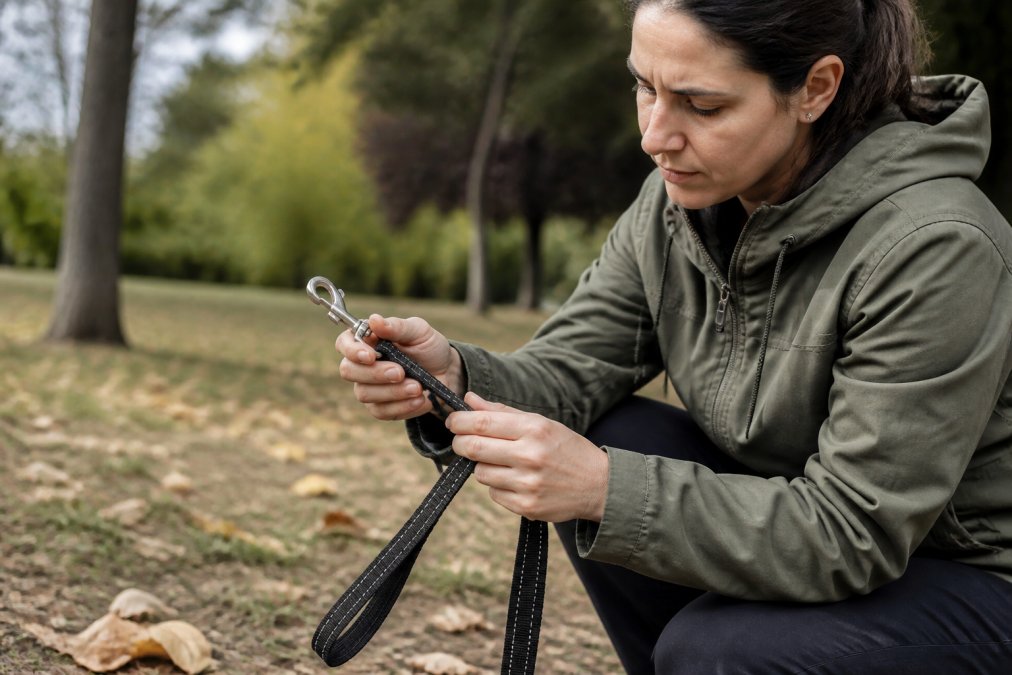
Inspect your leash weekly for visible damage. Look along the entire length of the webbing for fraying, tears, or thin spots where material has worn through. Check the snap hook for corrosion, cracks, or bent metal. Test the mechanism by opening and closing it several times, it should operate smoothly without sticking.
Run your fingers along the handle to detect rough spots, cracks, or areas where the rubber coating is peeling. A degraded handle affects your grip and indicates the leash is aging. Examine the stitching at connection points, look for loose threads or gaps where stitches have separated.
For retractable leashes, test the brake mechanism regularly. Press the brake button and verify the leash locks immediately without slipping. If the brake engages slowly or doesn't hold, the internal mechanism is wearing and the leash should be replaced soon.
Clean your leash monthly with mild soap and water. Dirt and debris accumulate on the webbing and in the snap hook mechanism, accelerating wear. Dry the leash completely before storing it. For leashes exposed to salt water or heavy mud, rinse immediately after use.
Store leashes away from direct sunlight and extreme heat. UV exposure degrades nylon over time, reducing tensile strength. Hanging your leash on a hook is better than coiling it tightly, which creates stress points and can cause permanent kinks.
Replace your leash if you notice any of these signs: webbing tears or holes, snap hook corrosion or cracks, loose or missing stitches, frayed edges, handle cracks, or brake failure on retractable leashes. A compromised leash creates safety risk that isn't worth the cost savings of continued use.
Retractable vs. Fixed-Length Leashes for Durability
The format of your leash affects both its durability profile and your control options. Retractable and fixed-length leashes have different failure modes and maintenance requirements.
Fixed-length leashes, typically 4 to 8 feet, are simpler mechanically. Without a retraction mechanism, they have fewer components to fail. The webbing, handle, and snap hook are the only elements under stress. Fixed leashes are generally more durable for dogs that pull consistently because the tension is distributed evenly along the entire leash length. They're also easier to inspect since there's no internal mechanism to evaluate.
Retractable leashes offer extended range, typically 16 to 26 feet, which appeals to owners who want their dogs more freedom. The trade-off is mechanical complexity. The internal spring, locking mechanism, and spool add components that can wear or fail. However, a quality retractable leash like the Mighty Paw Retractable Dog Leash 2.0, with its 16ft reflective nylon tape and one-touch quick-lock braking system, handles this complexity well. The tangle-free design prevents the webbing from bunching, which is where most retractable leash damage occurs.
For large breeds that pull hard, a fixed-length leash provides more predictable durability. The simpler design means fewer failure points. For dogs that walk calmly and explore at their own pace, a quality retractable leash gives them freedom while maintaining your control.
The Mighty Paw option at $24.42 provides reflective stitching for night visibility and an anti-slip handle, features that matter for everyday durability. The quick-lock braking system engages instantly without requiring you to hold the button, which reduces the risk of accidental release.
Safety Features That Last
A durable dog leash must maintain its safety function over years of use. Safety features that degrade reduce your ability to control your dog when it matters most.
Reflective stitching or reflective tape increases visibility during evening walks and low-light conditions. Quality reflective materials maintain visibility through repeated washing and exposure to sunlight. Cheap reflective coatings fade quickly, becoming nearly invisible within months. Check reflective elements regularly, if they're dull or barely visible, the leash's safety benefit is compromised.
Shock-absorbing components in the leash handle reduce the impact of sudden pulls. These features are especially important for dogs with reactive behavior or dogs that lunge unpredictably. A handle with built-in shock absorption protects your wrist and arm from injury while reducing stress on the leash hardware.
Bungee sections in some leashes absorb energy from sudden pulls, reducing the force transmitted to your hand and the snap hook. This feature extends leash life by distributing stress over time rather than concentrating it in a single jerk.
The no-pull design prevents your dog from gaining use to pull harder. A well-designed no-pull mechanism discourages pulling without choking or restricting breathing. This reduces the repeated stress that causes premature leash failure.
Control features, like the quick-lock brake on retractable leashes, allow instant stopping without fumbling. When you need to regain control quickly, a reliable locking mechanism prevents accidents that could damage the leash or injure your dog.
Conclusion
Finding a truly durable dog leash means prioritizing material strength, hardware quality, and construction method over brand name or price alone. The leashes that last are built with heavy-duty nylon webbing, stainless steel hardware, and reinforced stitching at stress points. Regular inspection and basic maintenance extend the life of any leash, but starting with quality construction saves money and frustration over time.
Paw Fit Gears offers retractable leashes specifically engineered for durability. The 26ft Ret retractable Dog Leash supports dogs up to 110 lbs with tangle-free design and one-hand brake control, while the Mighty Paw 2.0 adds reflective stitching for night safety. Both feature anti-slip handles and quality hardware built to last. Get started with Paw Fit Gears and discover gear designed for dogs that demand the best.
| Feature | Fixed-Length Leash | Retractable Leash | Best For |
|---|---|---|---|
| Durability Profile | Simpler design, fewer failure points | More components, requires maintenance | Consistent pullers |
| Range | 4-8 feet | 16-26 feet | Calm explorers |
| Control | Immediate and predictable | Adjustable with brake | Variable behavior |
| Maintenance | Minimal | Regular mechanism checks | Active dogs |
| Cost | Lower initial investment | Higher upfront cost | Budget-conscious owners |
EXTERNAL SOURCES & CITATIONS:
For information on dog safety and leash standards, the American Kennel Club's guide to dog safety equipment provides recommendations for secure leash selection. Additionally, the Pet Industry Joint Advisory Council's product safety standards establishes baseline durability requirements for pet gear. For owners concerned about material safety, the Consumer Product Safety Commission's guidance on pet product testing outlines testing protocols that ensure leash components meet safety thresholds.
Frequently Asked Questions
Q: What material makes the most durable dog leash for strong pullers?
A: Heavy-duty nylon webbing and biothane are top choices for strong pullers. Nylon offers excellent abrasion resistance and tensile strength. Biothane is waterproof and resists mildew, making it ideal for frequent outdoor use. Both materials withstand constant pulling without fraying. Pair either with reinforced snap hooks rated for your dog's weight capacity to prevent failure under tension.
Q: How often should I inspect my dog's leash for safety?
A: Inspect your leash weekly, especially if your dog is a strong puller or uses it daily. Check the webbing for fraying, tears, or thin spots where abrasion has worn through. Examine the snap hook for cracks, rust, or bent metal. Test the handle for padding deterioration and the swivel clip for smooth rotation. Replace the leash immediately if you spot significant damage. Monthly deep cleaning removes dirt that accelerates wear.
Q: What's the difference between a durable dog leash and a standard one?
A: Durable dog leashes use heavier-gauge materials, reinforced stitching, and higher-quality hardware designed to withstand repeated stress. Standard leashes often use thinner nylon and cheaper snap hooks that fail under sustained pulling. Durable options can include shock-absorbing features, padded handles to reduce hand fatigue, and reflective stitching for visibility. They're engineered for long-term wear rather than casual use, making them worth the investment for active dogs or training work.
Q: Should I choose a retractable or fixed-length leash for durability?
A: Fixed-length leashes are generally more durable for heavy pullers because they have fewer moving parts and less mechanical stress. Retractable leashes offer convenience but the internal spring and brake mechanism can wear out faster with constant use. However, high-quality retractable leashes with reinforced mechanisms and heavy-duty nylon tape, like the 26ft option rated for dogs up to 110 pounds, perform well if maintained properly. Your choice depends on your dog's behavior and how frequently you use the leash.
This article was written using GrandRanker