

Table of Contents
- Dog Loose in Car Accident: Immediate Steps to Take
- Dog Hit by Car with No Visible Injuries: Why You Still Need a Vet
- How to Transport an Injured Dog Safely After a Crash
- Legal and Insurance Consequences When a Dog Is Loose in a Car Accident
- Dog Car Safety Restraint: Preventing a Loose Dog in a Crash
- Documenting the Crash and Filing an Insurance Claim
- Frequently Asked Questions
Last Updated: October 7, 2026
Dog Loose in Car Accident: Immediate Steps to Take
If you're wondering what happens if a dog is loose in car accident situations, the answer starts with safety: pull over, secure your dog, and check for injuries before anything else. A loose dog can be thrown into seats, into other passengers, or out a window during a crash. The moments right after impact decide how the rest of the day goes.
The American Veterinary Medical Association's pet emergency guidance recommends checking your dog for injuries calmly and slowly, since frightened animals can bite even when they're not aggressive.
What to do, in order:
- Turn on your hazard lights and check yourself for injuries first
- Keep your dog from bolting into traffic before you open any door
- Leash or crate your dog before you step out of the car
- Call 911 if anyone is hurt or the dog is badly injured
- Move to a safe spot, then exchange information
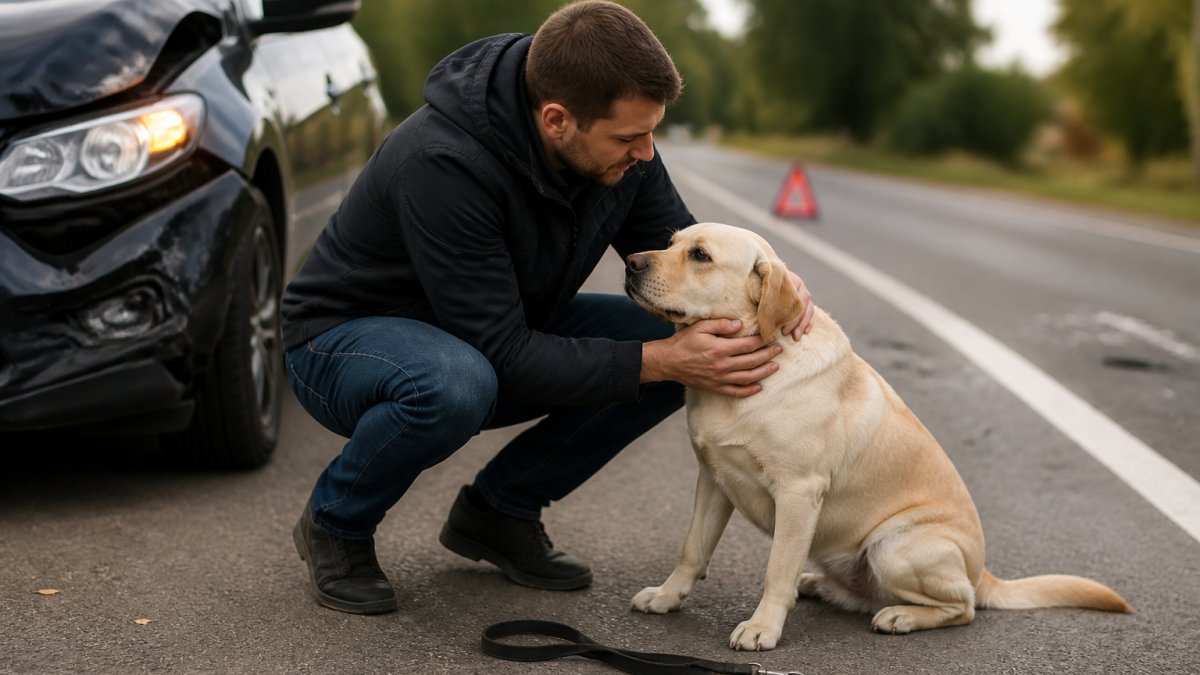
A loose dog in a crash is dangerous for everyone. An unrestrained pet becomes a projectile. Even a small dog can cause serious injury to a passenger when the car stops suddenly.
Dog Hit by Car with No Visible Injuries: Why You Still Need a Vet
A dog hit by car with no visible injuries still needs a vet exam within 24 hours. Adrenaline hides pain, and internal bleeding, bruised organs, and collapsed lungs don't always show outward signs. Your dog may walk normally and still be seriously hurt.
Watch for these warning signs after a car accident involving a dog:
- Heavy or fast breathing while resting
- Pale or white gums
- Weakness, wobbling, or refusal to stand
- Whining when touched in one area
- Vomiting, drooling, or a swollen belly
- Blood in urine or stool
If you can't reach a vet right away, keep your dog warm, quiet, and still. Call ahead so the clinic expects you. According to the American Red Cross pet first aid resources, keeping an injured animal calm and limiting movement prevents injuries from getting worse during transport.
How to Transport an Injured Dog Safely After a Crash
Transporting an injured dog safely means supporting the spine, keeping the dog flat, and using a firm surface like a board, a thick blanket, or a sturdy carrier. Never let an injured dog walk to the car, even if it seems able.
Use this approach:
- Muzzle your dog loosely with a strip of cloth if it's conscious, but never if it's vomiting or struggling to breathe
- Slide a blanket or board under the dog's body
- Lift with two people if possible, keeping the spine straight
- Place the dog in the back seat or cargo area, not on a lap
- Have someone sit with the dog and talk to it softly
A pet carrier or a secured harness works well for dogs that aren't badly hurt. Our 2 Pack Adjustable Dog Seat Belt for Car clips straight into your car's seat belt buckle and adjusts from 16.5 to 27.6 inches, so it fits most dogs and most vehicles. It's the kind of gear that turns a chaotic moment into a manageable one.

Legal and Insurance Consequences When a Dog Is Loose in a Car Accident
Liability in a dog loose in car accident case turns on two separate questions: was the dog loose inside the vehicle, or was it loose on the road? The answer changes which body of law applies, who pays, and what evidence matters.
If the dog was loose inside the car. The dog is treated as an unrestrained object, similar to an unsecured suitcase. In a crash, the dog can strike the driver, block the pedals, or obstruct the driver's view.
If the dog was loose on the road. This is a different analysis. Every state has some form of leash law or animal-at-large statute, but the specifics vary widely.
Reporting duties. Every state requires a driver to stop after a crash involving injury, death, or property damage above a statutory threshold.
Insurance mechanics. Car insurance for animal collisions splits along coverage lines:
- Collision coverage pays for damage to your vehicle from hitting an animal, and typically applies whether the animal was loose on the road or inside your car.
- Comprehensive coverage also covers animal strikes in most policies, and is often the cheaper route if you carry it, because comprehensive claims usually do not raise your premium the way an at-fault collision claim can.
- Liability coverage pays the other party when you are at fault. If your loose dog caused a crash that injured another driver, your liability coverage, not your pet coverage, is what responds.
- Pet injury protection is a separate add-on that pays veterinary bills for your own pet after a crash. It is not standard, and many drivers assume they have it when they do not.
Pet injury claims against another driver. If the other driver was at fault, you can usually claim veterinary bills, and in some states you can also claim the dog's fair market value or replacement cost if the dog died. Pets are legally property in every state, so noneconomic damages for emotional distress are generally not recoverable in a pet injury claim, though a small number of states have carved out limited exceptions. If the amount is small, most insurers settle quickly; if the dog was a service animal or had documented breeding or competition value, the claim can be contested and you may need counsel.
Because these rules vary by state and by the facts, the practical move is to contact your state's department of insurance or a local attorney if the claim is disputed. A short consultation is usually cheaper than an underpaid claim.
2 Pack Adjustable Dog Seat Belt for Car →
Dog Car Safety Restraint: Preventing a Loose Dog in a Crash
A dog car safety restraint is the single best way to prevent a loose dog in a crash. Options include crash-tested harnesses, pet carriers, and seat belt attachments. Each one keeps your dog from becoming a projectile and stops it from moving between seats while you drive.
What most guides miss is that restraint isn't just about the dog. An unrestrained pet causes driver distraction, which is a leading factor in crashes. Swerving to push a dog off your lap or overcorrecting when it climbs into the front seat turns a normal drive into a traffic accident.
The Center for Pet Safety tests pet restraints and publishes which harnesses and crates hold up in crash simulations.
| Restraint Type | Best For | Key Benefit |
|---|---|---|
| Seat belt attachment | Daily drives, most dogs | Clips to existing buckle, low cost |
| Crash-tested harness | Highway travel, large dogs | Spreads force across the chest |
| Pet carrier or crate | Small dogs, anxious pets | Full containment, reduces distraction |
| Back seat barrier | SUVs, multiple dogs | Keeps dogs in the cargo area |
Our 3 in 1 Winter Jacket + FREE Dog Safety Belt pairs cold-weather comfort with a safety belt.

Documenting the Crash and Filing an Insurance Claim
Most guides treat crash documentation as a generic checklist. For a dog loose in car accident claim, the evidence that actually moves the needle is pet-specific, and it is easy to lose in the first hour.
Capture this at the scene, before you leave.
- Photos of all vehicle damage from at least four angles, plus close-ups of any impact point
- Photos of the interior, seats, console, and floor, showing where the dog was and whether a restraint was in use
- Photos of your dog's injuries, including any that look minor, taken the same day
- The other driver's name, license plate, insurer, and policy number
- Names, phone numbers, and email addresses for every witness, including passengers in your own car
- The police report number and the responding officer's name and badge number, if officers came
- A written timeline of what happened, written the same day while memory is fresh
Why the interior photos matter. If your dog was loose inside the car, the other driver's insurer will argue that the dog caused or contributed to the crash.
Get veterinary records fast. A vet exam within 24 hours creates a medical record that ties the injury to the crash. Ask the clinic for a written treatment summary, an itemized estimate, and a prognosis.
File promptly, and file in writing. Most insurers have claim deadlines, and some policies require notice within a set number of days.
Keep every receipt. Veterinary bills, boarding costs if your dog needed to stay at the clinic, transportation to the vet, and any replacement of a destroyed crate or harness are all potentially recoverable. Photograph receipts as you get them, because thermal paper fades.
If the claim is denied or underpaid. Ask for the denial in writing and cite the specific policy language the insurer relied on. If the amount is small, a written demand letter citing your state's unfair claims settlement practices act often resolves it. If the amount is large or the insurer is stonewalling, a consultation with a local attorney is usually free and can change the outcome.
Frequently Asked Questions
What happens to a loose dog in a car accident?
A loose dog can become a projectile, hitting the windshield, seats, or other passengers. Even in a low-speed crash, an unrestrained dog may suffer internal injuries, fractures, or soft tissue damage. After any accident, check your dog for bleeding, limping, or difficulty breathing. If you see any signs of pain or abnormal behavior, take your dog to a veterinarian immediately. A dog loose in a car accident is also a major distraction that can worsen the crash outcome.
Can a dog be seriously injured in a car crash even if it looks fine?
Yes. Dogs often hide pain instinctively. A dog hit by car with no visible injuries may still have internal bleeding, bruised organs, or spinal damage. Symptoms like lethargy, vomiting, or refusing food can appear hours later. If your dog was loose during a collision, treat it as an emergency and see a vet within 24 hours, even if your pet seems normal.
How do I safely transport an injured dog after a crash?
Do not move the dog unless it is in immediate danger. If you must move it, use a sturdy board or blanket as a stretcher to keep the spine aligned. Muzzle the dog only if it is not vomiting, and keep it warm. For how to transport an injured dog, drive carefully to the nearest emergency vet. Having a dog car safety restraint like a seat belt harness in your vehicle can help secure your pet during the post-crash trip.
Who is responsible if a loose dog causes a car accident?
Liability depends on state and local leash laws. If a dog was loose on the road and caused a driver to swerve, the owner may be held negligent for failing to control the animal. If the dog was loose inside a car during a crash, the driver could face a traffic infraction for an unrestrained pet. Insurance claims often hinge on police reports and witness statements, so document everything and contact your insurer promptly.
A loose dog in a car accident is a scary situation, but it's one you can prepare for. The right restraint, a calm plan, and quick action protect your dog and your wallet. At Paw Fit Gears, we build gear for exactly these moments: adjustable seat belts that fit most cars, harnesses made for daily travel, and jackets that keep dogs comfortable on cold rides. Get started with Paw Fit Gears and give your dog a safer seat on every trip.