

Table of Contents
- What You'll Need to Secure Your Dog in the Back Seat
- Step-by-Step: How to Secure a Dog in the Car Back Seat
- Why Crash-Tested Dog Harnesses Matter for Passenger Safety
- Choosing Dog Car Seat Covers for Travel and Interior Protection
- How to Keep Your Dog Calm in the Car During Travel
- Vehicle-Specific Compatibility and Multi-Dog Logistics
- Common Mistakes to Avoid When Securing Your Dog
- Frequently Asked Questions
Last Updated: September 27, 2026
What You'll Need to Secure Your Dog in the Back Seat
Knowing how to secure dog car back seat starts with the right gear. A loose dog becomes a projectile in a crash, so the goal is simple: keep your dog anchored and comfortable.
Here is what you need before you start:
- A crash-tested dog harness that fits your dog's chest and weight
- A seat belt tether or dog seat belt with metal clips
- A back seat cover or hammock to protect your interior
- A crate or travel carrier if your dog prefers enclosed spaces
- Treats and a favorite toy for positive reinforcement
Center for Pet Safety crash test program tests restraints the same way automakers test seat belts, and many popular products fail.
Step-by-Step: How to Secure a Dog in the Car Back Seat
The full process takes about ten minutes the first time. After that, it is a two-minute routine.
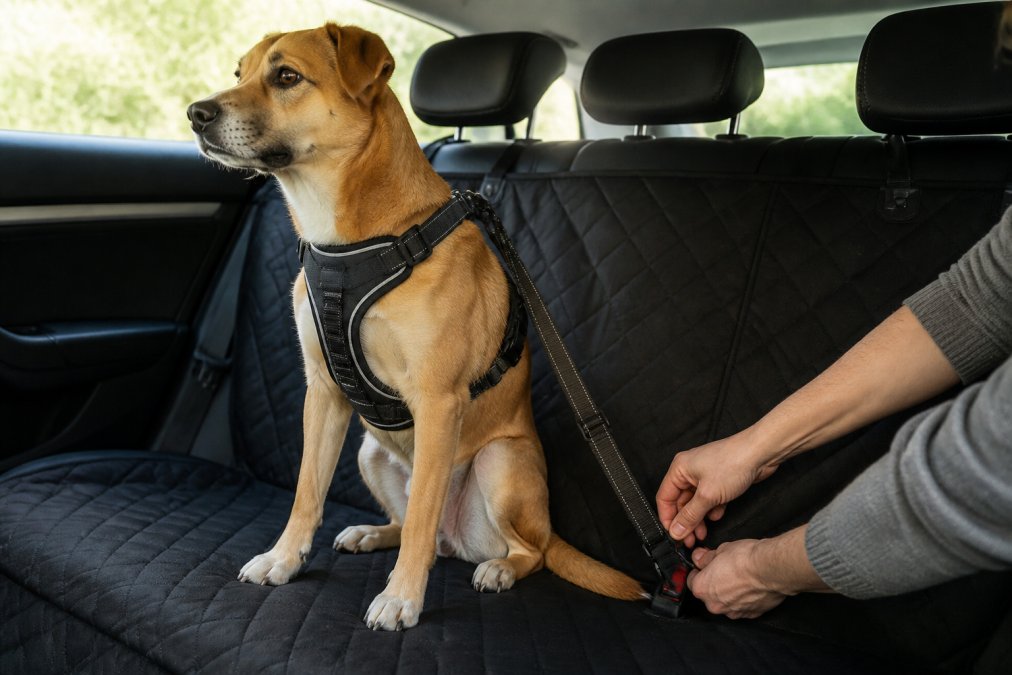
Step 1: Choose the Right Restraint System
Pick a restraint based on your dog's size, not just the label on the box. A harness attachment works well for most dogs. A crate suits dogs who settle better in an enclosed space.
Check three things before you buy:
- Weight capacity matches your dog's current weight
- The harness has wide straps and padded chest plates
- The tether clips are metal, not plastic
A common mistake is sizing up "to grow into." A loose harness lets a dog twist free during emergency braking.
Step 2: Install the Seat Belt Tether or Harness Attachment
Clip the tether to your dog's harness, then click the buckle into the seat belt slot. That is the whole install.
For a headrest attachment, loop the strap around the metal post behind the seat. Pull it tight so there is no slack.
The National Highway Traffic Safety Administration guidance on distracted driving is blunt about loose pets: an unrestrained dog becomes a distraction and a hazard in the same moment.
Step 3: Adjust for a Secure Fit and Verify Anchor Points
Your dog should be able to sit, stand, and lie down, but not reach the front seat. Two fingers should fit under the harness strap, no more.
Then test the anchor points:
- Tug the tether firmly. Nothing should slide.
- Check the buckle is fully latched.
- Confirm the harness straps are not twisted.
Why Crash-Tested Dog Harnesses Matter for Passenger Safety
Crash-tested dog harnesses are restraints proven to hold a dog's body in place during a simulated collision, rather than just keeping them from wandering. The difference between "tested" and "crash-tested" is the whole ballgame.
Here is the mechanism most shoppers never see. A static pull test loads a strap slowly until it snaps. A dynamic sled test straps a weighted dog dummy into a harness, accelerates the sled to highway speed, and stops it in a fraction of a second, the same physics a real front-end collision produces. A harness that survives a slow pull can still fail a sled test because the failure mode is different: stitching rips, webbing stretches, and metal hardware deforms under sudden deceleration rather than steady tension.
Center for Pet Safety crash test program runs dynamic sled tests on pet restraints and has published results showing that a large share of popular products fail at speeds well below highway limits. That is the number that matters, not the marketing claim on the box.
What most guides miss is that force works both ways. An unrestrained dog can injure passengers on impact, and a poorly made tether can snap and send hardware flying. A 60-pound dog in a 30 mph crash generates a load comparable to a small refrigerator thrown across the cabin, which is why the anchor point, not just the harness, has to be rated for it.
Hard Bottom 6-In-1 Dog Back Seat Cover →
Look for a harness with:
- A wide, padded chest plate to spread force across the ribcage instead of concentrating it on the throat
- Reinforced stitching at every stress point, chest, shoulders, and tether attachment
- Metal buckles and D-rings rated for your dog's weight, not plastic quick-clips
- A tether short enough to prevent the dog from reaching the front seat but long enough to lie down
What to Do With Gear After a Crash
If anything is questionable, replace the harness and tether. They are inexpensive compared to the cost of a second failure. A restraint that has already done its job once should be retired, not reused.
Choosing Dog Car Seat Covers for Travel and Interior Protection
Dog car seat covers for travel do two jobs: they protect your seats and they give your dog a stable surface to stand on. A dog sliding on leather is a stressed dog.
Look for these features:
- A non-slip base so the cover stays put
- A waterproof layer for accidents and muddy paws
- A mesh window for airflow and visibility
- Adjustable straps that fit your headrests
How to Keep Your Dog Calm in the Car During Travel
Most car anxiety comes from two things: motion sickness and a lack of predictability.
Other steps that help:
- Exercise your dog before a long drive
- Keep the cabin cool and crack a window
- Bring a worn t-shirt with your scent
- Feed a light meal two hours before leaving
- Use a favorite blanket in the crate or on the seat
Vehicle-Specific Compatibility and Multi-Dog Logistics
Not every restraint fits every vehicle. Buckle receivers sit at different depths and angles depending on the vehicle class, and the anchor point you assume is there may not be.
Multi-Dog Households: One Anchor, One Dog
Two dogs sharing one tether will tangle, and tangling during a stop is dangerous.
A few logistics that work well:
- Put the calmer dog nearest the door so the more anxious dog is not between them and the exit
- Use a divider between dogs who resource-guard, especially around chews or water bowls
- Match tether length to each dog's size, a small dog on a large dog's tether has too much slack
- Feed separately before the trip, never in the car
- Pack a second tether as a backup in case one clip fails mid-trip
Common Mistakes to Avoid When Securing Your Dog
The same errors show up again and again.
Here is a quick reference:
| Mistake | Why It Fails | The Fix |
|---|---|---|
| Clipping to a collar | Neck injury risk on impact | Always clip to a harness |
| Loose harness fit | Dog slips free or gets rubbed | Two-finger rule at the chest |
| Plastic buckles | Snap under sudden force | Choose metal hardware |
| No seat cover | Dog slides and panics | Add a non-slip hammock cover |
| Skipping a test drive | Problems show up mid-trip | Test locally first |
A secure dog car restraint only works if it fits, and it only fits if you check it. Re-check the harness every few months as your dog's weight and coat change.
Frequently Asked Questions
What is the safest way to restrain a dog in a car?
The safest method is a crash-tested harness paired with a seat belt tether that connects to your car's buckle. This keeps your dog in the back seat and prevents them from becoming a projectile during sudden stops. Avoid attaching a leash to a collar, as it can choke your dog in a collision. For added protection, use a dog car seat cover with a non-slip base to keep the harness anchored.
Is it safe to put my dog in the back seat of a car?
Yes, the back seat is the safest place for your dog. It keeps them away from airbags and the dashboard. Use a restraint system like a crash-tested harness or a travel carrier secured with a seat belt. A dog hammock or back seat cover can also protect your interior and give your dog a comfortable, non-slip surface to lie on during the ride.
How do I choose the right size harness for car travel?
Measure your dog's chest girth at the widest point and compare it to the harness manufacturer's size chart. The harness should fit snugly but allow two fingers to slide under the straps. Adjustable straps and a secure fit are critical. For car travel, look for a crash-tested harness with a broad chest plate to distribute impact forces evenly and prevent rubbing.
What are the benefits of using a dog car seat cover for travel?
A dog car seat cover protects your vehicle's interior from scratches, dirt, and accidents. It also provides a non-slip base that keeps your dog from sliding during turns or emergency braking. Many covers, like the Hard Bottom 6-in-1 Dog Back Seat Cover, include a mesh window for airflow and can double as a hammock. This reduces travel anxiety and keeps your dog comfortable.
Securing your dog in the back seat is one of the simplest safety habits you can build, and it starts with gear you can trust. Paw Fit Gears builds durable harnesses, seat belt tethers, and back seat covers designed for real dogs and real drives. Browse the full catalog to find the harness, cover, and travel accessories that fit your dog and your vehicle, and make your next trip a safer one.