

Table of Contents
- No-Pull Dog Harness vs Front Clip Harness: Key Differences
- Front Clip vs Back Clip Harness Pros and Cons
- How to Stop Dog Pulling on Leash With the Right Harness
- How to Use a Front Clip Harness Effectively
- Anatomical Impact and Fit: What Pulling Does to Your Dog's Body
- Harness vs Collar Safety and Breed-Specific Recommendations
- Frequently Asked Questions
Last Updated: September 29, 2026
No-Pull Dog Harness vs Front Clip Harness: Key Differences
The difference between a no-pull dog harness and a front clip harness comes down to one thing: where the leash attaches and how that point redirects your dog's forward motion. A no-pull harness is the broader category, and a front clip harness is the most effective design within it. At Paw Fit Gears, we get this question constantly from owners whose arms are tired and whose dogs are still dragging them down the block.

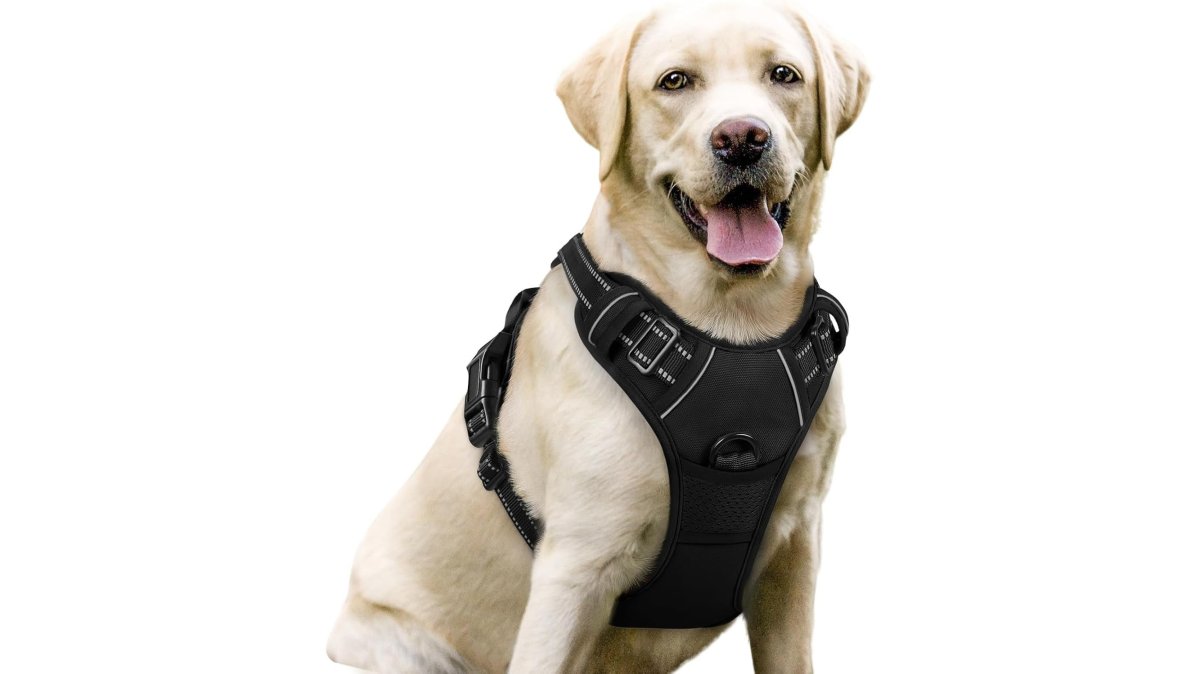
A no-pull dog harness is a walking tool that discourages pulling by redistributing leash pressure away from the throat and into the chest or torso.
How Each Design Redirects Leash Pressure
A front clip harness uses a chest attachment to create a steering effect. When your dog pulls forward, the leash tension turns them gently back toward you. It's a redirection, not a punishment.
Front Clip vs Back Clip Harness Pros and Cons
Front clip harnesses win for training. Back clip harnesses win for comfortable, non-training walks with dogs that already have decent leash manners.
| Feature | Front Clip Harness | Back Clip Harness |
|---|---|---|
| Pulling control | Strong redirection | Minimal |
| Best for | Training, strong pullers | Calm walkers, hiking |
| Range of motion | Slight shoulder restriction | Full range |
| Leash tangling risk | Higher | Low |
| Ideal use case | Leash training sessions | Casual walks, long hikes |
When a Back-Clip Harness Still Makes Sense
Back-clip designs are the better choice for dogs that already walk politely, for hiking where you want full shoulder range, and for senior dogs with joint sensitivity. If your dog doesn't pull, there's no reason to add steering hardware.

How to Stop Dog Pulling on Leash With the Right Harness
Stopping leash pulling starts with matching the harness to the behavior, then training consistently. The harness gives you control; it doesn't teach the behavior on its own.
Here's a practical sequence that works:
- Fit the harness so two fingers slide under every strap
- Attach the leash to the front chest D-ring
- Stand still the moment the leash goes tight
- Wait for slack, then mark and reward
- Change direction when your dog surges forward
- Practice in low-distraction areas first
- Gradually add busy environments
How to Use a Front Clip Harness Effectively
Using a front clip harness effectively means understanding the physics it creates, then using that physics as a teaching window, not as a permanent crutch. The harness handles redirection; you handle timing and reinforcement.
The Mechanics You Are Actually Working With
When the leash is attached at the sternum and your dog surges forward, tension rotates the dog's front assembly toward you. That rotation is a mild physical cue, not a correction. Two things make it work:
- The chest strap must sit low. If the D-ring rides up toward the throat, the leash pulls the head up and back instead of rotating the body, which many dogs find aversive and which can put pressure on the trachea.
- The leash angle matters. A short, low leash (roughly 45 degrees from the ground) produces cleaner rotation than a high, tight leash. A high leash pulls the dog's front end off the ground and can encourage rearing.
A Transition Roadmap: From Harness to Loose-Leash Walking
Most owners never phase the harness out. Here is a progression that uses it as a training tool:
No-Pull Dog Harness with 2 Leash Clips →
- Weeks 1-2, Front clip only, low-distraction routes. Reward every check-in. Keep sessions under 15 minutes.
- Weeks 3-4, Add duration. Ask for a few steps of loose leash before rewarding. Introduce a verbal marker ("yes" or a clicker) the moment the leash goes slack.
- Weeks 5-6, Move the leash to the back ring for short stretches. If pulling returns, switch back to the front for the rest of the walk. This teaches the dog that the front clip is a training mode, not a punishment.
- Weeks 7+, Alternate attachment points by environment. Front clip in busy areas, back clip on quiet trails. The goal is a dog that walks politely regardless of where the leash is attached.
Handling the Two Most Common Front-Clip Problems
- Leash under the legs. During sniffing stops, the leash loops behind a front leg. Fix it by keeping the leash hand on the same side as the attachment point and gathering slack rather than letting it trail.
- Shoulder restriction. Some front-clip designs limit shoulder extension, which can shorten a dog's stride. If your dog's gait looks choppy, look for a harness with a Y-shaped chest strap that leaves the shoulder joint clear.
The Association of Professional Dog Trainers resource library notes that equipment supports training but never replaces it. A harness that reduces pulling still needs consistent sessions to build lasting leash manners.
Anatomical Impact and Fit: What Pulling Does to Your Dog's Body
Harness pressure lands differently depending on the attachment point, and fit determines whether that pressure helps or hurts. A poorly fitted harness, front or back clip, causes chafing, restricts range of motion, and can worsen anxiety in sensitive dogs.
Check these fit points monthly, especially on growing puppies:
- Two fingers fit under every strap
- Chest strap sits below the windpipe, not across it
- Shoulder straps don't rub the armpits
- D-rings sit centered, not twisted
- No gaping when your dog pulls
Harness vs Collar Safety and Breed-Specific Recommendations
Harnesses are generally safer than collars for dogs that pull, but the reason is anatomical, not just comfort. A flat collar concentrates all leash pressure on the ventral neck, the trachea, larynx, thyroid gland, and the jugular veins sit in that same narrow band. Repeated pressure there is associated with tracheal collapse, coughing, and in brachycephalic dogs, increased ocular pressure.
Why Breed and Body Shape Change the Recommendation
- Deep-chested sighthounds (Greyhounds, Whippets, Salukis). Their ribcage is much deeper than their waist, so a standard harness slides forward and rubs the armpits. Look for a harness with a longer chest panel or a sighthound-specific cut, and measure girth at the deepest point of the ribcage, not behind the front legs.
- Brachycephalic breeds (Pugs, French Bulldogs, Boston Terriers). Never take leash pressure on the neck. Even a front-clip harness needs a chest strap that sits well below the windpipe; a strap riding high on the throat defeats the purpose.
- Strong pullers (Huskies, German Shepherds, Labrador Retrievers, Pit Bull-type dogs). A front-clip harness with a martingale-style chest loop or a second back attachment gives you steering plus a backup point if the dog twists.
- Toy and small breeds. A padded front-clip harness sized to a 10-15 inch girth is usually enough; heavy hardware adds weight without adding control.
- Senior dogs and dogs with arthritis. A back-clip harness with a padded chest plate and a handle is often easier to put on and less restrictive through the shoulder.
Sizing and Fit Checks That Prevent Injury
Measure girth at the widest point of the ribcage and add two fingers of slack. Re-measure every 4-6 weeks for puppies, and any time a dog's weight changes by more than about 10 percent. A harness that fit in spring can rub raw by fall.
When a Collar Is Still the Right Tool
Collars are fine for identification tags and for dogs that already walk on a loose leash. A flat collar or a well-fitted martingale is also the standard for most obedience competition, where harnesses are not permitted. The rule of thumb: use a collar for ID and trained dogs, use a harness for any dog that still pulls.
Frequently Asked Questions
Do no-pull dog harnesses actually work?
Yes, when the fit is right and you train consistently. A front-clip design redirects forward motion sideways, so a dog that surges ahead feels its own momentum turned against it. That gives you a moment to reward the dog for easing off. A no-pull dog harness with 4 adjustment points, like the dual-clip vest from Paw Fit Gears at $27.09, gives you a chest ring for training and a back ring for relaxed walks.
Is a front-clip harness better than a back-clip harness for training?
For leash pulling, yes. A back-clip harness leaves the strongest pulling muscles in the chest and shoulders free to drive forward, which is why sled dogs wear them. A front-clip harness turns the dog gently toward you when the leash tightens. Use the back clip for sniff-heavy or casual walks once your dog has learned leash manners.
How do I use a front clip harness effectively without hurting my dog?
Measure the girth behind the front legs and across the chest, then tighten all four straps so you can fit two fingers under each one. Clip the leash to the chest D-ring for training walks and keep light tension, releasing the moment your dog stops pulling. Never yank the leash, and check under the front legs for chafing after the first few walks.
Which type of dog harness should I avoid?
Skip any harness that restricts shoulder range of motion with a tight horizontal chest strap sitting low across the front legs. Also avoid harnesses with thin, unpadded straps that rub under the armpits on long walks. Look for breathable mesh padding, reflective strips for low-light safety, and a design that lets the shoulders move freely.
The real challenge isn't picking a harness. It's committing to the training that makes the harness work. Paw Fit Gears builds gear for that process: adjustable no-pull harnesses with dual leash clips, breathable padding, and reflective straps for walks at any hour. Get started with Paw Fit Gears and give your dog the comfort and control that make every walk easier.