

Table of Contents
- Why Ergonomic Dog Bowls Matter for Digestion
- Elevated Dog Bowls for Bloat Prevention
- Slow Feeder Dog Bowls for Digestion
- How to Choose the Right Dog Bowl Height
- Material Considerations for Durability and Safety
- Features That Support Digestive Health
- Conclusion
Last Updated: August 28, 2026
Why Ergonomic Dog Bowls Matter for Digestion
Ergonomic dog bowls are designed to align your dog's body in a natural feeding position that supports healthy eating and gastrointestinal function. At Paw Fit Gears, we understand that how your dog eats is as important as what they eat. The angle of your dog's head and neck during meals directly influences swallowing mechanics, esophageal alignment, and food movement through the digestive tract.
A dog eating from a ground-level bowl must crane their neck downward unnaturally, compressing the esophagus and slowing the swallowing reflex. This forces food down the throat before it's properly prepared for digestion, contributing to regurgitation, vomiting, and serious conditions like gastric dilatation-volvulus (bloat).
Elevated feeders change this entirely. By raising the bowl to shoulder or chest height, your dog maintains a neutral spine and relaxed neck position. Food moves naturally through the esophagus into the stomach, the diaphragm functions properly, and stomach pressure decreases. These fundamental changes optimize how your dog's digestive system operates during meals.
Beyond digestion, dogs with arthritis, joint pain, or mobility issues find relief when they don't have to bend low to eat. Senior dogs experience less strain on their neck and shoulders. Even young, healthy dogs develop better eating habits with proper ergonomic support from the start.
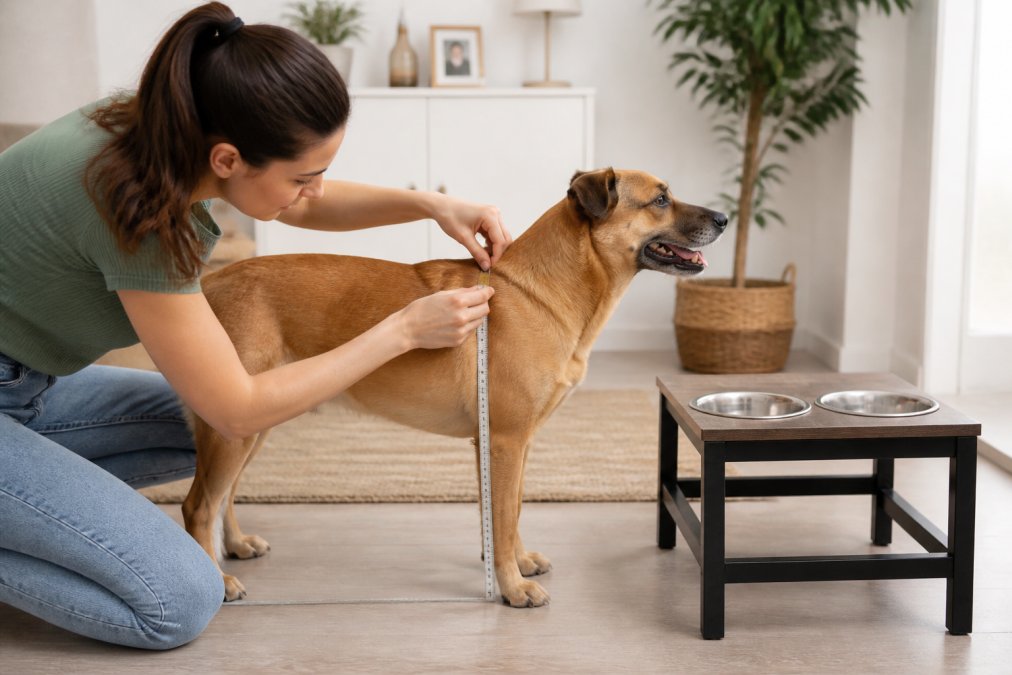
Elevated Dog Bowls for Bloat Prevention
Elevated dog bowls reduce the risk of gastric dilatation-volvulus (bloat), one of the most dangerous canine health emergencies. This condition occurs when the stomach fills with gas and twists on itself, cutting off blood supply and requiring emergency surgery. Large and deep-chested breeds like German Shepherds, Great Danes, and Boxers face significantly higher risk.
How Elevation Reduces Gastric Pressure
When a dog eats from a ground-level bowl, they swallow more air along with food. The downward angle of their head and neck creates negative pressure in the esophagus, pulling air into the stomach with each swallow. An elevated bowl eliminates this problem, your dog's head stays level or slightly elevated, allowing food to move down by gravity alone without forcing air into the stomach.
Elevated feeding also reduces the speed at which food enters the stomach. Slower intake means the stomach has time to process and move food into the small intestine rather than accumulating a large bolus that ferments and produces gas. Proper posture at an elevated feeder positions the stomach higher in the body, reducing mechanical stress on supporting ligaments and decreasing the likelihood of stomach rotation.
Which Breeds Benefit Most
Large and giant breed dogs benefit most from elevated feeders due to their body structure and bloat risk. German Shepherds, Great Danes, Weimaraners, Saint Bernards, and Dobermans should always eat from elevated bowls. Brachycephalic breeds like Bulldogs, Pugs, and Boston Terriers also benefit significantly, their compressed airways make swallowing difficult, and elevated bowls reduce the effort required to eat safely. Even small breeds experience better digestion when eating from a properly elevated bowl.
Slow Feeder Dog Bowls for Digestion
Slow feeder dog bowls feature ridges, dividers, or maze-like patterns that force your dog to eat more deliberately. These bowls address a common digestive problem: eating too quickly. Dogs that gulp their food swallow large amounts of air, don't chew thoroughly, and send improperly prepared food into the stomach.
Controlling Eating Speed
Many dogs eat as if in a race, consuming an entire meal in 30 seconds. This speed creates multiple problems: the stomach receives a large volume of food and air simultaneously, becomes distended rapidly, and the dog's satiety signals don't have time to register in the brain.
A slow feeder forces your dog to work around obstacles to access food. This mechanical barrier naturally slows intake without requiring training or intervention. Slower eating also improves nutrient absorption, when food moves through the digestive tract at a measured pace, the stomach and small intestine have adequate time to break down food and extract nutrients.
Anti-Vomit and Regurgitation Benefits
Dogs that eat too quickly often vomit within minutes of finishing their meal. The stomach becomes over-distended, triggering the gag reflex and expulsion of food that hasn't been properly processed. A slow feeder bowl eliminates most regurgitation issues by controlling the rate at which food enters the stomach, allowing it to produce digestive enzymes and begin breaking down food appropriately.
How to Choose the Right Dog Bowl Height
The correct bowl height depends on your dog's size, age, and body structure. The goal is a height where your dog's front legs are nearly straight when eating, with their head at a neutral angle relative to their spine.
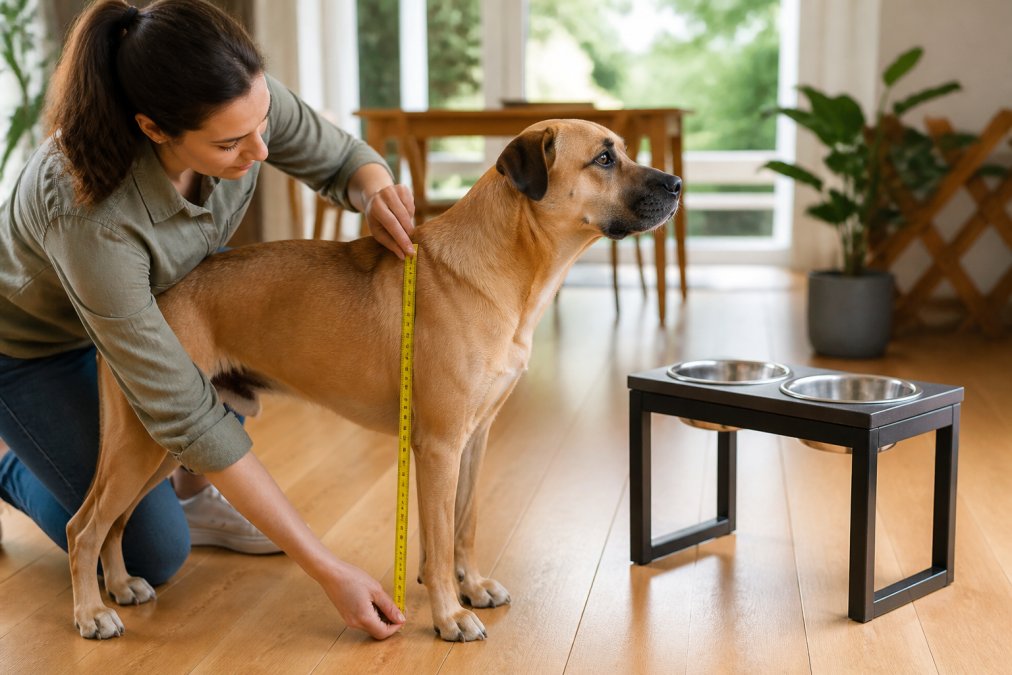
Measuring Your Dog for Proper Alignment
Measure your dog from the ground to the top of their shoulder while standing naturally. This measurement, called the withers height, is your baseline. The bowl should be positioned at approximately 50-75% of this height.
For example, a dog with a 20-inch withers height should eat from a bowl elevated to roughly 10-15 inches. Watch your dog while they eat, their front legs should be nearly straight or only slightly bent, their neck in a neutral position, and their spine forming a gentle curve. If your dog is bending their front legs significantly or stretching their neck, adjust the height. Body structure matters more than weight when determining proper bowl height.
Age-Specific Ergonomic Needs
Puppies grow rapidly, and their ergonomic needs change constantly. Adjustable-height feeders solve this problem by allowing you to raise the bowl as your dog grows. Senior dogs benefit from maximum elevation to minimize strain on arthritic joints. Middle-aged dogs typically do well with standard elevated feeding at 50-75% withers height.
Material Considerations for Durability and Safety
The material your bowl is made from affects durability, your dog's health, and ease of cleaning.
Stainless Steel vs. Ceramic vs. Plastic
Stainless steel bowls are the gold standard for dog feeding. They're durable, non-toxic, don't retain odors or bacteria, and can go in the dishwasher. Ceramic bowls offer aesthetic appeal and excellent heat retention but chip and crack easily. Once damaged, bacteria colonize the cracks. Some ceramic glazes contain lead or cadmium, verify that any ceramic bowl is food-safe and lead-free.
Plastic bowls are the least desirable option. Plastic degrades over time, especially when exposed to hot water or sunlight, releasing microplastics that your dog ingests. Some plastics contain BPA or phthalates, chemicals that disrupt endocrine function. Plastic also harbors bacteria in microscopic scratches. Stainless steel or ceramic are significantly better choices.
Sustainability and Material Toxicity
Stainless steel is the most environmentally responsible choice, a quality bowl lasts for years or decades and is fully recyclable. Ceramic bowls are also recyclable and can last many years if they don't chip. Plastic bowls degrade frequently and rarely get recycled, ending up in landfills.
Material toxicity is a health concern. Stainless steel is inert and releases nothing into food or water. High-quality ceramic bowls made with food-safe glazes are also safe. Budget plastic bowls can leach chemicals into your dog's food and water, especially when exposed to heat or acidic foods.
Paw Fit Gears prioritizes durability and safety in all feeding solutions, using stainless steel bowls paired with sturdy, non-slip bases designed to support long-term use and your dog's digestive health.
Features That Support Digestive Health
Beyond elevation and slow-feed design, several features enhance the effectiveness of ergonomic feeders.
Non-Slip Bases and Stable Stands
A feeder that slides across the floor during meals creates an unstable eating environment. Your dog must compensate for movement, shifting their weight and posture constantly, which increases stress during eating and negatively impacts digestion. A non-slip base keeps the feeder stationary, allowing your dog to relax and focus on eating.
Stable stands should be constructed from sturdy materials that won't wobble or tip. Metal frames are superior to plastic or wood for long-term stability. The stand should have a low center of gravity and wide footprint to prevent tipping. Bowls should be either permanently attached or fitted snugly enough that they don't move during normal use.
Cleaning and Maintenance for Gastrointestinal Health
A dirty bowl is a source of bacterial contamination that directly affects your dog's digestive health. Bowls should be washed daily with hot soapy water and air-dried or towel-dried completely. Damp bowls harbor bacteria and mold, which can cause gastrointestinal upset.
Clean the stand and frame too, food particles accumulate in crevices, creating a breeding ground for bacteria. A weekly deep clean of the entire feeding station prevents bacterial buildup. Stainless steel bowls can go in the dishwasher on the hot cycle. If your dog has a history of digestive issues, consider sanitizing bowls with a dilute bleach solution (1 part bleach to 10 parts water) once weekly, then rinse thoroughly and air-dry completely.
Choosing the right ergonomic dog bowls for digestion supports your dog's fundamental health. Proper elevation, slow-feed design, quality materials, and stable construction work together to optimize how your dog eats and digests food. At Paw Fit Gears, we've designed our feeding solutions with these principles in mind, offering elevated feeders with non-slip bases, stainless steel bowls, and ergonomic heights that adjust to your dog's needs. Explore our collection of ergonomic feeding solutions to find the perfect fit for your dog's size and health needs.
| Feature | Benefit | Best For |
|---|---|---|
| Elevated height | Reduces gastric pressure, improves esophageal alignment | All dogs, especially large breeds |
| Slow-feed design | Controls eating speed, reduces regurgitation | Fast eaters, bloat-prone dogs |
| Stainless steel bowl | Durable, non-toxic, easy to sanitize | Health-conscious owners, active dogs |
| Non-slip base | Prevents feeder movement, reduces eating stress | All dogs, multi-dog households |
| Adjustable height | Accommodates growth and changing needs | Puppies, senior dogs |
According to veterinary research on canine gastroenterology, proper feeding posture significantly impacts digestive efficiency and reduces the incidence of regurgitation in dogs of all sizes. Studies examining bloat prevention strategies in large breed dogs consistently show that elevated feeding reduces gastric pressure and improves food transit time through the digestive system.
The American College of Veterinary Surgeons guidelines on gastric dilatation-volvulus emphasize that feeding management, including bowl height and eating speed, represents one of the most controllable risk factors for this life-threatening condition. Implementing proper ergonomic feeding practices from puppyhood establishes healthy eating habits that benefit your dog throughout their life.
Frequently Asked Questions
Q: Do elevated dog bowls help with digestion?
A: Yes. Elevated dog bowls align the esophagus and stomach more naturally, reducing strain on the neck and joints while promoting better swallowing reflex and food intake regulation. This improved posture correction helps dogs digest meals more efficiently and can reduce the risk of food regurgitation. Many veterinarians recommend elevated feeders, especially for large breeds and senior dogs prone to digestive discomfort.
Q: Can ergonomic bowls help prevent bloat in dogs?
A: Ergonomic bowls, particularly elevated dog bowls for bloat prevention, may reduce bloat risk by improving esophageal alignment and slowing eating speed. Gastric dilatation-volvulus (bloat) is a serious condition in dogs, especially brachycephalic breeds and deep-chested dogs. While no bowl eliminates bloat entirely, combining elevation with slow feeder features addresses multiple risk factors by controlling eating speed and promoting better gastrointestinal health.
Q: What height should an ergonomic dog bowl be for my breed?
A: The correct dog bowl height depends on your dog's size and breed. As a general rule, the bowl should align with your dog's elbows or slightly below when standing naturally. Measure your dog's shoulder height and set the bowl at approximately 25-50% of that height. Large and giant breeds benefit most from elevated feeders, while small breeds may need lower heights. Age matters too: senior dogs with arthritis relief needs benefit from higher bowls to reduce joint strain.
Q: Do vets recommend elevated dog bowls?
A: Many veterinarians recommend elevated bowls for specific situations, including senior dogs with joint health concerns, large breeds at risk for bloat, and dogs with swallowing difficulties. Veterinary recommended elevated feeders improve orthopedic support and promote better mealtime comfort. However, recommendations vary by individual dog's health, age, and breed anatomy, so consult your veterinarian about whether an ergonomic bowl suits your dog's specific needs.
This article was written using GrandRanker