

Table of Contents
- Why Short-Haired Dogs Need Cold Weather Dog Gear
- Best Winter Coats for Short-Haired Dogs
- Dog Paw Protection for Ice and Salt
- Signs a Dog Is Too Cold on a Walk
- Gear Selection by Temperature, Wind, and Walk Duration
- Fit, Sizing, and Mobility Checks for Winter Dog Gear
- Visibility and Safety Gear for Dark Winter Walks
- Complete Cold Weather Dog Walking Checklist
- Frequently Asked Questions
Last Updated: October 6, 2026
Why Short-Haired Dogs Need Cold Weather Dog Gear
Short-haired dogs feel winter sooner than most owners expect, and cold weather dog gear is what closes that gap. A Greyhound, Pit Bull, or Poodle has a single coat with minimal insulation, so wind, snow, and ice reach the skin fast.
Cold tolerance describes how well a dog holds body heat in low temperatures. It depends on coat type, body fat, size, age, and health, not on how tough the dog acts. For a short-haired breed, a 20°F morning with wind feels closer to 5°F.
That is the part most guides skip. They tell you to "dress your dog warmly" without explaining that a 60-second walk and a 45-minute hike need different gear entirely.
Best Winter Coats for Short-Haired Dogs
The best winter coats for short-haired dogs cover the chest and belly, block wind, and leave the legs free to move. Coverage matters more than thickness. A thin coat that reaches the belly beats a puffy vest that stops at the ribs.
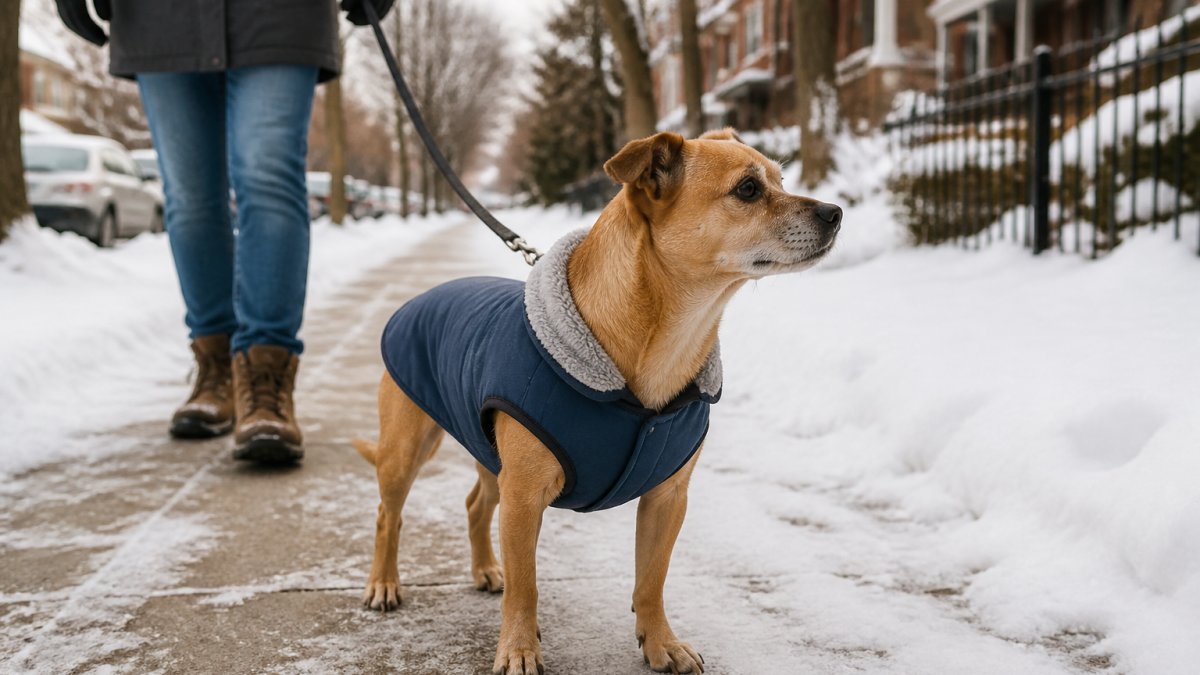
Look for these features:
- Fleece or quilted lining for insulation against the skin
- Water-resistant outer shell for snow and sleet
- Adjustable straps at the chest and neck
- Reflective trim for dark walks
- A leash opening so a harness fits underneath
Our own pick is the 3 in 1 Winter Jacket + FREE Dog Safety Belt, which pairs a removable layer with a safety belt for car rides.

Jackets vs. Sweaters vs. Snowsuits
Jackets block wind and precipitation, sweaters add insulation, and snowsuits cover the legs and belly. Most short-haired dogs do best with a jacket for daily walks and a sweater as a base layer on bitter days.
| Gear Type | Best For | Coverage | Watch Out For |
|---|---|---|---|
| Sweater | Mild cold, indoor-to-car trips | Torso only | Soaks through in snow |
| Jacket | Daily winter walks | Chest and back | Check belly coverage |
| Snowsuit | Deep cold, long hikes | Full body and legs | Slower to put on |
Dog Paw Protection for Ice and Salt
Dog paw protection for ice and salt is not optional in winter. Ice cuts pads, road salt and ice melt burn them, and a dog that stops mid-walk and lifts a paw is telling you the ground hurts. Two tools handle this: boots and paw wax. Each has a real trade-off, and the right choice depends on your dog, the surface, and how long you will be out.
Boots vs. Paw Wax: Which Works Better?
Boots give full protection from salt, ice, and abrasion. Paw wax gives grip and a barrier without changing how your dog walks. Neither is universally better.
| Factor | Boots | Paw Wax or Balm |
|---|---|---|
| Salt and ice melt | Full barrier | Partial, needs reapplication |
| Ice and crusted snow | Full protection | Grip only, no cut protection |
| Long hikes | Best choice | Wears off, needs reapply |
| Short walks | Works, but overkill | Best choice |
| Dogs that refuse footwear | Not an option | Works for most dogs |
| Acclimation needed | Yes, days of practice | None |
| Cleaning | Rinse and dry after each walk | Wipe paws, reapply next time |
Boots: fit and break-in. Measure each paw at the widest point while your dog is standing, then add about a quarter inch for sock room if you use them.
Paw wax: how it works and when it fails. Wax creates a thin barrier that keeps salt and ice from direct contact and adds a little traction.
A third option: paw balm for recovery. After walks, a pad-conditioning balm helps repair small cracks from cold and salt. It is not protection during the walk, it is recovery after.
Post-Walk Paw Care
Salt and ice melt can burn paw pads and cause stomach upset if your dog licks them off. Rinse paws with warm water after every winter walk, not just the long ones. A quick routine:
- Wipe or rinse each paw to remove salt, ice, and grit.
- Check pads and between the toes for cracks, cuts, or redness.
- Dry the paws fully, especially between the toes, to prevent ice balls from forming on the next walk.
- Apply a conditioning balm if pads look dry or cracked.
Watch for ice balls. Snow packs into the fur between paw pads and hardens into ice balls that hurt with every step. Keeping the fur between the pads trimmed short helps. So does a thin layer of wax before the walk.
Signs a Dog Is Too Cold on a Walk
Signs a dog is too cold include shivering, lifting paws, tucking the tail, whining, and refusing to walk. Any one of these means it is time to head home.
Watch for these in order of severity:
- Shivering that continues after you start moving
- Lifting one paw, then another
- Slowing down or stopping entirely
- Tucking the tail and hunching the back
- Whining or trying to turn around
Small dogs, senior dogs, and dogs with thin coats hit these stages fastest. If your dog shows two or more signs, cut the walk short. Ten minutes outside beats a vet visit.
Gear Selection by Temperature, Wind, and Walk Duration
Match gear to conditions, not to the calendar. A 35°F calm day and a 35°F windy day are not the same walk, and a 10-minute potty break needs different gear than a 45-minute hike.
Start with wind chill. Wind strips heat from a short-haired dog faster than still air at the same temperature.
3 in 1 Winter Jacket + FREE Dog Safety Belt →
Then layer in precipitation. Dry cold and wet cold are different problems. Snow is manageable with a water-resistant shell.
| Conditions | Walk Length | Recommended Gear |
|---|---|---|
| Above 45°F, calm | Any | Light sweater or none |
| 32-45°F, calm | Up to 30 min | Fleece-lined jacket |
| 32-45°F, windy (15+ mph) | Up to 20 min | Fleece-lined jacket plus a wind-blocking shell |
| 20-32°F, dry | Up to 30 min | Jacket with belly coverage plus paw wax |
| 20-32°F, snow or sleet | Up to 20 min | Waterproof jacket, boots, paw wax |
| Below 20°F, calm | 10-15 min | Insulated jacket, boots, sweater base layer |
| Below 20°F, any wind | 5-10 min | Snowsuit or full-body coverage, boots, keep it short |
| Below 0°F or wind chill below -10°F | Potty break only | Full coverage, boots, watch for paw lifting within seconds |
Adjust for the dog, not just the weather. A 10-lb Chihuahua hits its cold limit far sooner than a 60-lb Boxer at the same temperature.
Duration changes the gear, not just the layer count. A 5-minute potty break at 15°F is usually fine with a jacket and boots.
Watch the ground, not just the air. Pavement, sidewalk, and metal surfaces hold cold and can be 10-20°F colder than the air temperature. A dog standing still on a cold sidewalk loses paw heat fast. Keep moving, and head home if your dog starts shifting weight from paw to paw.
Fit, Sizing, and Mobility Checks for Winter Dog Gear
Fit decides whether your dog actually wears the gear or fights it. A coat that is too tight restricts the shoulders. One that is too loose catches on fences and trips the legs.
Run this check before every winter walk:
- Two fingers fit under the neck strap
- The chest strap sits behind the front legs, not across them
- The belly panel covers the stomach without sagging
- Your dog can sit, lie down, and walk without resistance
- No rubbing at the armpits after five minutes
If your dog freezes in place or walks sideways, the fit is wrong. Adjust before you head out.
Visibility and Safety Gear for Dark Winter Walks
Dark winter walks need reflective gear on both ends of the leash. Shorter daylight hours mean many owners walk at dawn or dusk, when drivers see less.
Our No-Pull Dog Harness with 2 Leash Clips includes reflective strips and a padded vest, so it layers under a winter jacket without bulk. For dogs under 50 lbs, the Mighty Paw Retractable Dog Leash 2.0 adds 16 feet of reflective nylon and a one-touch brake for icy surfaces.


Add a clip-on light to the collar or harness. Reflective material only works when headlights hit it. A small LED light makes your dog visible from the side.
Complete Cold Weather Dog Walking Checklist
Here is the full kit we recommend for short-haired dogs, organized by priority. Start with the essentials and add the rest as temperatures drop.
Essentials:
- Fleece-lined winter jacket with belly coverage
- Reflective harness that fits under the coat
- Paw wax or balm for light snow
- LED clip-on light for the collar
For deep cold:
- Dog boots with a break-in period at home
- Insulated sweater as a base layer
- Snowsuit for long hikes below 20°F
After every walk:
- Wipe paws to remove salt and ice
- Check pads for cracks or cuts
- Dry the coat before storing it
- Inspect straps for wear
Frequently Asked Questions
How cold is too cold for a short-haired dog?
Most short-haired dogs start feeling uncomfortable below 45°F, and walks should be shortened or replaced with indoor activity below 32°F. Wind chill makes it worse: a 20°F day with 15 mph wind feels like 5°F to your dog. Small breeds, senior dogs, and those with single coats like Greyhounds or Pit Bulls hit their limit faster than larger, double-coated breeds. Watch for shivering, lifting paws, or slowing down, and head home if you see any of those signs.
Do short-haired dogs really need a coat in winter?
Yes. Short-haired dogs with single coats have minimal insulation and lose body heat quickly. A well-fitted dog jacket or fleece vest traps a layer of warm air against the body, which matters most on walks longer than 10 minutes or when temperatures drop below 45°F. Breeds like Greyhounds, Whippets, Boxers, and Poodles benefit most. Look for water-resistant outer fabric and a soft lining, and check that the coat covers the chest and belly, not just the back.
Do short-haired dogs need boots in the snow?
Not always, but they help in specific conditions. Dog boots protect paws from ice balls forming between toes, road salt burns, and frozen surfaces. If your dog tolerates boots, they are the best option for snow and ice. If not, paw wax or balm creates a protective barrier and is easier to apply. Either way, rinse paws with warm water after every winter walk to remove salt and ice melt, which can cause chemical burns and is toxic if licked off.
What should I pack for a winter walk with my short-haired dog?
A complete cold-weather walking kit for a short-haired dog includes: a fleece-lined dog jacket or snowsuit rated for the temperature, paw wax or dog boots, a reflective harness and leash for low-light visibility, a towel for drying paws and belly, and a portable water bottle. For walks under 20°F or longer than 30 minutes, add a second layer like a fleece vest under the jacket. Keep walks shorter in extreme cold and check paws every 10-15 minutes for ice buildup.
Winter walks test your preparation more than your dog's toughness. A short-haired dog needs the right coat, paw protection, and visibility gear before the first cold snap, not after. Paw Fit Gears carries the essentials in one place, including the 3 in 1 Winter Jacket, reflective no-pull harnesses, and a retractable leash built for low-light walks. Get started with Paw Fit Gears and give your dog a winter season of comfortable, safe walks.