

Table of Contents
- Why Flat-Faced Dogs Need Specialized Bowls
- Understanding Brachycephalic Breeds and Their Eating Challenges
- Key Bowl Features: Shape, Width, and Depth
- Best Bowl for Brachycephalic Dogs: What Veterinarians Recommend
- Slanted Dog Bowl for Flat-Faced Dogs: Design and Benefits
- Slow Feeder Bowl for French Bulldogs: Controlling Eating Speed
- Dog Bowl Size Guide: Measuring and Selecting the Right Dimensions
- Materials, Stability, and Maintenance Considerations
- Frequently Asked Questions
Last Updated: October 21, 2026
Why Flat-Faced Dogs Need Specialized Bowls
Flat-faced dogs face eating challenges that standard bowls don't address. Choosing the right bowl for flat-faced dogs solves a genuine health problem: brachycephalic breeds like French Bulldogs, Pugs, and Boston Terriers have compressed facial structures that make feeding uncomfortable and sometimes dangerous with conventional bowls.
A standard bowl forces these dogs to tilt their heads at awkward angles, compressing their airways further while they eat, which can trigger gagging, regurgitation, and excessive gulping. Over time, poor feeding posture contributes to breathing difficulties and digestive stress.
Specialized bowl designs accommodate the unique anatomy of flat-faced dogs by reducing the physical strain of eating and improving muzzle clearance. Choosing a bowl designed for brachycephalic breeds invests in comfort and safety during one of your dog's most frequent daily activities.
Understanding Brachycephalic Breeds and Their Eating Challenges
Brachycephalic dogs have shortened muzzles and compressed facial structures that affect how they eat, breathe, and swallow. Understanding these challenges helps you recognize why a bowl for flat-faced dogs matters more than it might for other breeds.
The primary eating challenge is airway compression.
Secondary challenges include face smearing and food mess. Flat-faced dogs have less muzzle length to keep food contained, so more food ends up on their face and around their mouth, which can lead to skin irritation and infections in the facial folds common to these breeds.
Many owners notice their flat-faced dogs eat slower or seem stressed during meals, which often signals the bowl itself is part of the problem. A bowl designed for brachycephalic breeds reduces these stressors by accommodating their anatomy instead of fighting against it.
Key Bowl Features: Shape, Width, and Depth
The three most important specifications when choosing the right bowl for flat-faced dogs are shape, width, and depth, which directly affect how your dog positions their head while eating and whether their muzzle has adequate clearance.
Width matters most. A wide opening allows your flat-faced dog to access food without compressing their face into the bowl. Standard bowls often have narrow openings that force the dog's muzzle into the dish, creating contact with the rim and restricting breathing space.
Depth is equally critical. Shallow bowls keep food closer to the rim, reducing how far your dog must lower their head.
Shape influences both function and ease of cleaning.
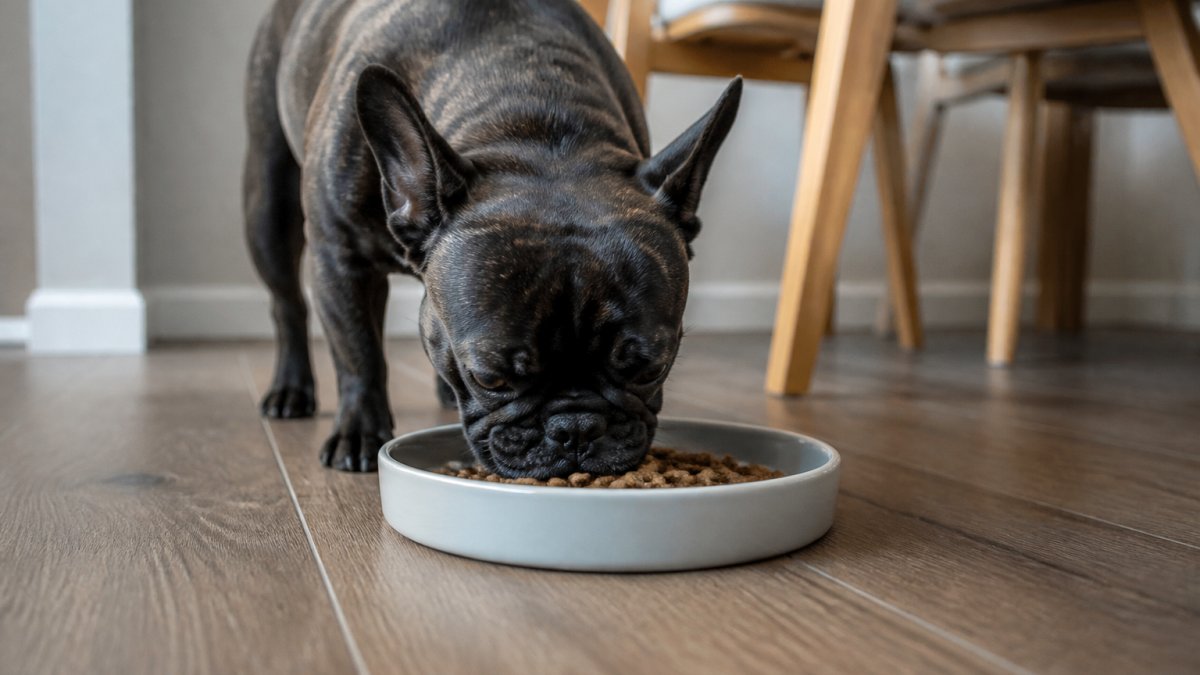
Shallow and Wide Bowl Designs
Shallow, wide bowls are the foundation of feeding comfort for flat-faced dogs, keeping food at a level your dog can reach without extreme head flexion or facial compression.
The best shallow bowls for flat-faced dogs measure between 2 to 3 inches deep and 6 to 8 inches wide. This geometry means your dog can lower their head slightly rather than plunging their muzzle deep into the dish. The result is immediate: less airway restriction, easier breathing, and calmer eating behavior.
Wide bowls also reduce face smearing because the food sits further from the rim, so your Pug or French Bulldog can eat without their cheeks and jowls dragging through food or water, a significant benefit for owners dealing with skin fold infections or irritation.
Tilted and Slanted Bowl Options
A slanted dog bowl for flat-faced dogs uses angle to reduce the physical demand of eating, bringing food closer to their natural head position instead of forcing their head straight down.
Tilted bowls typically angle between 15 to 30 degrees, mimicking the posture your dog would naturally adopt if eating from slightly elevated ground. The slanted design for flat-faced dogs reduces neck strain and improves breathing clearance compared to flat bowls, and many owners report calmer eating because the posture feels less restrictive.
The tilt also addresses regurgitation. By improving the angle of swallowing, slanted designs can reduce the gulping behavior that leads to food coming back up. This is especially valuable for flat-faced dogs prone to digestive sensitivity.
Raised and Elevated Feeder Systems
Raised or elevated feeder systems lift the bowl off the ground, bringing food closer to your dog's natural eating position so your flat-faced dog doesn't have to bend all the way down.
Elevated feeders typically range from 4 to 8 inches high, depending on your dog's size and individual needs. The height reduction in neck flexion is significant, your dog's head position is more neutral, their airway stays more open, and breathing during meals becomes less labored. For older flat-faced dogs or those with existing breathing challenges, elevated feeders can make the difference between stressful meals and comfortable ones.
Raised systems also improve posture and digestion: food moves down the esophagus more naturally due to gravity, reducing the regurgitation and gulping that plague many brachycephalic breeds. Elevated feeders also keep food and water bowls in one stable location, which many dogs find reassuring.
Best Bowl for Brachycephalic Dogs: What Veterinarians Recommend
Veterinary guidance consistently emphasizes that bowl design directly affects your brachycephalic dog's health. While research on specific products is limited, veterinary professionals universally recommend prioritizing muzzle clearance and reduced neck strain as the foundation of any feeding solution for flat-faced dogs.
The consensus is clear: avoid deep, narrow bowls at all costs. These force the exact head position that makes breathing difficult for brachycephalic breeds. Instead, look for shallow, wide designs or tilted options that accommodate your dog's anatomy.
Veterinarians also recommend monitoring your dog's eating behavior after switching bowls. Signs of improvement include calmer eating, less gagging or regurgitation, and reduced face smearing. If your dog seems stressed or shows no improvement after a week or two, try a different design, what works for one flat-faced dog may not suit another.
Slanted Dog Bowl for Flat-Faced Dogs: Design and Benefits
A slanted dog bowl for flat-faced dogs uses angled geometry to solve multiple feeding problems at once, bringing food closer to your dog's natural head position and reducing the extreme flexion required by flat bowls.
The primary benefit is improved breathing during meals. By changing the angle of your dog's head, a slanted design keeps their airway more open compared to standard bowls. This alone can reduce gagging, regurgitation, and the stress many flat-faced dogs experience at mealtime.
Secondary benefits include better food access and reduced mess: the angled surface guides food toward the raised edge, making it easier for your dog's shorter muzzle to reach without pushing their entire face into the bowl, and it contains food better, reducing smearing and spillage.
When selecting a slanted bowl, look for a stable, non-slip base. A tilted bowl that shifts during feeding creates new problems instead of solving them.
Slow Feeder Bowl for French Bulldogs: Controlling Eating Speed
A slow feeder bowl for French Bulldogs addresses one of the breed's most common behavioral issues: eating too fast. Many flat-faced dogs gulp their food rapidly, triggering gagging, regurgitation, and digestive upset; a slow feeder bowl for flat-faced dogs uses design features to force more deliberate eating.
Slow feeders typically feature ridges, dividers, or obstacle patterns that break up the food, requiring your dog to work around the design to access each bite. This slows consumption naturally without monitoring or restricting portions, and for French Bulldogs prone to gulping the result is often calmer eating, less regurgitation, and better digestion.
The challenge with slow feeders is ensuring they still accommodate the muzzle clearance needs of flat-faced dogs. A slow feeder designed for long-muzzled breeds may not work well for Pugs or French Bulldogs because the obstacles can make muzzle access even harder.
Dog Bowl Size Guide: Measuring and Selecting the Right Dimensions
Choosing the right bowl size for your flat-faced dog requires three measurements: muzzle width, eating style, and food volume per meal.
Start by measuring your dog's muzzle width at the widest point across their nose. A properly sized bowl should be at least 2 inches wider than this measurement on each side. For example, if your dog's muzzle is 3 inches wide, a bowl with a 7 to 8-inch diameter gives adequate clearance.
Next, consider the volume. Most flat-faced dogs eat between 0.5 to 2 cups of food per meal, depending on their size and age. A shallow bowl that's 6 to 8 inches wide typically holds 1 to 2 cups comfortably without piling food too high.
Finally, evaluate your dog's eating style. Careful eaters who work through food methodically may do fine with a simple shallow bowl, while aggressive eaters who dive into the bowl benefit from a slow feeder or elevated design that naturally slows consumption.
| Measurement | Purpose | Target Range |
|---|---|---|
| Muzzle width | Determines bowl width needed | Add 2 inches on each side |
| Food volume per meal | Determines bowl capacity | 1-2 cups for most flat-faced dogs |
| Bowl depth | Affects head position and breathing | 2-3 inches for brachycephalic breeds |
| Bowl width | Ensures muzzle clearance | 6-8 inches for medium flat-faced dogs |
Materials, Stability, and Maintenance Considerations
The material you choose affects durability, safety, and ease of cleaning, so the best bowl materials balance durability with practical maintenance.
Stainless steel is the most popular choice for feeding bowls. It's durable, non-toxic, and easy to clean, you can run it through the dishwasher without worry.
Ceramic bowls offer aesthetic appeal and weight that prevents sliding. A heavy ceramic bowl stays in place even when your dog pushes against it while eating.
Plastic bowls are affordable but not ideal. They retain odors, can leach chemicals with repeated washing, and many flat-faced dogs can chew through plastic more easily than other materials.
Stability matters enormously: a bowl that slides during eating creates stress and can trigger the very problems you're trying to solve.
Maintenance should be straightforward. The best bowls for flat-faced dogs are dishwasher safe and don't require special cleaning products.
Frequently Asked Questions
What kind of bowls are best for flat-faced dogs?
Flat-faced dogs benefit most from shallow, wide bowls with low front edges that allow easy muzzle access. Tilted or slanted designs reduce neck strain and improve breathing comfort during meals. Elevated feeders can help with posture, though height depends on your individual dog's size. Avoid deep, narrow bowls that force your dog to strain or twist their face to reach food.
Are slanted bowls better for dogs with short muzzles?
Yes, slanted dog bowls for flat-faced dogs reduce the angle your dog must tilt their head to eat, improving airflow and swallowing. The angled design also helps prevent food from pressing against their face, reducing face smearing and mess. Many owners report their brachycephalic dogs eat more comfortably and breathe easier with a slanted design compared to flat-bottomed bowls.
Should I use a slow feeder bowl for my French Bulldog?
A slow feeder bowl for French Bulldogs can be helpful if your dog gulps food quickly, which can cause regurgitation or bloating. The maze-like ridges naturally slow eating pace. However, ensure the slow feeder design doesn't have narrow openings that force your dog's muzzle into uncomfortable positions. Test it first to confirm your dog can access food easily without struggling.
How do I measure my dog to choose the right bowl size?
Use a dog bowl size guide by measuring your dog's muzzle width, the bowl opening should be at least 1-2 inches wider than their muzzle for comfortable access. Measure from nose to the back of their head to determine ideal bowl depth; most flat-faced dogs do best with 2-3 inch depth. Consider your dog's eating style too: faster eaters may benefit from slightly larger bowls to reduce spillage.
Flat-faced dogs depend on feeding solutions that accommodate their unique anatomy. The right bowl design, shallow, wide, and stable, makes every meal calmer and more comfortable for your dog. At Paw Fit Gears, we understand that quality feeding gear is as important as any other part of your dog's daily care. Explore our collection of ergonomic feeders and specialized bowls designed specifically for brachycephalic breeds to find the perfect fit for your dog's needs and lifestyle.