

Table of Contents
- Quick Comparison of Top Training Tools for Jumping Dogs
- 1. Ultrasonic Training Devices: Audible Correction Without Harm
- 2. No-Pull Harnesses: Control and Leash Manners
- How to Stop a Dog From Jumping on Guests
- 3. Interactive Toys and Physical Exercise Equipment
- Positive Reinforcement Training Tools for Dogs
- Training Duration for Jumping Behavior: What to Expect
- Conclusion
Last Updated: August 25, 2026
Quick Comparison of Top Training Tools for Jumping Dogs
Training tools for jumping dogs range from ultrasonic devices that deliver audible correction to harnesses designed for leash control and interactive toys that channel excess energy. The right tool depends on whether you're addressing the behavior (jumping up at people) or building physical fitness through agility work.
Jumping is one of the most common behavioral issues dog owners face, but the solution isn't one-size-fits-all. A device that works for an excitable young Lab won't necessarily suit a senior dog with anxiety-driven jumping.
| Tool Type | Best For | Price Range | Primary Benefit |
|---|---|---|---|
| Ultrasonic Training Device | Immediate behavior correction | $49.99 | Safe, audible deterrent without shock |
| No-Pull Harness | Leash control during greetings | $27-$36 | Reduces pulling and redirects forward motion |
| Interactive Toys & Exercise Equipment | Energy outlet and mental stimulation | $67-$83 | Prevents boredom-driven jumping |
| Clicker Training Kit | Marker-based positive reinforcement | Varies | Builds consistency in reward timing |
1. Ultrasonic Training Devices: Audible Correction Without Harm
An ultrasonic training device delivers a high-frequency sound that interrupts unwanted behavior without physical punishment. The Ultrasonic Dog Training Device from Paw Fit Gears combines three tools in one: an ultrasonic bark deterrent, training clicker, and dog whistle at $49.99.


When your dog jumps, you press the button to emit an ultrasonic sound (inaudible to humans above 20 kHz) (peer-reviewed research). Most dogs pause, look toward you, and become receptive to the next cue. The device includes three modes: ultrasonic only for subtle correction, audible sound for clicker training, and ultrasonic plus flashlight for strong distractions. The 35-foot range means you can correct behavior from across a room or yard.
Charge via USB-C in 90 minutes for up to 60 days of battery life. The one-button design is straightforward with no complex menus. Auto shut-off after 8 seconds prevents over-correction and keeps the sound brief enough to startle without stressing your dog.
The device works best for dogs over 15 pounds and older puppies (8+ weeks). Toy breeds and very young puppies may find the sound overstimulating, so start at low volume and observe your dog's response.
2. No-Pull Harnesses: Control and Leash Manners
A no-pull harness redirects forward motion when your dog lunges or jumps during greetings on walks. Unlike traditional collars that can strain the neck, a front-clip harness pivots your dog's body sideways when they pull, naturally discouraging the behavior without pain.
Paw Fit Gears offers two options. The No-Pull Dog Harness with Front Clip and Reflective Strips ($36.48) is built for heavy-duty use with large dogs, featuring two metal leash attachment points, a heavy-duty handle for quick control, and reflective strips for low-light safety. The No-Pull Dog Harness with 2 Leash Clips ($27.09) delivers similar function with soft padding and breathable mesh. Both include four adjustment straps for a snug fit.

When your dog jumps or pulls forward, the chest clip naturally rotates their body toward you instead of allowing them to charge ahead. Over time, dogs learn that jumping forward doesn't get them where they want to go.
Use the front clip for active training sessions when jumping is most likely, and the back clip for casual walks once behavior improves. Reflective strips are essential if you walk during dawn, dusk, or evening hours.
How to Stop a Dog From Jumping on Guests
Stopping jumping on guests requires consistency, clear communication, and managing the environment so your dog doesn't practice the unwanted behavior repeatedly.
Step 1: Manage the setup. Before guests arrive, put your dog on a leash or in a harness. Position yourself between your dog and the guest so you can gently redirect if jumping starts.
Step 2: Use a marker signal. The moment your dog's feet leave the ground to jump, use your ultrasonic device, a clicker, or a verbal marker like "Yes!" to mark the exact instant. Then immediately redirect: ask for a sit, offer a treat, or step sideways to interrupt the jump.
Step 3: Reward calm greeting behavior. When your dog stays on all four feet during a greeting, reward heavily with high-value treats or praise. Repeat this dozens of times so your dog learns that calm behavior produces the best outcomes.
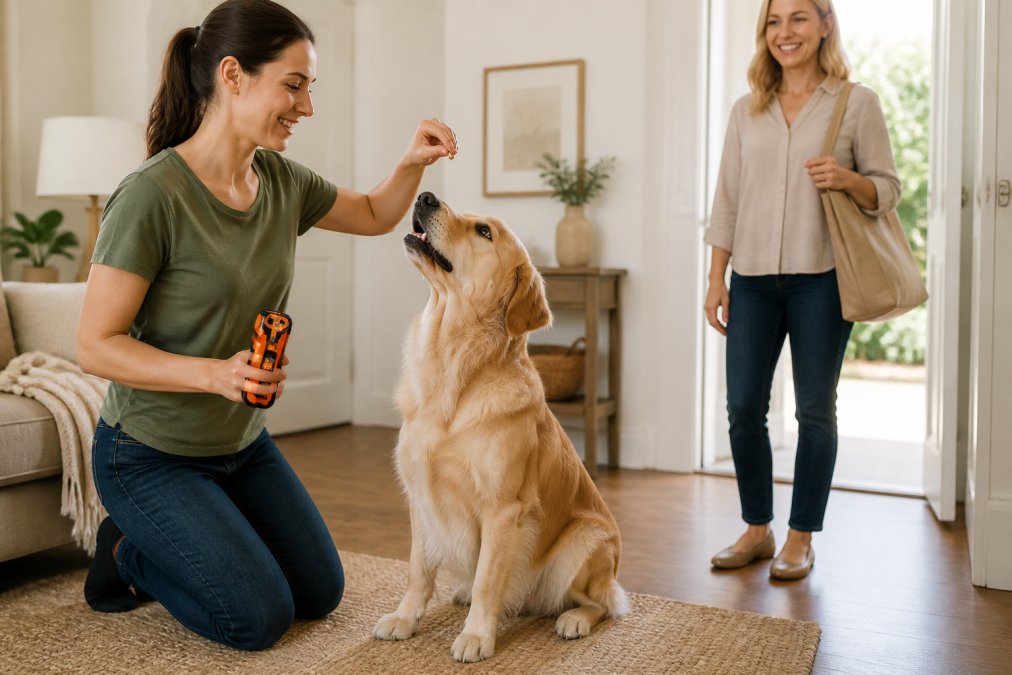
Most dogs show improvement within 2-4 weeks of consistent training (peer-reviewed research). By week three, the frequency and intensity of jumping usually decrease noticeably. Full extinction often takes 6-8 weeks of consistent management.
Common mistake: Acknowledging the jump at all, even negatively. Yelling "No!" or pushing your dog away is still attention, and attention is rewarding. The most effective approach is calm, consistent redirection without drama.
3. Interactive Toys and Physical Exercise Equipment
High-energy dogs jump partly because they have excess physical and mental energy. Interactive toys and exercise equipment provide an outlet that reduces the motivation to jump in the first place.
The 18" Herding Ball from Paw Fit Gears ($67.31) is designed for high-energy breeds like Australian Shepherds and German Shepherds. The ball taps into natural herding instincts, encouraging dogs to chase, bump, and control a large rolling object. The ball is durable.
For dogs that need solo play, the Durable Dog Tug Toy Kit ($82.99) anchors to the ground and allows your dog to engage in self-directed tugging. Dogs can tug solo for 10-20 minutes at a time, which builds jaw strength, provides physical exertion, and occupies their mind.
Most jumping issues improve with 30-60 minutes of physical activity daily, split into 2-3 sessions (aaha.org). A 20-minute morning walk, 15-minute midday play session with the herding ball, and 15-minute evening fetch creates a pattern that reduces excess energy. Combine physical exercise with mental stimulation, puzzle toys, training sessions, and scent work for best results.
Positive Reinforcement Training Tools for Dogs
Positive reinforcement training tools mark desired behavior with precision and reward it immediately. Clicker training is the gold standard for this type of marker-based approach.
A clicker is a small handheld device that makes a consistent clicking sound when pressed. The click marks the exact instant your dog performs the behavior you want to reinforce. For jumping prevention, you'd click when your dog sits calmly instead of jumping, then immediately follow with a treat.
The Ultrasonic Dog Training Device from Paw Fit Gears ($49.99) includes a clicker function alongside the ultrasonic deterrent. The audible clicker mode produces a distinct clicking sound that's louder than a traditional plastic clicker, especially useful for dogs that are easily distracted or in noisy environments.
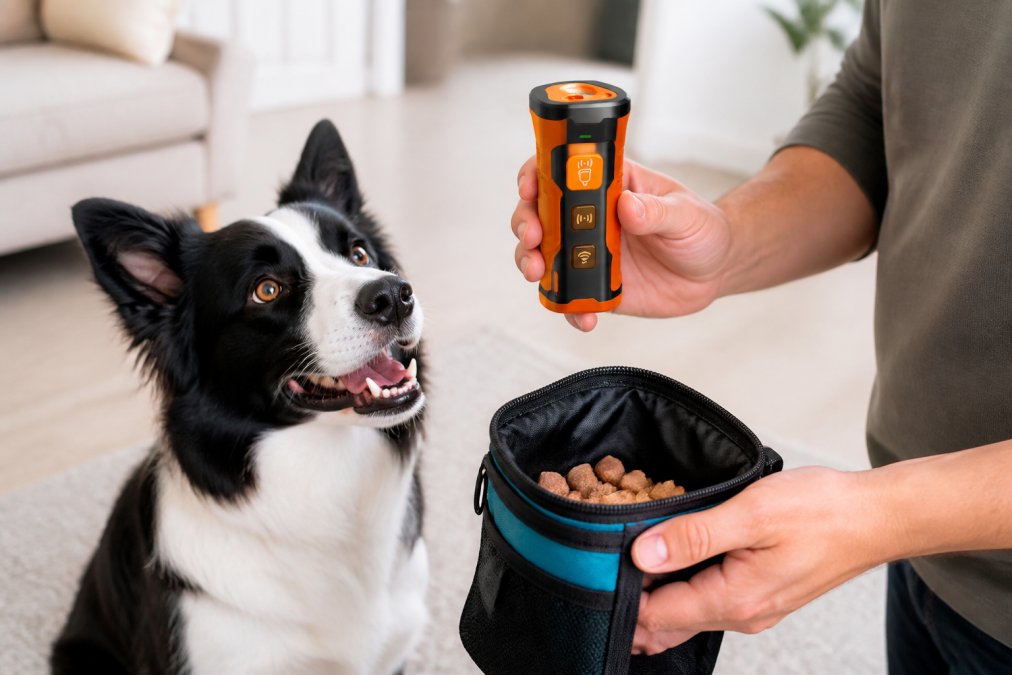
High-value reward systems: Small pieces of chicken, cheese, or commercial training treats should be reserved exclusively for training sessions. Rotate between 2-3 types of high-value treats so your dog stays motivated and doesn't habituate to a single reward.
Keep training sessions to 5-10 minutes. Short, focused sessions prevent your dog from becoming bored or frustrated. End on a success so your dog finishes eager to train again tomorrow. Multiple short sessions per day (3-4 sessions) are more effective than one long session.
Keep your clicker and treat pouch in the same location so you're ready to mark and reward the moment your dog performs the desired behavior. Many owners find a treat pouch worn around the waist invaluable.
Training Duration for Jumping Behavior: What to Expect
Most owners see noticeable improvement in jumping behavior within 3-4 weeks of consistent training. However, "consistent" means daily practice, not occasional correction.
Week 1-2: Jumping frequency may not decrease immediately because your dog is still testing whether jumping gets attention or rewards. Stick with it.
Week 3-4: Most dogs show a 40-60% reduction in jumping frequency. Jumping intensity also decreases, with lower and less forceful jumps.
Week 5-8: Jumping becomes rare during controlled greeting scenarios. Your dog may still jump occasionally when highly excited, but the baseline behavior is resolved.
Maintenance: Once jumping stops, continue rewarding calm greeting behavior occasionally. Random rewards every few greetings maintain the behavior long-term through intermittent reinforcement.
Age-specific considerations matter. Puppies under 6 months learn quickly but also forget quickly, requiring more frequent, shorter training sessions. Adult dogs (1-7 years) typically show the most consistent progress. Senior dogs (8+ years) may take longer if jumping has been a lifelong habit, but they can still learn with patience.
Jumping behavior responds best to a layered approach combining management, marker training, and physical exercise. The tools from Paw Fit Gears, ultrasonic training devices, no-pull harnesses, and interactive exercise equipment, address different aspects of the problem simultaneously. An ultrasonic device provides immediate correction, a no-pull harness gives you control during vulnerable moments like guest arrivals, and exercise equipment channels the energy that drives jumping.
Success depends on consistency more than tool choice. Get started with Paw Fit Gears' training tools and establish a routine that fits your schedule. Within weeks, you'll see the jumping frequency drop and calm greeting behavior emerge.
Frequently Asked Questions
Q: What is the best tool to stop a dog from jumping on people?
A: The best tool depends on your dog's age and temperament. For most dogs, a no-pull harness combined with positive reinforcement training is highly effective. The front-clip design redirects jumping energy and gives you control without punishment. For strong behavioral correction, an ultrasonic training device ($49.99) provides humane feedback up to 35 feet away. Pair any tool with high-value treats and consistent practice for fastest results.
Q: How do I train my dog to stop jumping on guests using positive reinforcement training tools for dogs?
A: Start by teaching impulse control with a clicker and treats before guests arrive. When your dog sits calmly during a greeting, immediately click and reward with a high-value treat. Have guests ignore jumping and only interact when all four paws are on the ground. Use a no-pull harness during introductions for better control. Most dogs show improvement within 2-4 weeks with daily 10-15 minute sessions using consistent positive reinforcement.
Q: How long does it take to train a dog to stop jumping?
A: Training duration for jumping behavior typically ranges from 2-8 weeks depending on age, breed, and consistency. Puppies and young dogs often respond faster (2-4 weeks), while older dogs may need 6-8 weeks. Daily 15-minute training sessions with high-value rewards accelerate progress. Consistency is critical, jumping that gets reinforced even occasionally will take longer to eliminate. Most owners see noticeable improvement within the first 2-3 weeks if they practice daily.
Q: Do training harnesses help stop a dog from jumping?
A: Yes, no-pull harnesses are highly effective for managing jumping during walks and greetings. The front-clip design redirects your dog's forward motion, giving you immediate control without choking or punishment. A quality harness like our no-pull option ($27.09-$36.48) provides dual leash attachment points for training flexibility. Combine the harness with positive reinforcement techniques for best results. The physical control helps prevent jumping while you teach better behavior.
This article was written using GrandRanker