

Table of Contents
- Why Dogs Need Safe Chewy Alternatives for Gear
- Essential Gear for New Puppies: Starting With the Right Chew Toys
- How to Stop a Puppy From Chewing Their Leash: Prevention & Alternatives
- Durable Dog Harnesses for Chewers: Materials That Withstand Aggressive Biting
- Top Chewy Alternatives for Gear: Product Comparison
- Safety Considerations When Choosing Chewy Alternatives
- Hygiene and Maintenance for Long-Lasting Chew Gear
- Conclusion
Last Updated: August 27, 2026
Why Dogs Need Safe Chewy Alternatives for Gear
Dogs chew to seek sensory input, develop oral motor skills, and relieve stress. The problem emerges when that chewing targets your gear: leashes fray, harnesses tear, and collars snap. At Paw Fit Gears, we've worked with dog owners who've cycled through multiple harnesses in a single season because their dogs treated them like chew toys. The real issue isn't the chewing itself, it's redirecting that instinct toward safe, durable alternatives while protecting your equipment.
Puppies and high-energy dogs experience particularly intense chewing phases. Their oral motor needs are legitimate; chewing helps them regulate sensory input and manage anxiety. When gear becomes the target, you face a compounding problem: destroyed equipment plus an unsatisfied dog. Offering appropriate chewy alternatives addresses both sides of that equation.
Generic chew toys often don't satisfy the same urge as chewing gear does. Gear has texture, resistance, and tactile feedback that standard toys lack. The solution isn't just providing any alternative, it's providing alternatives with similar sensory properties: textured surfaces, bite resistance, and firmness that engages their proprioceptive input system.
Essential Gear for New Puppies: Starting With the Right Chew Toys
New puppies need gear that survives their developmental chewing phase. The first 6-12 months determine whether your dog learns to chew appropriately or develops a preference for destructive targets.
Start with reinforced plush toys designed for aggressive chewers. These need upgraded materials: thick cotton with reinforced stitching, built-in squeakers for mental stimulation, and durability to withstand sustained chewing. The Large Squeaky Plush Dog Toy for Aggressive Chewers from Paw Fit Gears delivers this: 13.5 inches of thick pineapple cotton with reinforced stitching, designed for medium and large breeds at $13.70.

Pair plush toys with interactive options that engage different sensory systems. The Rip & Reveal Squeaky Toy ($17.72) offers layered stimulation: outer squeaker, ripping sensation, and hidden surprises inside. This variety prevents habituation and keeps puppies engaged rather than defaulting to gear chewing out of boredom.
High-energy breeds need tools that challenge their motor planning and proprioceptive input systems. The Durable Dog Tug Toy Kit ($82.99) works for all sizes and includes a braided rope toy with a locking carabiner, designed for both interactive play and solo engagement.

How to Stop a Puppy From Chewing Their Leash: Prevention & Alternatives
Leash chewing peaks between 3-6 months when puppies experience intense oral motor needs and test what materials are safe to destroy (peer-reviewed research).
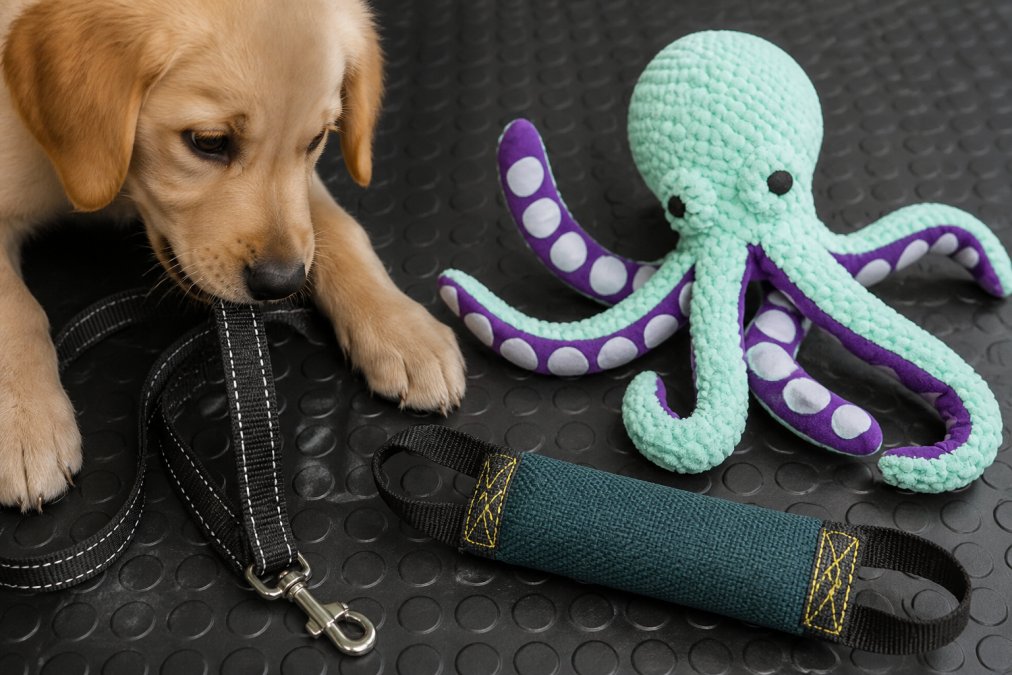
Prevention starts before chewing becomes a habit. Never leave a leash lying around as a free chew toy. Store leashes out of reach and only introduce them during structured activities. During walks, redirect chewing behavior immediately by stopping and offering an appropriate alternative like a textured toy or bite tube. Resume walking once your puppy engages with the approved alternative.
At home, establish a designated chewing zone with approved alternatives. Rotate toys to maintain novelty, offering the same toy for weeks until your puppy loses interest drives them toward gear instead. For puppies showing particular aggression toward leashes, try wrapping the lead with a texture your puppy finds less appealing. Many dogs dislike smooth plastic or certain fabric types. Experiment with different leash materials to find what your puppy naturally avoids.
The underlying principle is consistent: chewy alternatives work when they offer comparable sensory input to the gear itself. A thin rubber toy won't substitute for a textured leash. You need alternatives with similar firmness levels, tactile feedback, and bite resistance.
Durable Dog Harnesses for Chewers: Materials That Withstand Aggressive Biting
A harness designed for regular dogs won't survive a determined chewer. You need materials engineered for bite resistance and durability.
Look for harnesses made from heavy-duty nylon or reinforced synthetic blends. These materials resist puncture and tearing far better than standard webbing. Reinforced double-stitching and stress-point reinforcement prevent seams from unraveling under sustained chewing pressure. Paw Fit Gears focuses on this exact durability standard across its harness collection.
Textured surfaces on harnesses sometimes attract more chewing than smooth ones. If your dog shows particular interest in your harness, consider a minimalist design with fewer protrusions. Flat, simplified harnesses present less tactile interest than heavily padded versions.
Proper fit reduces chewing behavior. A poorly fitting harness rubs and irritates, triggering more chewing as your dog tries to relieve discomfort. A well-fitted harness sits smoothly without pressure points, reducing the sensory input that triggers chewing in the first place.
Inspect your harness weekly for fraying, loose stitching, or small tears. Address damage early, a small tear spreads quickly under continued chewing. Most well-made harnesses last 12-18 months with heavy chewers before replacement becomes necessary (aafco.org).
Top Chewy Alternatives for Gear: Product Comparison
The best chewy alternatives for gear share specific characteristics: bite resistance, textured surfaces that provide tactile feedback, and durability that matches or exceeds standard gear.
| Product | Type | Price | Best For | Key Feature |
|---|---|---|---|---|
| Large Squeaky Plush Dog Toy | Plush with squeaker | $13.70 | Daily chewing, interactive play | Reinforced stitching, thick cotton fabric |
| 2-in-1 Interactive Rip & Reveal | Interactive plush | $17.72 | Mental stimulation, exploratory chewing | Layered design with hidden squeakers |
| Durable Dog Tug Toy Kit | Rope toy system | $82.99 | Solo and interactive play, high-energy breeds | Locking carabiner, braided resistance |
| 18" Herding Ball | Ball toy | $67.31 | High-energy breeds, outdoor play | Bite-resistant, boosts agility |
Interactive Plush Toys With Reinforced Stitching
Reinforced plush toys bridge the gap between soft comfort and durability. The Large Squeaky Plush Dog Toy is engineered for this exact purpose. Made with upgraded thick pineapple cotton and reinforced stitching throughout, it delivers the textured bite surface dogs crave while resisting tearing that destroys regular plush toys.
The built-in squeaker provides ongoing mental stimulation and reinforces engagement. The 13.5-inch length works for medium and large breeds, providing real chewing resistance without being too large for puppies to manipulate. Machine washability extends the toy's lifespan, throw it in the washer weekly to maintain hygiene and prevent bacterial growth.
Herding Balls for High-Energy Dogs
High-energy breeds like Australian Shepherds, German Shepherds, and Border Collies experience a different chewing drive tied to their herding and working instincts. They need tools that engage their proprioceptive input system and allow them to express natural behavior patterns.
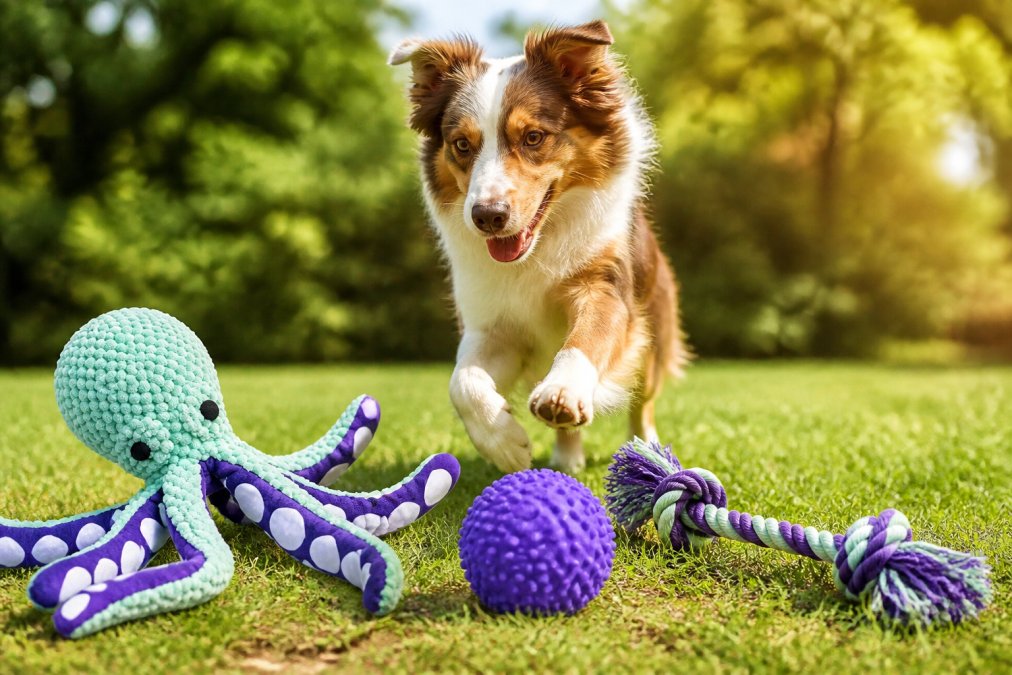
The 18" Herding Ball taps directly into this instinct. The 18-inch size provides substantial resistance and weight. The reinforced stitching and webbing construction withstand intense play without tearing. The bite-resistant design prevents your dog from puncturing or destroying it through aggressive chewing.

The ergonomic handle design prevents your dog from grabbing the handle itself, redirecting chewing away from your hands or gear. Herding balls provide both physical and mental stimulation, satisfying natural instincts and reducing the sensory seeking that drives gear chewing. The machine-washable cover and included pump, stoppers, and remover add practical longevity.
Tug Toy Kits for Solo and Interactive Play
Tug toys provide resistance feedback and engage proprioceptive input through pulling and tugging motion, satisfying a different aspect of the chewing drive than passive chewing does.
The Durable Dog Tug Toy Kit works for all dog sizes because it's a system. The locking carabiner allows you to attach different toy options and customize based on your dog's preferences. The braided rope toy included provides substantial bite resistance, designed to withstand strong, sustained tugging without fraying or breaking.
Solo play capability is critical for dogs that need to self-regulate through chewing. Install it in your yard or indoors, and your dog can tug and pull as needed without requiring your participation. The enhanced base provides stability even under intense tugging. Replacement attachments are available, so you can refresh the toy without replacing the entire system.
Safety Considerations When Choosing Chewy Alternatives
Not all chew toys are created equal, and not all are safe for every dog.
Non-toxic materials are non-negotiable (the FDA). Your dog will ingest fragments of whatever they chew. Toys made from BPA-free silicone, food-grade rubber, or certified non-toxic fabrics prevent chemical exposure. Paw Fit Gears products use materials verified as safe for animal contact.
Size matching prevents choking hazards. The toy should be larger than your dog's mouth when closed. For puppies, err on the larger side since they grow quickly.
Supervised play is essential during the introduction phase. Watch how your dog engages with new toys to determine whether it's appropriate for your specific dog. Some dogs are gentle; others are destructive. Match toy durability to your dog's actual chewing intensity.
Rotation prevents habituation and reduces boredom-driven gear chewing. Rotating through 4-5 different alternatives keeps novelty high. Store toys your dog isn't currently using and swap them out weekly.
Inspect toys regularly for damage. Remove toys that show significant wear and replace them early. Don't wait for complete destruction.
Hygiene and Maintenance for Long-Lasting Chew Gear
Chew toys accumulate saliva, bacteria, and environmental contaminants. Regular cleaning extends their lifespan and prevents bacterial growth.
Machine-washable toys should be washed weekly if your dog chews them daily. Use standard detergent and warm water, then air dry completely before returning them to your dog. Moisture trapped inside creates an environment for mold and mildew.
For non-washable toys, hand wash with hot soapy water and a brush to scrub away debris. Rinse thoroughly and air dry completely, paying special attention to crevices and squeaker compartments.
Establish a replacement cycle. Most well-made toys last 12-24 months with daily use. Mark purchase dates and plan replacements accordingly. A toy that's starting to fail is still being chewed, and fragments end up in your dog's digestive system.
Store toys properly between uses in a clean, dry container away from direct sunlight. UV exposure degrades materials over time.
Dog owners who struggle with gear chewing often assume the problem is behavioral rather than recognizing it as a legitimate sensory need. The real solution isn't punishment, it's providing chewy alternatives for gear that satisfy those needs safely. Paw Fit Gears offers a curated collection of toys engineered for durability and sensory engagement: reinforced plush toys with built-in squeakers, interactive toys that stimulate mental engagement, herding balls for high-energy breeds, and tug toy systems for solo and interactive play. Each option addresses a specific aspect of the chewing drive while protecting your essential equipment. Start with appropriate alternatives before destructive chewing becomes a habit, rotate toys to maintain engagement, and inspect regularly for wear. Your gear lasts longer, your dog's sensory needs are met, and behavioral problems never develop in the first place.
Frequently Asked Questions
What are the best chewy alternatives for gear that heavy chewers won't destroy?
Heavy chewers need toys made with reinforced stitching, thick fabric, and durable materials like pineapple cotton. Interactive plush toys with multiple layers, herding balls with bite-resistant design, and tug toy kits withstand aggressive chewing. Look for products specifically labeled for aggressive chewers, and rotate toys regularly to maintain engagement and prevent wear patterns that lead to destruction.
How do I choose durable dog harnesses for chewers that won't fall apart?
Select harnesses made from high-quality nylon or reinforced webbing with secure stitching throughout. Avoid thin materials or poorly constructed seams that chewers can exploit. Check for bite-resistant design features and consider brands that offer replacement guarantees. Test the fit carefully to ensure no loose straps that invite chewing, and inspect regularly for damage before it becomes a safety issue.
What materials are safest for essential gear for new puppies?
Choose non-toxic, BPA-free materials like food-grade silicone, natural rubber, or soft plush fabric with reinforced stitching. Avoid small parts that can be swallowed, toxic dyes, or materials with sharp edges. Verify that all toys are machine washable for easy hygiene. New puppies especially need gear that's gentle on developing teeth and gums while remaining durable enough for their natural chewing instincts.
How often should I replace chewy alternatives for gear?
Inspect toys weekly for signs of wear, loose stitching, or small tears. Replace toys when they show significant damage, as broken pieces can become choking hazards or cause intestinal blockages. Most quality chew toys last 3-6 months with regular use, depending on chewing intensity. Rotating multiple toys extends their lifespan and keeps your dog engaged with fresh options, reducing wear on any single item.
This article was written using GrandRanker